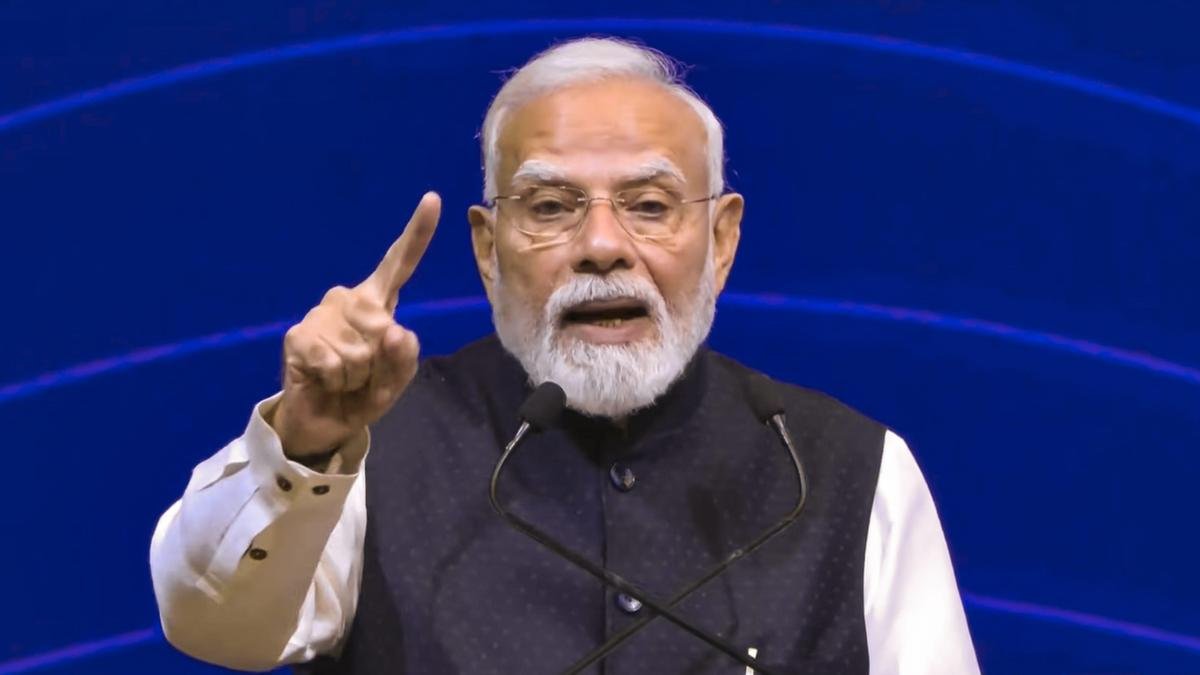
Prime Minister Narendra Modi pitched India as a “new and trustworthy location” for electronics manufacturing, urging global chipmakers to consider the country’s potential to relieve electronics from the “weaponisation” of supply chains.
Mr.
Modi, who inaugurated the Semicon India 2026.
“Wherever semiconductor ecosystems have been built in the world, the entire ecosystem has come together only after decades of hard work.
But India, with your cooperation, has worked simultaneously on chip design, manufacturing, equipment manufacturing, the materials ecosystem, testing capability, and has demonstrated success.” Mr.
Modi’s address came days after the India Semiconductor Mission’s second phase, which has an outlay of ₹1.27 lakh crore, was notified.
What goals does Semicon 2.0 aim to achieve? | Explained The Prime Minister said India is the “mother of democracy”.
“When such a country succeeds in a critical industry, it strengthens the supply chain of the entire world.
And today, when supply chains are being weaponised, its importance becomes much greater.
We should also look at this development taking place in India from this larger perspective,” he said.
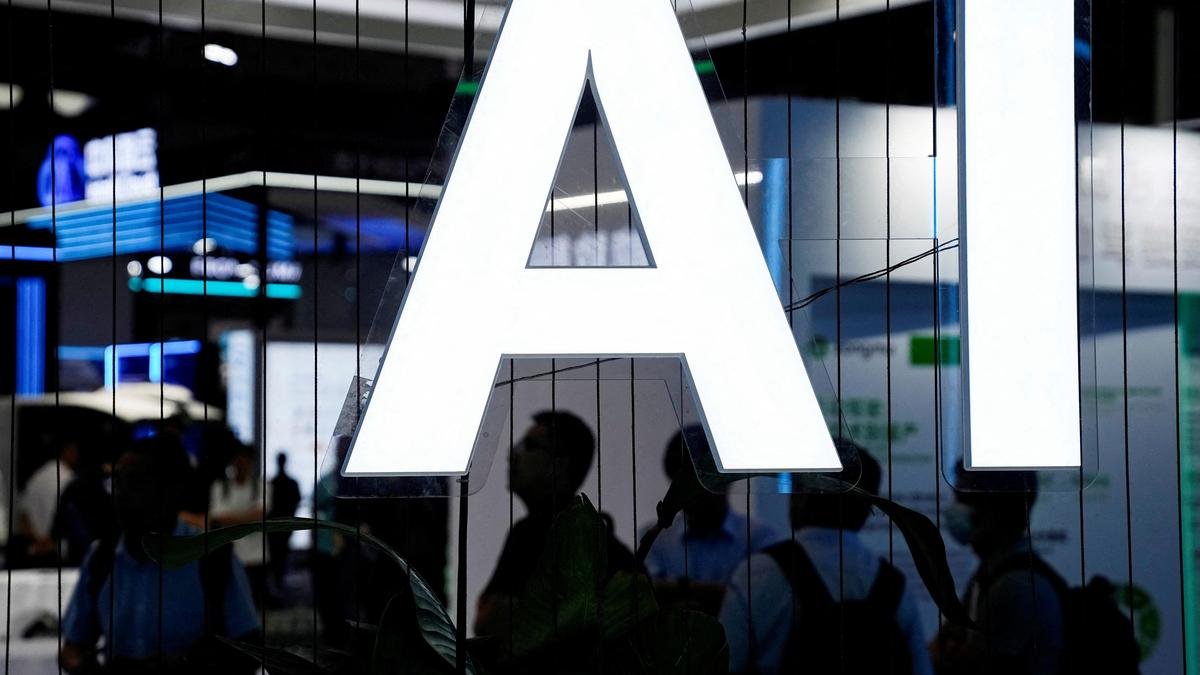
Semicon India 2026 brought together semiconductor and electronics firms from India and other countries.
Speaking at the event, IT Minister Ashwini Vaishnaw said the government plans to train one lakh people who will be a “global pool of talent” and can “straightaway be employed in the factories which are coming up in India”.
Global industry body SEMI’s CEO Ajit Manocha estimated that the semiconductor industry would cross $1.3 trillion this year, and $2 trillion by 2030.
Chip industry Leaders from the semiconductor industry expressed hope in India’s trajectory and its role in their global plans.
Applied Materials committed to invest $5 billion over the coming five years, to expand its R&D centre and supply chain.
PM interacts with chip industry ahead of Semicon event “Earlier this year, we began commercial production at Sanand,” Micron CEO Sanjay Mehrotra said.
“Our current production capacity already exceeds the memory required for India’s entire laptop market … The India Semiconductor Mission, and now ISM 2.0, gave this industry a foundation it did not have before.” Infineon CEO Jochen Hanebeck called India a “market of tremendous importance”, praising the “pace of progress across the Indian ecosystem”.
Pointing to his firm increasing hiring in India by 28%, Mr.
Hanebeck said that “[w]e see great potential for India to strengthen its position across the global semiconductor value chain.” India's semiconductor market to reach $300 billion by 2035: Deloitte report “India is evolving from a major chip consumer and chip design hub into a full-stack global semiconductor powerhouse,” Merck’s electronics CEO Benjamin Hein said.
Lam Research COO Sesha Varadarajan announced that his firm would be investing ₹10,000 crore “to establish our first silicon component manufacturing facility in the country” and that “we are increasing our partnerships with suppliers across India in specialised materials, precision components, gases, chemicals, metrology and manufacturing services.” Wayne Allan, an executive at the Dutch firm ASML, which makes extreme ultraviolet lithography machines essential to advanced chip manufacturing, said that “India will become increasingly important globally” as the chip ecosystem develops further.