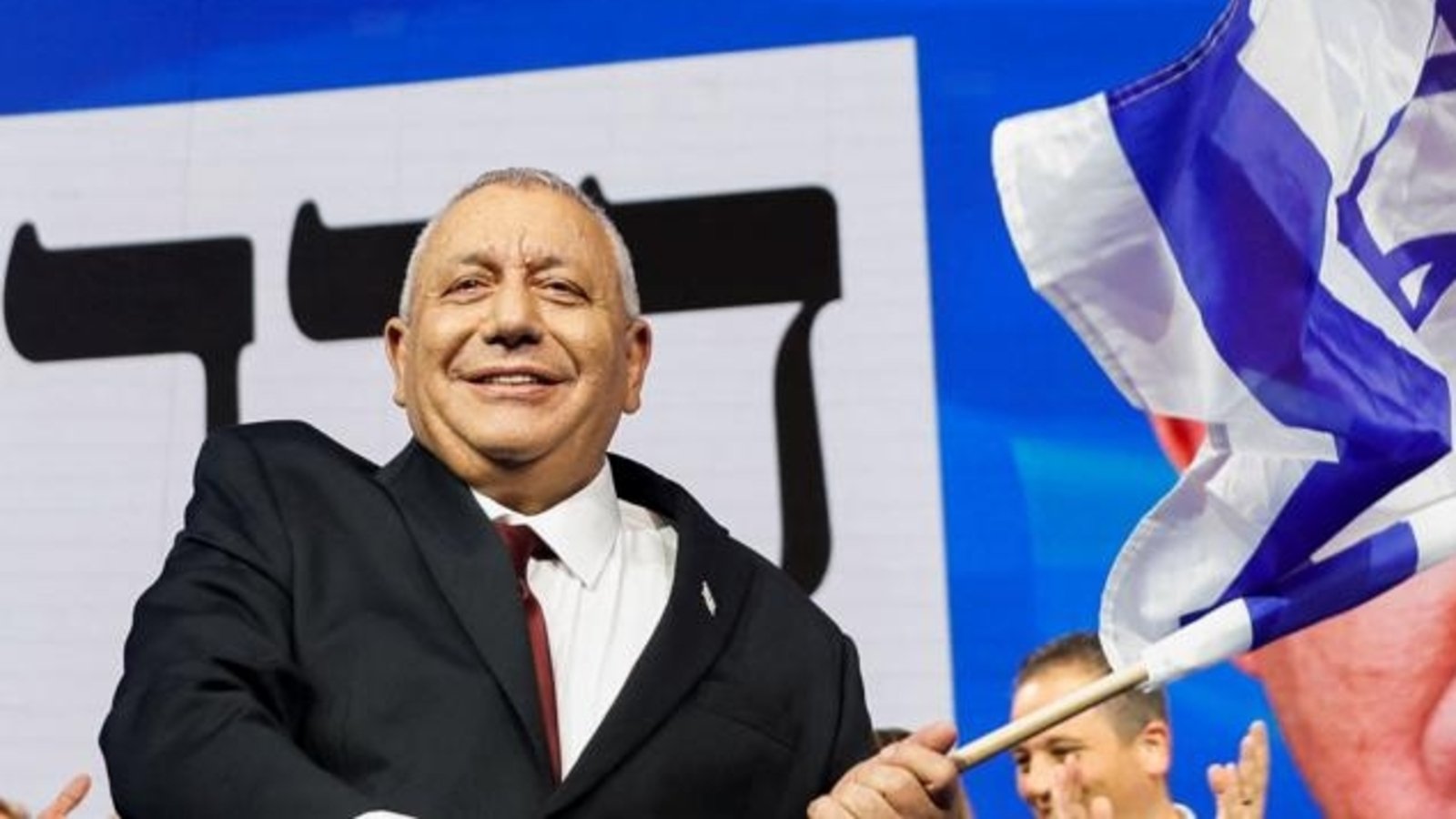
Setback for Netanyahu as Israel’s Arab parties agree to back Eisenkot for Prime Minister Gadi Eisenkot is now set to receive recommendations from 67 members of the 120-seat Knesset, putting him ahead of incumbent Prime Minister Benjamin Netanyahu.
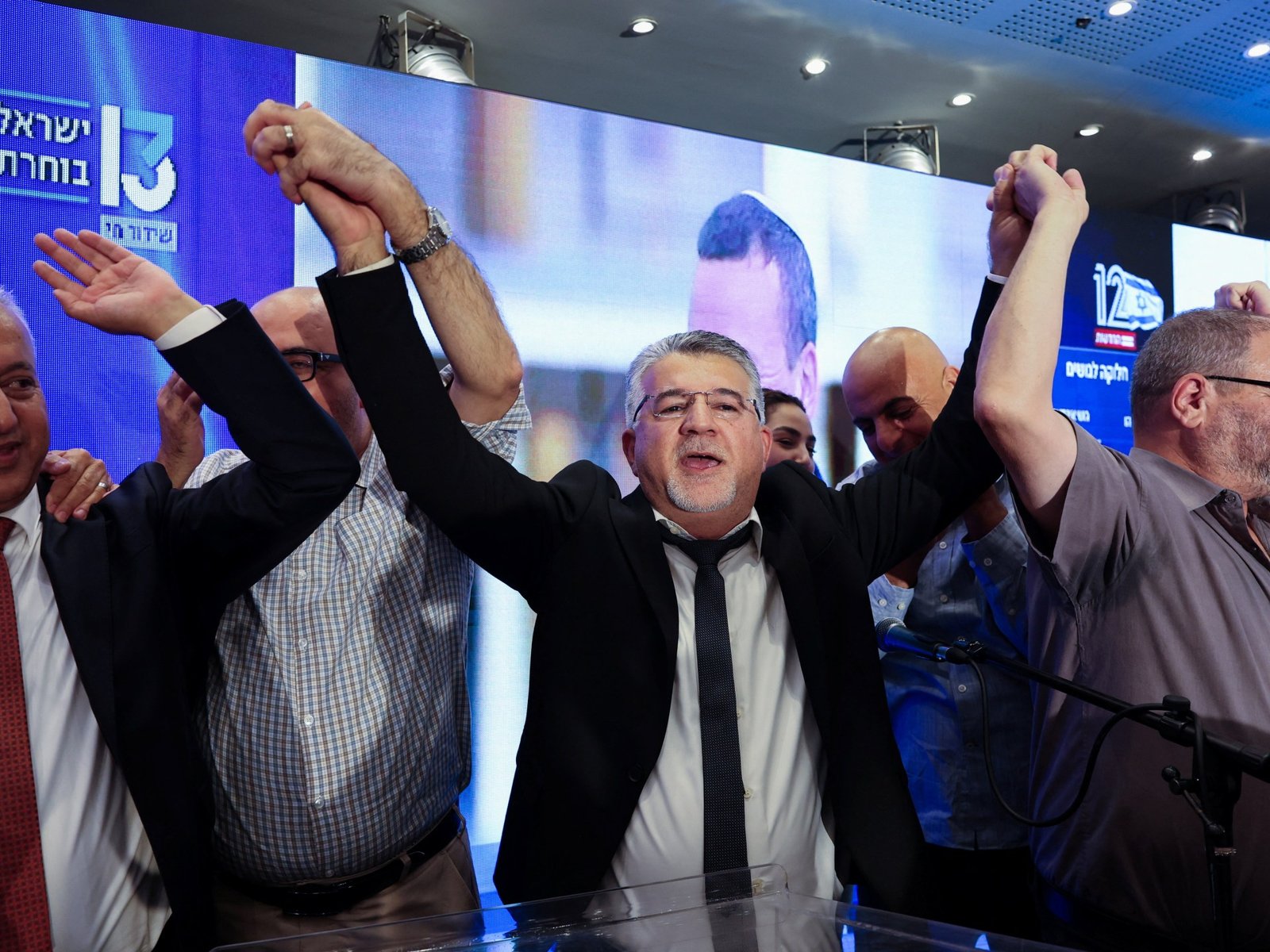
Updated on: Nov 5, 2026, 22:30:26 IST By HT News Desk Prefer HTon Google Share via Copy link The Joint List, an alliance of Arab political factions in Israel, and the Arab-led Ra'am party have backed Yashar party chairman Gadi Eisenkot as their choice for the country's next prime minister.
The Joint List announced its support on Thursday and said it would formally recommend Eisenkot to President Isaac Herzog during consultations on government formation. (HT file) The Joint List announced its support on Thursday and said it would formally recommend Eisenkot to President Isaac Herzog during consultations on government formation.
Ra'am's eight lawmakers had already pledged their support earlier, The Times of Israel reported.
"The Joint List announced today, Thursday, that it will inform the President of the State, Isaac Herzog, this evening of its decision to recommend that Gadi Eisenkot be tasked with forming the government," the party said in a statement, as per AFP.
Eisenkot is now set to receive recommendations from 67 members of the 120-seat Knesset, putting him ahead of incumbent Prime Minister Benjamin Netanyahu, whose Likud party-alliance has 58 seats.
The tally includes eight lawmakers from the Arab-led Ra'am party, which had earlier announced its support, and 11 members of the Joint List.
Arab-led parties won a record 19 seats in Israel’s 120-seat parliament in last week’s general election.
The recommendations come despite Eisenkot's earlier position on Arab parties joining his government.
In a September 26 interview with Channel 12, the Yashar leader said Ra'am would not be part of his next government, arguing that no Arab or ultra-Orthodox party then met his conditions for joining a coalition.
“At the moment I don’t see any Arab or Haredi parties who accept these principles, including [Ra’am leader] Mansour Abbas, and therefore he won’t be part of my next government,” Eisenkot said earlier.
Netanyahu faces uncertainty over support Netanyahu's bloc, which holds 53 seats, may not secure recommendations from all its members.
Degel HaTorah, which controls four of the seven seats held by United Torah Judaism, has said it will not recommend either candidate.
The ultra-Orthodox faction has distanced itself from Netanyahu over his government's failure to pass legislation exempting Haredi men from compulsory military service, according to The Times of Israel.
Herzog begins consultations with party leaders Herzog has accepted the certified results of last week's parliamentary election and begun consultations with political parties to decide who should be tasked with forming the next government.
Earlier, Herzog called on parties to do their utmost to avert another round of elections.
"Any reasonable person need only look at the security and diplomatic challenges before us, at the changing region around us, and remember the issues tearing us apart from within, to understand that an immense responsibility rests upon us," he said.
On Wednesday, Herzog met representatives of the Religious Zionism, Zehut, Shas and Yisrael Beytenu parties.
He said the delegations had submitted their recommendations on which Knesset member should receive the mandate to form the government.
Herzog said consultations would continue on Thursday.
Once the process concludes, the president will select the candidate he believes has the best chance of securing a parliamentary majority.
The choice is expected to be between Netanyahu and Eisenkot.
The candidate appointed will have 28 days to form a government, with a possible extension of 14 days.
If neither candidate manages to secure the support needed to form a coalition, Israel could head for another election early next year.
Operating round the clock, the desk brings together experienced editors, reporters and correspondents to deliver fast, accurate and contextual reporting across subjects that influence public policy, governance, business, society and international affairs.
The HT News Desk covers politics, elections, government policies, the economy, business and markets, science and technology, the environment, law and order, infrastructure, education, climate issues and geopolitics, while closely tracking developments across states, institutions and global capitals.
The team also leads coverage of major breaking news events, policy announcements, court proceedings, natural disasters, public emergencies and significant international developments.
Reports published by the newsdesk are based on information gathered from reporters on the ground, official statements, government agencies, court records, regulatory filings, recognised institutions and other authoritative sources.
Stories undergo editorial scrutiny and verification processes to ensure accuracy, fairness and relevance, and are updated as events evolve and additional information becomes available.