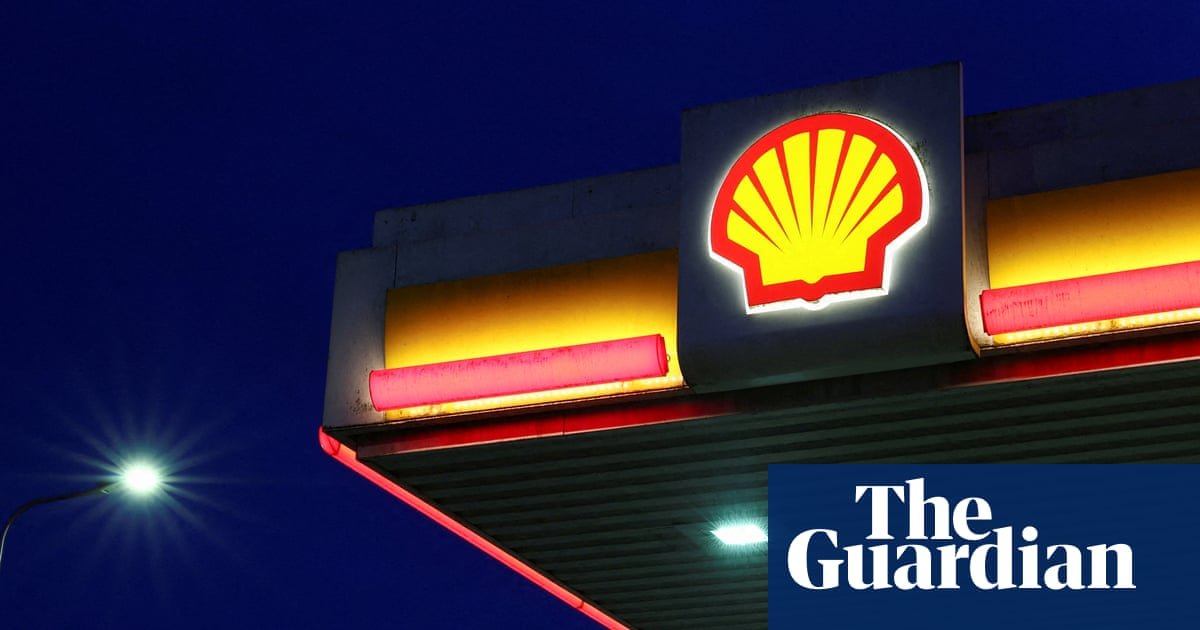
Shell’’s results beat analyst expectations for a rise to $10.33bn.
33bn.
8bn as Iran war pushes up profit margin on oil Energy firm to return $5bn to shareholders as climate campaigners criticise high profits Shell has doubled its profits in the last quarter after the Middle East conflict drove up the price of oil and gas and created shortages in the global market.
Shell reported on Thursday morning that it made an adjusted profit of $10.8bn (£8.1bn) in the July-September quarter, up from $5.432bn in the third quarter of 2025.
The results beat analyst expectations for a rise to $10.33bn.
The company also raised its share buyback programme – it plans to return $5bn to investors for the next three months, up from $3bn in the last quarter.
“Shell’s relentless focus on operational performance enabled very strong results in a quarter with continued severe disruption to the global energy system,” the Shell chief executive, Wael Sawan, said.
Climate campaigners criticised the jump in profits, which pushed Shell’s shares up by 3% in early trading on Thursday morning.
“As fossil-fuelled storms, floods, and soaring costs wreck communities, oil executives like Shell’s Wael Sawan are popping champagne on the deck of a sinking planet.
We are paying with our lives and paychecks while they cash in on our misery,” said Philip Evans, a senior campaigner at Greenpeace.
Shell’s profits were also higher than in the second quarter of this year, when it made $9.836bn.
Shell told investors earlier this month that it expected the profit margins at its refineries to climb to $42 for each barrel of fuel produced in the July to September period, far above the margins of $24 a barrel in the second quarter of this year.
These margins are also significantly higher than the previous record for petroleum products of about $28 a barrel, set in the early months of the Russia-Ukraine war, due to shortages in the global market caused by severe damage to refineries in the Middle East and Russia.
Shell’s gas production has been hard hit by the Middle East crisis, which led to severe damage to one of its key gas processing facilities in the Gulf.
The company’s prewar gas production of 900,000 barrels of oil equivalent per day fell by a third as the Middle East war unfolded. skip past newsletter promotion after newsletter promotion Europe’s benchmark gas price index reached an average of almost €64 per megawatt-hour in the third quarter, up from more than €48 a megawatt-hour in the second quarter.
Meanwhile, the global oil price benchmark averaged $94.90 a barrel, up from $69.10 a barrel in the same quarter last year.
The steadily rising commodity prices helped lift the market value of Europe’s biggest oil and gas company, now the largest company on the UK’s FTSE 100 index.
Shell’s share price rose to a record high of more than £40 a share earlier this month as the global oil price climbed towards $117 a barrel, the highest price in six months.
Explore more on these topicsShell Oil and gas companies Energy industry Oil Europe Gas US-Israel war on Iran news Share Reuse this content