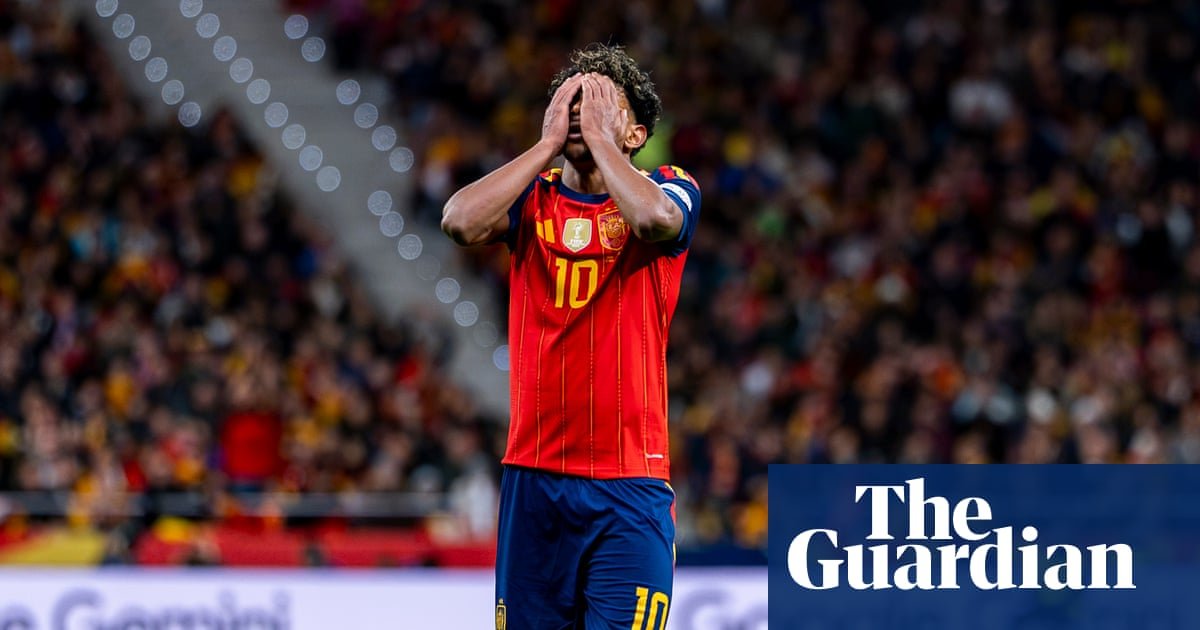
While the head coach, players and Spanish press were magnanimous in defeat, there was pride mixed in with disappointment – and confidence the future is still bright
“With every game, defeat gets closer,” Luis de la Fuente had said and on Sunday night it finally came. Spain had lost only one competitive game since Scotland in March 2023 back when the coach hadn’t won anything and didn’t look like he ever would – and that solitary loss was on penalties in the 2025 Nations League final. Statistically, they said, penalties don’t count, so while Portugal lifted the trophy that night, the team that won the European Championship and World Cup in the summers either side also claimed a Fifa record of 44 official games unbeaten. And then England turned up at the Metropolitano.
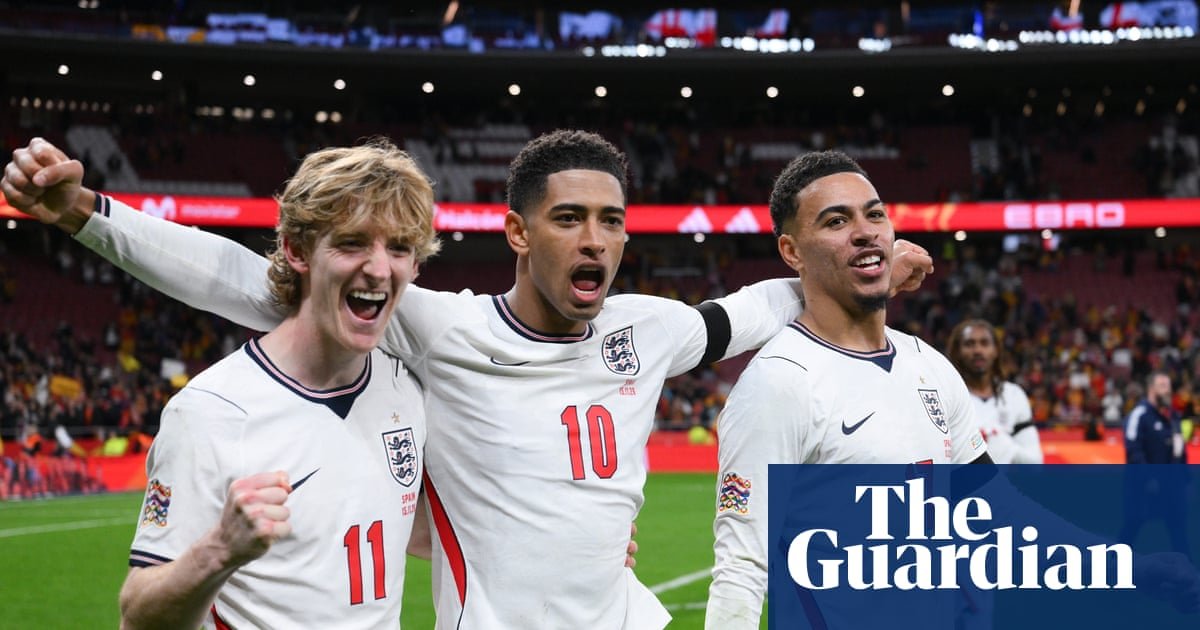
A night that started with Iker Casillas, Fernando Torres and Fernando Llorente handing the World Cup to Unai Simón ended with Spain trying to overhaul a shock 3-0 deficit. Against 10 men and led by a superb Lamine Yamal, Spain made De la Fuente think for a while that they would, but it wasn’t to be.
Aymeric Laporte had almost levelled it in the 91st minute, denied by James Trafford. “I thought it was in, but that’s football,” the defender said, and in football some days you lose, especially against opponents such as these. “This could have been the World Cup final,” the coach said.
Had it been, who knows, this might have been different. From a Spanish perspective, better to lose now, with both teams already through to the Nations League quarter-finals, than somewhere else: better than Berlin, June 2024, that’s for sure. There might even have been some value in it, the coach welcoming a glimpse of “reality” and claiming that everything he took from the defeat was positive. Thomas Tuchel had said Spain can look “invincible” but sometimes it helps to be reminded you’re not. Which isn’t to say they wanted it to happen now, still less that they didn’t care. “It’s a pity,” Mikel Oyarzabal said. “It hurts,” Simón admitted. “But we knew at some point it could happen.”
Not that the analysis ends there. Before the game Simón had lifted the trophy in the absence of Rodri, who was replaced by Martín Zubimendi. And although De la Fuente likes to say Zubimendi is the second-best central midfielder in the world after the captain, although Zubimendi was on the pitch when they won the Euros and the World Cup, he has not started a Premier League game for Arsenal and faced Declan Rice, who has started 10. “Sometimes it’s not easy to come to the national team when you’re not playing many minutes,” Zubimendi had admitted after a narrow win over Czechia three days earlier. There was also a start for Mikel Merino, often the super-sub. And not for Pedri.
Asked about Pedri’s absence, De la Fuente shot back: “Fabián’s not a bad player either, is he?” The past two tournaments have ended with Pedri losing out – to Dani Olmo at No 10 at Euro 2024 and to Fabián Ruiz in central midfield at the World Cup. They have also ended with Spain winning the titles, the decision justified; the Barcelona midfielder has begun only two of the past nine matches for Spain, and they have won eight. Yet the continued absence of a midfielder who may be the most talented in the team is disconcerting, maybe even feels like a defeat in itself. At the Metropolitano it was in midfield, unusually, where Spain did not take control and he helped change the game when introduced.
De la Fuente also admitted that Spain had been struggling from dead balls – in fact that was part of the reason to include Marc Pubill and Merino. That has been a constant since the World Cup, Simón said, and it showed on the second goal. Olmo was absent. It was not easy to live with the intensity England imposed. And Laporte called it a “peculiar” week: he had missed Prague with a virus that others had feared catching too. There had also been the debate about Lamine Yamal before the game, and none whatsoever about him after it.
Yet after all the chatter, much of which will have morphed by March when the national team meet up again, there was a certain acceptance. Appreciation too, for Spain and for their opponents. “After three years and 44 games unbeaten, it would be a bit strange to say: ‘This has to change.’ I don’t feel that way at all,” De la Fuente said, and everyone agreed.
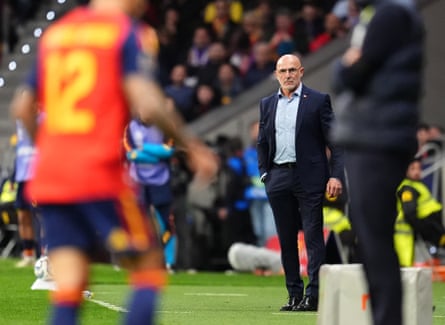
What happened? England happened. “The second-best team in the world, comparable to us,” as Simón called them. Oyarzabal talked about how Tuchel’s team had gone man to man all over the pitch, a team of “clear ideas”. Laporte spoke of how deeply they had studied Spain. “They overran us in the first 30 minutes, they were superior throughout most of the game … and we still nearly turned it around,” De la Fuente said.
No excuses: England were just better, “a formidable opponent: voracious, ambitious, scorching”, in El País’s words. “If you’re going to lose your run, better to do it against an imposing opponent like England,” said Marca. Spain were “obliged to recognise they had a stupendous rival before them, defeat is not unjust”, wrote El Mundo.
“This can happen against England,” Simón said. It was just that they had “forgotten what defeat tastes like”, De la Fuente admitted, and while that wasn’t nice it was also something to be proud of. “This serves to underline what we have done,” he repeated over and over and over again, the same answer offered to almost every question; it served to value a record-breaking run, the trophies won en route and what lies ahead. It was time to build towards another record but that didn’t mean beginning again, it meant carrying on. “The best is yet to come,” he said. “This shows how hard it is to get here. As they say: ‘Let’s see you beat that.’”
At the end of the match, De la Fuente lined up alongside his staff and applauded his players off the pitch, a guard of honour for the men who had made history. “In the dressing room they were sad,” he said. “But I told them: ‘Gentlemen, do you know what you’ve done? Do you know where we are? This is historic. Let’s see if anyone ever matches this. Maybe they will … or maybe they won’t.’”