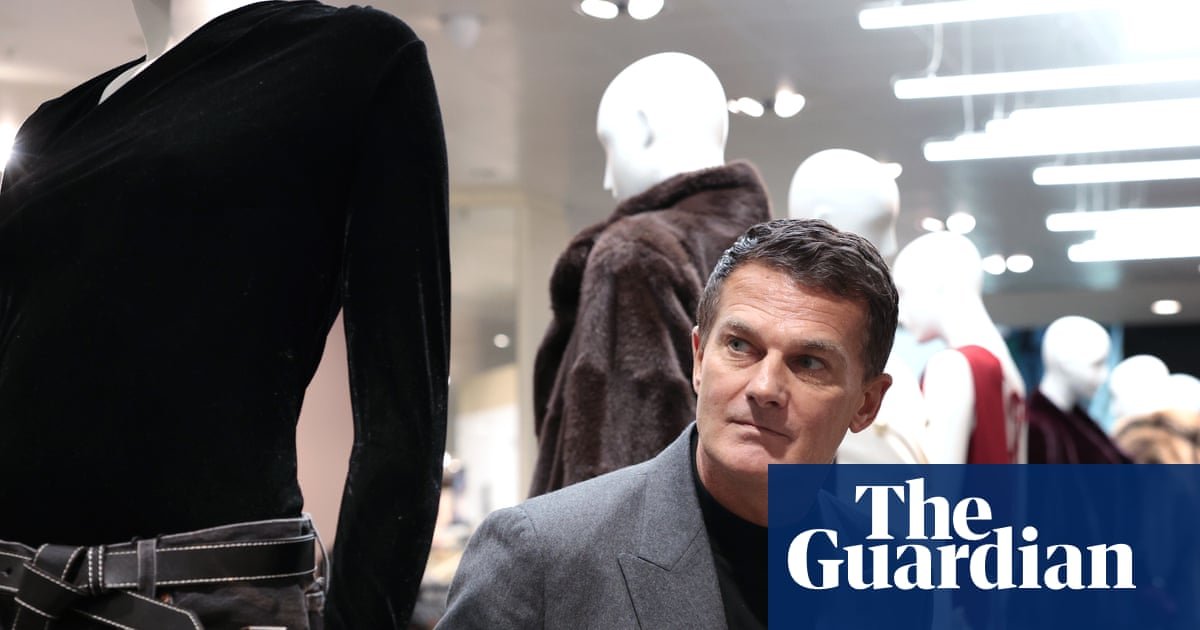
Peter Ruis said he was leaving John Lewis with the business on a ‘stronger footing’.
Peter Ruis appeared ‘to be doing a good job in difficult circumstances’ at department store chain, says analyst “Going up?” After a tough week for department stores it feels as if that sales aspiration is as dated as the singsong phrase in the opening credits of Are You Being Served?
Simpsons of Piccadilly, which inspired the fictional Grace Brothers department store in which the 1970s TV sitcom was set, is long gone, and several of its modern equivalents are now fighting oblivion.
The boss of John Lewis, Peter Ruis, clearly decided it was time to exit the elevator this week, announcing his abrupt departure from the UK’s biggest department store chain in a surprise statement.
Days later, Harvey Nichols, the luxury Knightsbridge store that was once a byword for 1990s chic, was bought out of administration for a knock-down price by the owner of Sports Direct, Mike Ashley’s Frasers Group.
It was only nine months ago that Ruis was talking about possible expansion of the 36-store chain and a burst of investment was seen to have revived sales.
Since then, trading has been tough, not helped by blistering summer weather during which shops on hot high streets have lost out to online specialists, while the high cost of living has put spending on big-ticket items such as sofas and beds on hold.
John Lewis said Ruis had decided to step down to “pursue new projects”.
Ruis said he was leaving with the business on a “stronger footing”.
Insiders suggest he had been discussing an exit for months.
However, this was greeted with scepticism by those who know the company well, given that John Lewis recently organised a media briefing led by Ruis on 3 September, just three days before he is due to step down.
It is understood he will still hold the briefing, days before the group announces half-year results.
Peter Ruis oversaw the renovation of major John Lewis stores including those in Oxford Street (pictured), Bluewater and Glasgow.
Those close to Ruis suggest he was leaving “on his own terms”, may have personal reasons for moving on, and did not appear to have a new job lined up.
Sources close to John Lewis who have worked with Ruis, a fashion veteran, say he and Jason Tarry, the chair of the department store’s parent group, have notably different career backgrounds and management styles, and were always unlikely to gel.
Ruis returned to the business in 2024 after a decade away running retailers including Jigsaw and Anthropologie, while Tarry, a former Tesco executive, took the top job shortly after.
“I am surprised Peter has lasted as long as he has,” one source said.
However, Tarry said Ruis had done a “fantastic job”.
Nick Bubb, an independent retail analyst, said the sudden exit came despite Ruis “appearing to be doing a good job in difficult circumstances”.
He said it was “hard not to link the news with the recent Jason Tarry comments about tough trading at John Lewis” but noted the company’s line that it had arranged an “orderly succession to Kernan”.
Ruis led the revival of the group’s 100-year-old “never knowingly undersold” promise, which helped deliver a decent festive season.
He also oversaw the renovation of large stores including those in Oxford Street, Bluewater and now Glasgow, and spearheaded the launch of buzzy collaborations including bringing Topshop, Waterstones and the Jamie Oliver brand into stores.
Last year, the department store chain increased sales by 3% to £4.9bn, with underlying profit up 29% to £58m in a “subdued market”.
Staff across the partnership received their first annual bonus in four years.
Richard Hyman, a retail analyst, said Ruis might have been prone to big investments but “for a department store to work, it has got to be a really strong brand.
It is about handwriting and that is something Peter Ruis is good at.” Another industry source said Ruis was “getting the best tune out of it on trading that was possible, but the issue is more strategic change and grasping nettles”.
Some industry watchers believe the business will have to reduce its space further after closing 16 department stores during the Covid pandemic. skip past newsletter promotion after newsletter promotion The now closed John Lewis store in Sheffield city centre.
The chain closed 16 stores during the Covid pandemic.
However, it is unlikely Tarry would have pushed out Ruis in favour of Kernan, who does not have experience with handling relationships with big brands or running department stores.
Kernan has served as the chief executive of River Island, The White Company and the cycling retailer Wiggle after more than a decade rising through the ranks at New Look.
Hyman said Tarry was also unlikely to have wanted to make a big change just months after a management changeover at John Lewis’s sister group Waitrose.
The top job at the group’s department store arm is starting to appear among the hardest in retail.
The role has been stuck in the revolving doors since 2016 when Andy Street left after a decade.
His immediate successor, Paula Nickolds, did four years, Pippa Wicks less than three, and then the former Hovis boss Nish Kankiwala was brought into the new role of chief executive for two years before hiring Ruis as managing director in January 2024.
The multiple changes are no surprise given the pressure that department stores are under.
Once the only places where consumers can compare and buy a wide range of brands under one roof, department stores now face heavy competition from the internet, which can host an almost inexhaustible array of products.
Rival department store chain Harvey Nichols was described as being in a ‘death spiral’ by Frasers Group boss Mike Ashley.
One moment stores are adding cafes and bars, the next gyms, massage rooms and beauty parlours.
Homewares may boom in sales one year and technology the next, but flexing a large store to accommodate the latest tastes can take many months and millions of pounds while websites can adjust in the beat of an algorithm.
The John Lewis estate is almost the last national department store chain standing after the closure of Debenhams and Beales.
In recent years the family-owned Fenwick chain has closed its London flagship store on Bond Street, the Weston family sold off Selfridges in 2022, and the Harvey Nichols deal came after Ashley described it as in a “death spiral”.
House of Fraser has been reduced by two-thirds since 2018 to just 20 outlets under Ashley.
He has nevertheless gained five new sites in the UK in landing Harvey Nichols, including the Knightsbridge flagship and potentially another in Dublin.
Ashley is an expert in property development, and can no doubt see a chance to make more of these sites with a mix of his brands and potentially other services such as hotels or gyms.
Kernan has his work cut out to keep the tills ringing at John Lewis, or this may be the next chain Ashley has his sights set on.
Explore more on these topicsJohn Lewis Retail industry features Share Reuse this content