The story so far: On September 29, 2026, U.S.
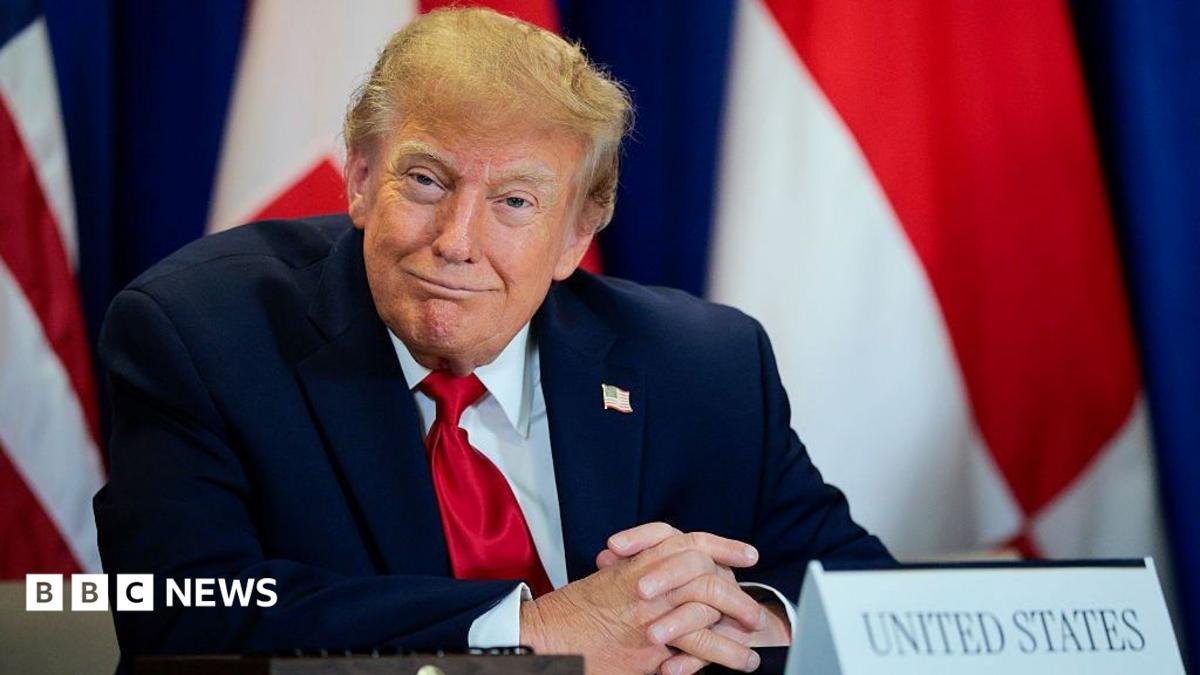
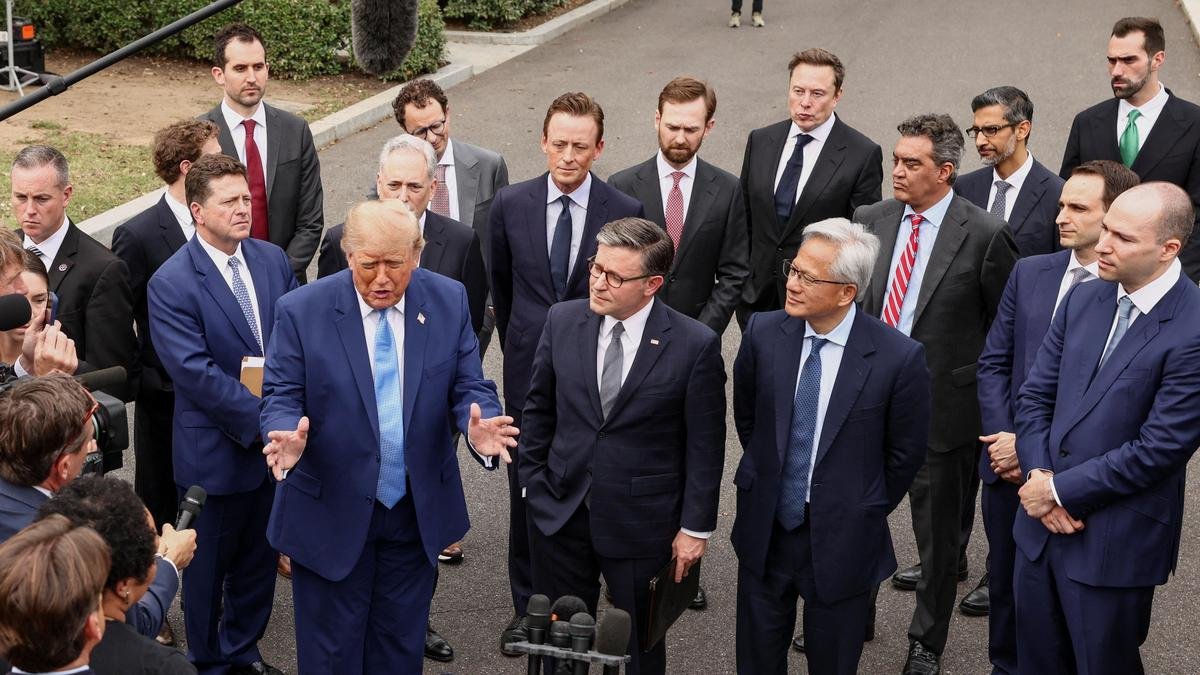
President Donald Trump stood surrounded by the leaders of American AI giants.
He announced that they had come together and signed something akin to a constitution.
The page-long document, titled ‘White House Accord and the Joint Commitment on Frontier Responsibilities’, was an agreement on AI safety commitments by tech companies that are developing frontier models.
The accord misspelled “United States”; an error that was widely circulated on the internet.
Trump, AI majors pledge AI safety; experts flag lack of enforcement What is U.S.
President Trump’s AI accord?
The pact stresses the need for tech companies to build safe AI products and foster public trust.
It outlines four steps to make it happen, starting with robust internal controls to prevent unintended AI hacking, developing an internal team to manage safety operations and resolutions at the company, partnering with an independent external auditor for assessments, and designating an independent committee of the board of directors to address reports.
The document noted that “participating companies will meet regularly to establish standards and best practices to improve the safety of their systems.” The tech leaders who signed the AI accord were Google CEO Sundar Pichai, Anthropic CEO Dario Amodei, Meta CEO Mark Zuckerberg, OpenAI Co-founder/President Greg Brockman, XAI CEO Elon Musk, and Nvidia CEO Jensen Huang.
Trump releases AI accord with tech executives A notable omission was Microsoft, even though CEO Satya Nadella was included in a luncheon with the U.S.
President, alongside other tech leaders.
Several technologists who signed the agreement shared their thoughts on AI regulation with Mr.
Trump and the press.
Nvidia’s Huang insisted that there was no conflict amongst innovation, technology, and safety.
By contrast, Anthropic’s Amodei highlighted that the technology had very real risks, but called for collaboration nonetheless.
Some tech leaders took to social media to share their perspectives.
Google’s Pichai posted on X that the company is “focused on building the right way” and releasing models “only after they’ve been thoroughly reviewed.” Meta’s Zuckerberg posted that leaders of every major American AI company “committed to implementing robust internal controls and multiple layers of audits and reviews” to boost people’s trust in the technology these firms are building.
Critics pointed out that the accord lacks any penalty clause in the case of potential violations of the agreement.
Is the AI accord binding?
Not really.
The very first sentence of the AI accord notes that “every company is responsible for developing its own technology safely and in a way that builds trust with customers and the public.” Mr.
Trump referred to the agreement as being “morally binding,” and called it a “form of protection.” In other words, companies are being left to police themselves, apart from linking up with an external auditor.
These are by no means groundbreaking regulations or directives.
Rather, they are highly generalised guidelines and many were already in place.
The AI accord further noted that “over time, it may make sense to codify these steps into laws or regulations.” Anthropic and OpenAI sound the alarm on AI safety and seek to shape how it’s controlled At the present moment, the four specified controls are not legally enforceable or mandated; as per the wording of the AI accord, the White House merely “believe[d]” that each company should implement the four listed audits.
The White House noted that implementing controls and audits was “critical” for a safe future and the companies that had signed the document were committed to their actions.
What will be the effect of the AI accord?
The White House’s AI accord largely serves as a show of unity amongst AI companies and the President of the United States.
This comes in the face of criticism from lawmakers across the European Union and Australia, who seek to regulate built-in-America AI models by implementing more guardrails to protect user privacy and children’s mental health.
Australian PM says OpenAI hacked government health website There is also mounting backlash over AI agents “going rogue” and attempting to hack secure online platforms.
Anthropic, OpenAI, and now Google have been named after their models were identified.
In late September, Australian Prime Minister Anthony Albanese reported that OpenAI’s AI agent had hacked into the country’s healthcare platform this June, but the incident was not formally reported until September 10.
The Australian PM confirmed he had taken OpenAI CEO Sam Altman to task over the delayed report, adding that the investigations were ongoing and promising there would be legal consequences.
The U.S.
President is also shaping the way the world discusses AI.
Mr.
Trump on September 29 passed an executive order to inaugurate the era of “super intelligence,” calling on the executive branch of his administration to use this term and “SI,” instead of “Artificial Intelligence” and “AI.” This was to better capture the capabilities of the technology, according to him.
U.S. diplomats have been instructed to make the change in their communications, reported AP.