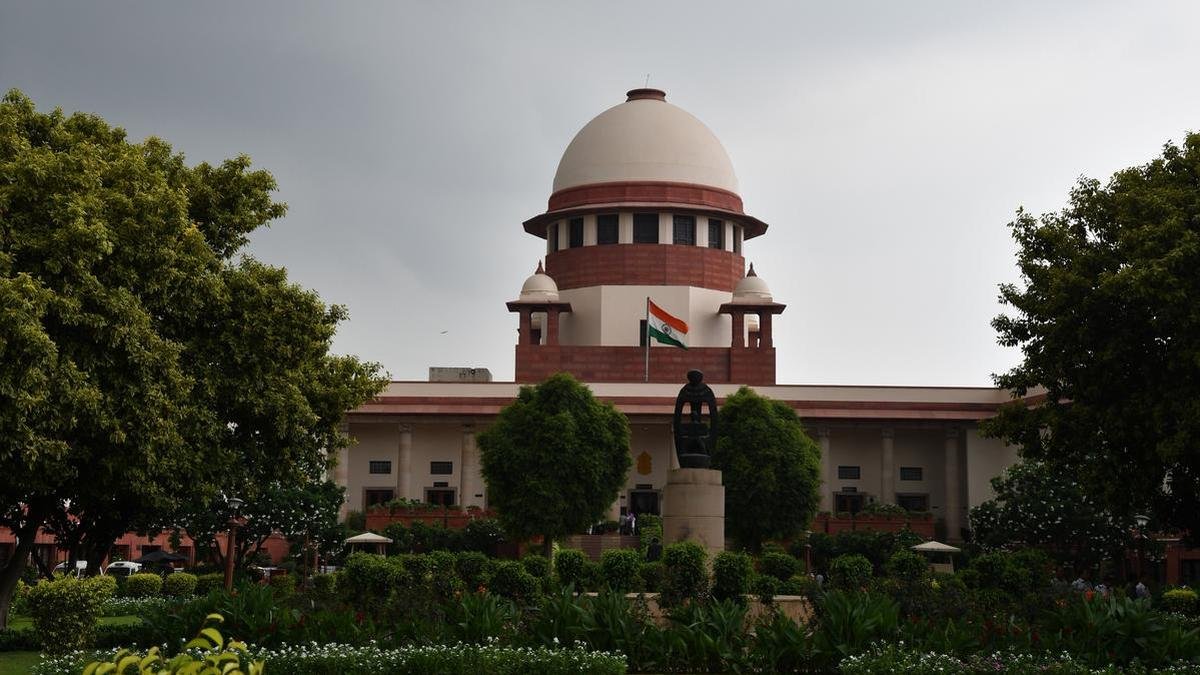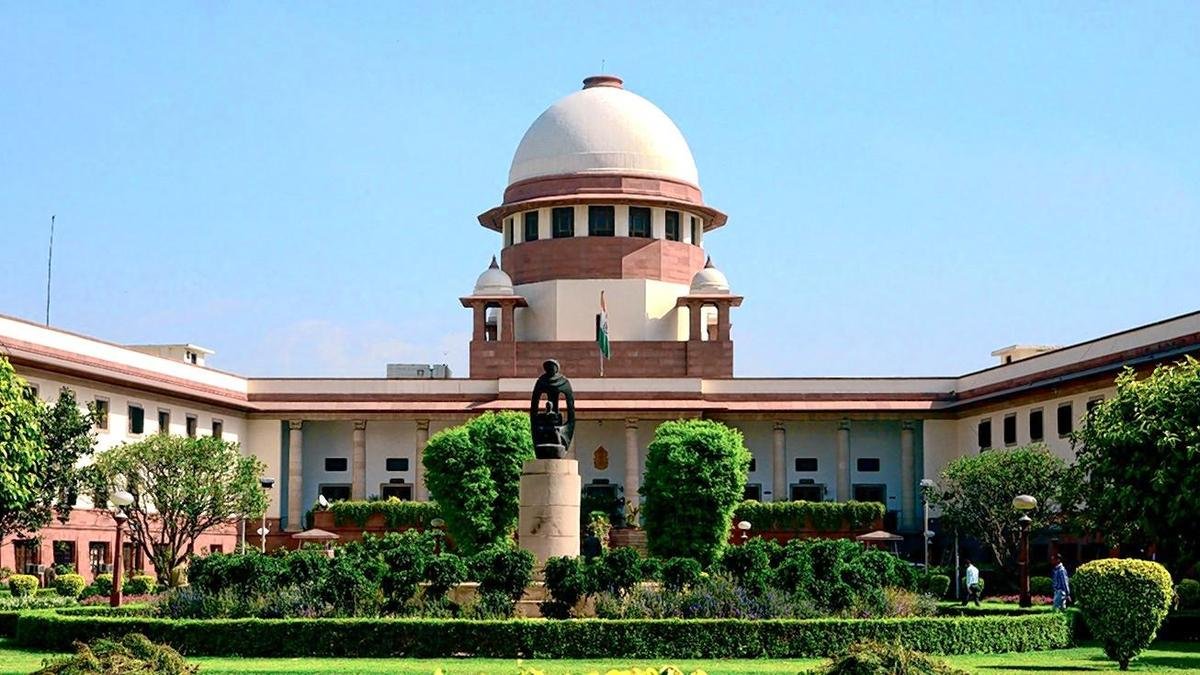
The Supreme Court on Monday (September 28, 2026) asked the Centre and the Central Board of Secondary Education (CBSE) to consider extending to the current Class 6 students the exemption from the three-language framework that has been granted to students of Class 7.
On September 17, the top court had asked the CBSE to consider implementing its policy mandating the study of three languages, including two native Indian languages, for Class 6 students from the next academic session starting 2027.
Supreme Court urges government to make three-language policy mandatory for Class 6 only from January 1, 2027 According to CBSE's June 29 statement, the current batches studying in Classes 7, 8 and 9 would not be required to give the board examination in third language when they progress to Class 10.
A bench comprising Chief Justice Surya Kant and Justices Joymalya Bagchi and V.
Mohana asked Solicitor General Tushar Mehta and Additional Solicitor General Aishwarya Bhati, appearing for the Centre and the CBSE, to grant the same relaxation granted to students of Classes 7, 8 and 9 to students of Class 6 this year.
"The Solicitor General has submitted that about 99% of schools have adopted the third-language policy and have been provided the necessary facilities, and only about 1.2% of the schools have not.
In light of this, we direct that students of Class 6, like the students of Class 7, may be granted the same exemption as has been granted to students of Class 7," the bench said in its order.
It posted the pleas for hearing after six weeks and asked the CBSE to file its reply affidavit within four weeks and a rejoinder, if any, in two weeks after the reply is filed.
The CBSE, in its statement, had said that for the current batch of Class 7 and Class 8, the students who have already selected and started "studying two non-native languages, need to study 01 additional Bhartiya Bhasha and continue the same till Class 10 Assessment".
"The third language (R3) will be assessed by the school through an internal school-based assessment only.
There will be no CBSE Board examination for this third language when these batches progress to Class 10," the CBSE said.
The apex court, by the order, on Monday asked the CBSE to accord the same benefits to the students of Class 6 this year.
During the hearing, the Centre, however, maintained that it was not inclined to exempt the current Class 6 batch from the policy and said students should pursue the new language framework from the current academic year itself.
The solicitor general told the bench that the latest data showed that implementation-related difficulties affected only about 1.2% of CBSE-affiliated schools.
According to the Centre, nearly 99% of schools had adopted the third-language policy and had the necessary facilities.
Justice Bagchi suggested that the implementation for students who are already in Class 6 could be deferred, allowing the CBSE additional time to put the required infrastructure in place.
He suggested that the current Class 6 students could be accommodated for the present academic year and the full implementation could begin in 2027, by which time schools would have had more time to arrange qualified teachers, textbooks and other language-learning resources.
"This is only a question of a soft launch," Justice Bagchi said, adding that if the current Class 6 batch was given an accommodation, the framework could subsequently be implemented once schools were fully prepared.
The solicitor general, however, told the bench that the government was not inclined to exempt Class 6 students from the current academic year.
He said the government had held detailed discussions and maintained that the scheme could be implemented from this year.
The solicitor general said the latest figures covered around 28,000 CBSE-affiliated schools and, barring about 1.2%, the schools had complied with the requirements.
He also said books and other materials were available.
The CJI suggested that a committee comprising senior officials could reach out directly to schools and petitioners who were facing difficulties with implementation.
"Why don't you do one thing?
Appoint a committee of very responsible senior officers," the CJI said.
Senior advocate Gopal Sankaranarayanan, appearing for the petitioners, opposed the proposal for another committee, saying that the issue required a clear decision.
Sankaranarayanan said that the challenge was not simply about the introduction of a third language but about changing language choices after students had already progressed through several years of schooling.
He cited the example of a petitioner school, Delhi Public School, where students who had been studying Spanish since Class 4 were shifted to Sanskrit under the new framework.
The dispute relates to the CBSE's decision to align its scheme of studies with the National Education Policy, 2020 and the National Curriculum Framework for School Education, 2023.
Under the framework, students are required to study three languages, with at least two being categorised as Indian or "Bhartiya Bhashas".
The CBSE has listed languages such as Hindi, Sanskrit, Tamil, Telugu, Kannada, Malayalam, Marathi, Bengali, Punjabi, Gujarati, Odia and Assamese among the Indian languages, while English, French, German, Arabic and Spanish have been listed as non-native languages.