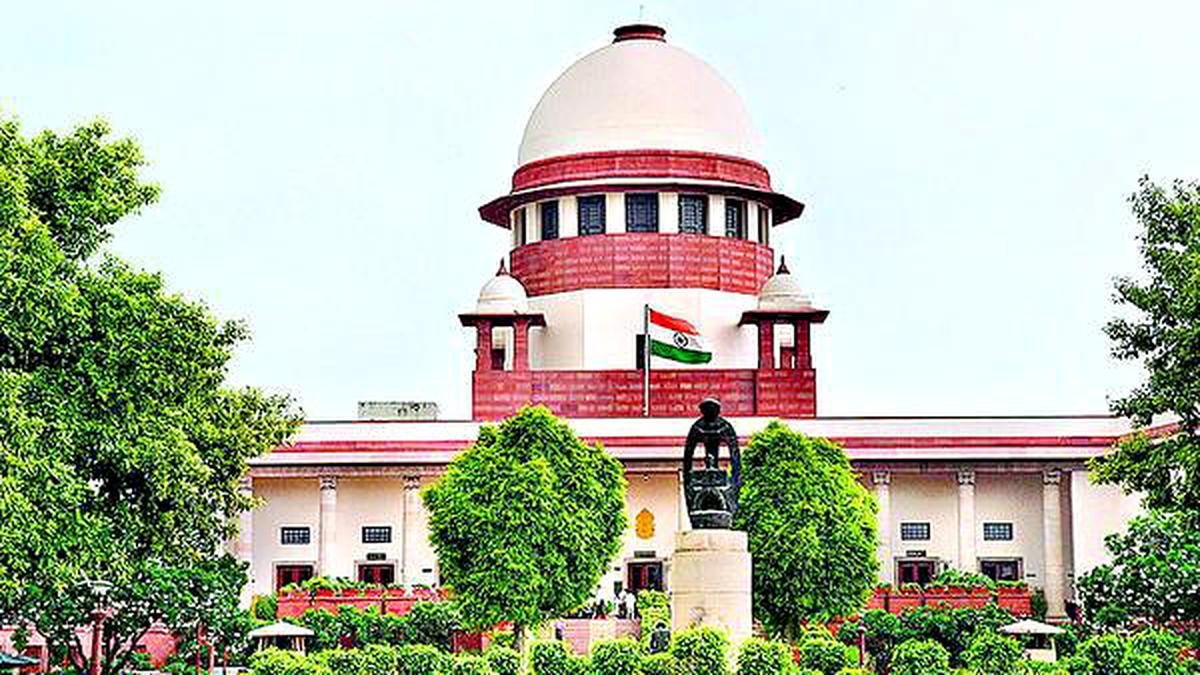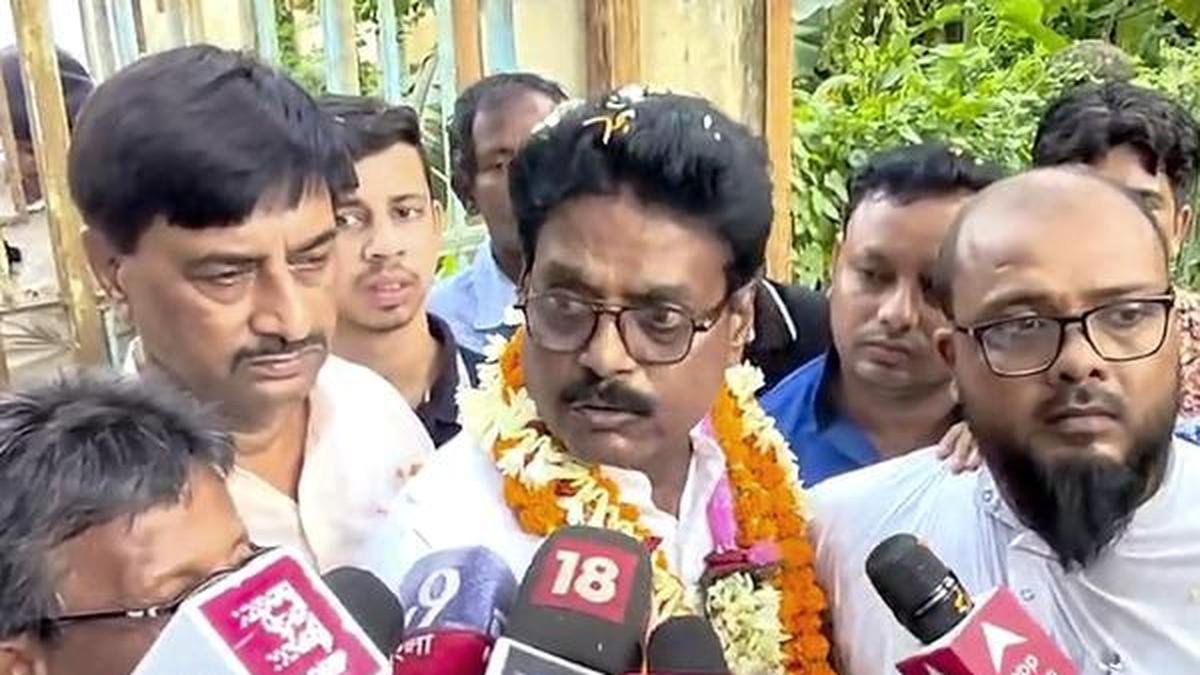
The Supreme Court on Wednesday (October 7, 2026) refused to interfere with a Calcutta High Court decision granting interim bail to Congress Nandigram Assembly by-election candidate Milan Pradhan a day after the polling.
A Bench of the Chief Justice of India Surya Kant and Justice V. Mohana disposed of the State of West Bengal’s challenge to the High Court order.
The Bench did not comment on the merits of the cases registered against Mr. Pradhan. It said the State was free to raise all contentions against Mr. Pradhan in the appropriate court if he seeks an extension of interim bail or regular bail.
Need to surrender: Solicitor General
Solicitor General Tushar Mehta informed the top court that Mr. Pradhan had to surrender on October 21, 2026.
Justice Joymalya Bagchi, who is part of the regular Bench headed by Chief Justice Kant, had recused himself from hearing the State of West Bengal’s plea against Mr. Pradhan on October 5. The judge had cited a conflict of interest, noting that he had represented some of the involved parties in the underlying cases during his time in private practice. Due to his recusal, the court had adjourned the State’s case against Mr. Pradhan to October 7, which happened to be a day after the polling.
On September 30, the State had orally sought an urgent hearing of its petitions. However, the court had said it had a lengthy board of cases, before posting the petitions on October 5. The Bench had not budged despite Mr. Mehta’s attempts to convince the court of the urgency, saying one of the cases against Mr. Pradhan involved murder.
The State had moved multiple petitions against the High Court, one each for the six FIRs registered against the Congress candidate.
Mr. Pradhan’s counsel had submitted in the High Court that his client was arrested on September 18 in connection with an FIR filed 19 years ago. The High Court had also taken note of the fact that Mr. Pradhan was taken into custody only after filing his nomination papers. The cases against him related to the 2007 Nandigram agitation and involved allegations of rioting and murder.
The High Court had noted in its decision that the events at Nandigram formed part of the history of West Bengal, particularly the farmers’ struggle to protect the land acquisition to which they were deeply attached.
“The petitioner is a political activist who was associated with the land movement at Nandigram in 2007. His political involvement is also evident from his participation in the present election as the candidate of a political party,” the High Court had observed.