Bench led by CJI Surya Kant clarified that the interim protection would not extend to "anti-social elements" or persons having criminal records.
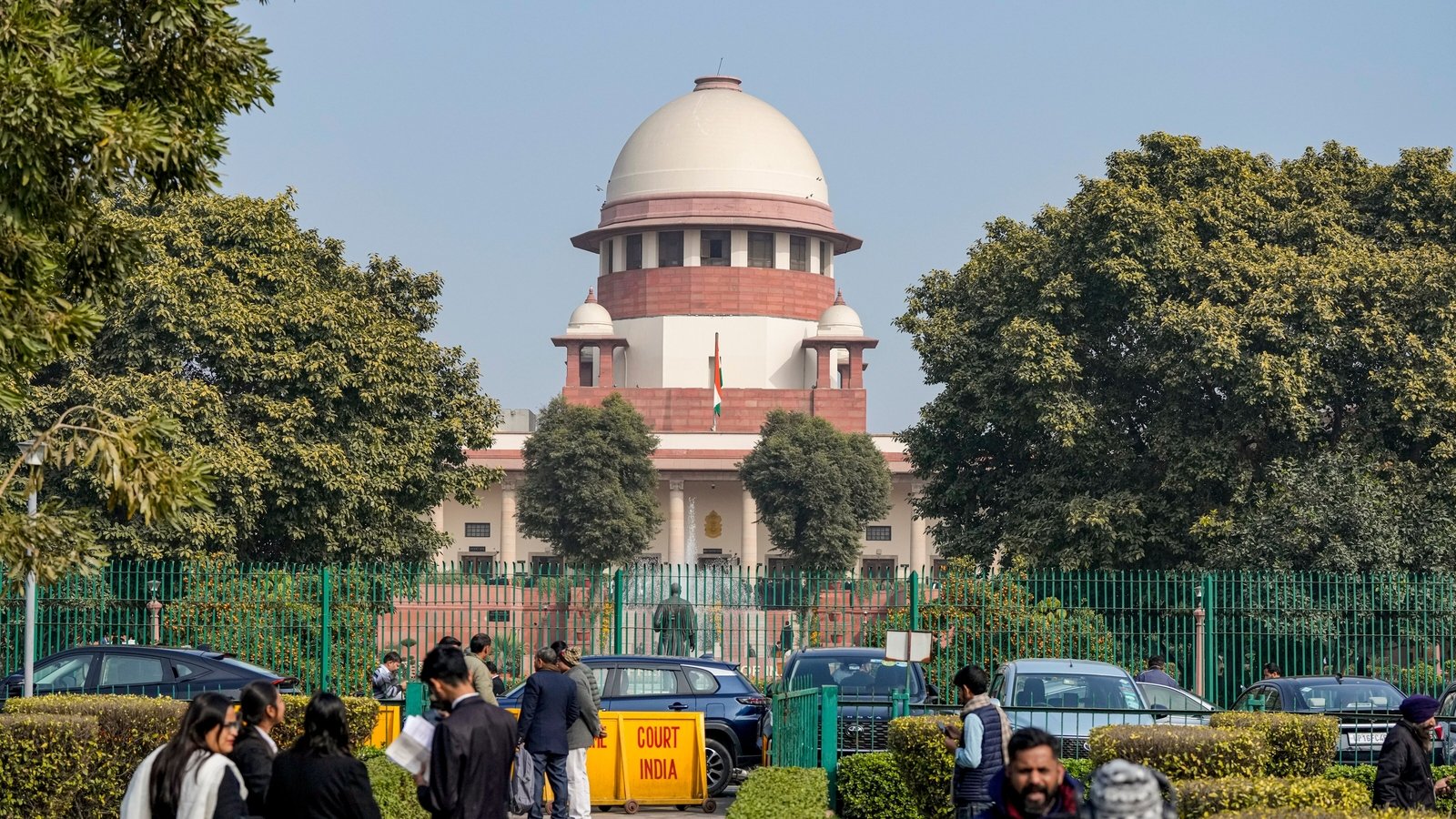
Updated on: Jul 28, 2026, 12:54:22 IST By Utkarsh Anand Prefer HTon Google Share via Copy link The Supreme Court on Tuesday held that the violence during the recent student protests in Delhi and across several states warranted a “thorough, fair and impartial” investigation, while directing that all minors arrested during the demonstrations be released immediately and restraining police from taking coercive action against protesting students or making their personal data public.
Track live updates on monsoon session of the Parliament A bench led by Chief Justice of India Surya Kant and comprising justices Joymalya Bagchi and V Mohana, however, clarified that the interim protection would not extend to "anti-social elements" or persons having criminal antecedents.
Issuing notices to the Union government and the chief secretaries of Delhi, Maharashtra, Bihar, Assam, Kerala, West Bengal, Madhya Pradesh and Uttar Pradesh, the court said allegations of police excesses as well as violence against police personnel required an independent probe.
The order came on a batch of petitions alleging excessive force during protests over the NEET examination controversy, including the July 20 “Sansad Chalo” demonstration in Delhi and subsequent protests in several states.
During the hearing, the bench observed that the protests were constitutionally protected so long as they remained peaceful.
“It was completely a peaceful protest by students raising demands.
Such a protest is permissible and protected under the Constitution,” observed the CJI, while cautioning that peaceful demonstrations were often infiltrated by “uninvited guests with agendas”.
So why should there not be an independent probe into all of this,” the bench remarked.
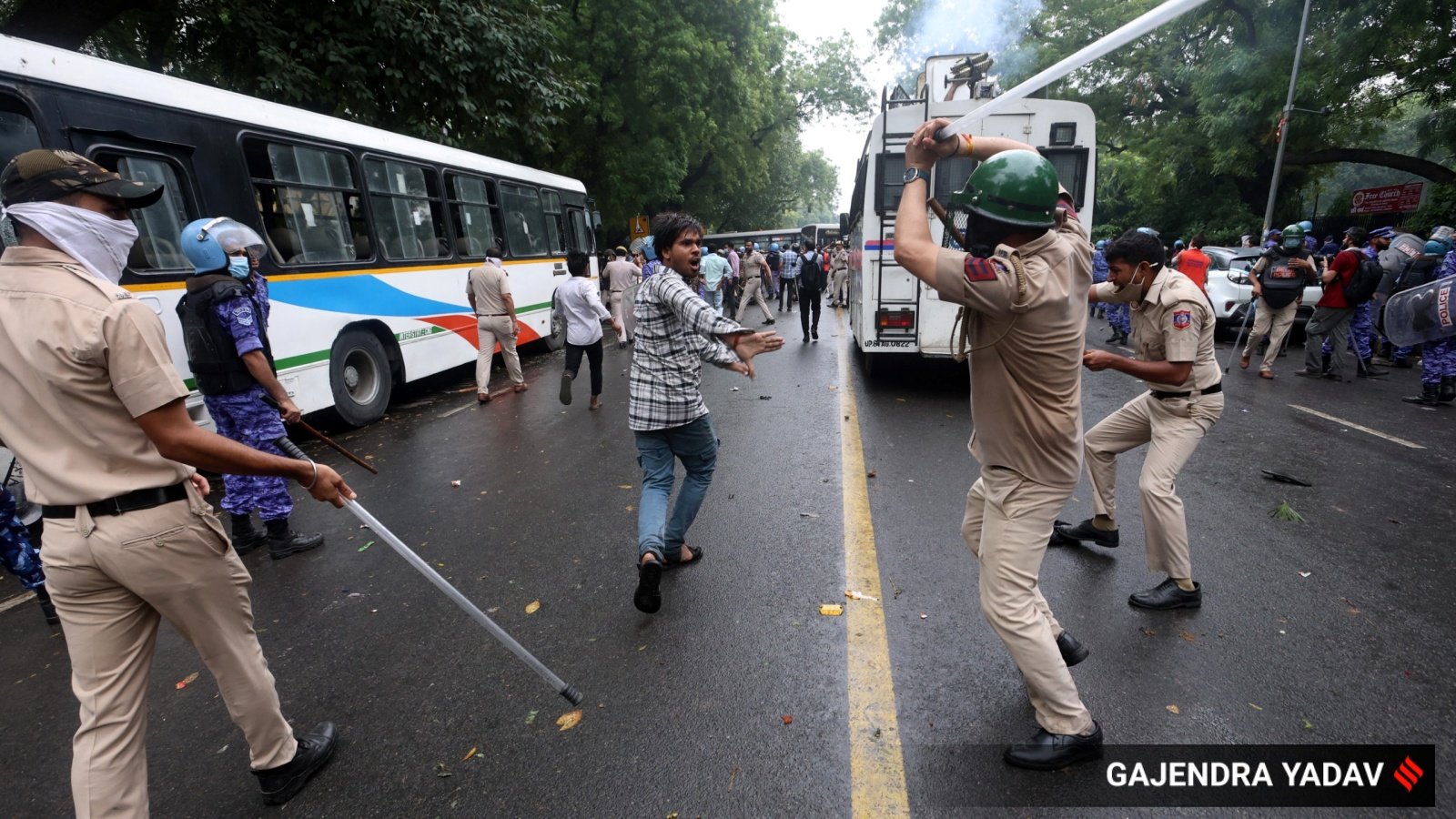
The court took note of allegations regarding the use of pellet guns, electric batons, lathi charges, assault on women protesters and media personnel, and claims that police personnel in civilian clothes had participated in violence.
“Use of pellet guns, electric batons and lathi resulting in life-threatening injuries are some of the issues...
Excessive use of pellet guns is something that needs to be looked into,” it said.
At the same time, it recognised allegations that more than 200 police personnel had suffered injuries during the protests.
“If students have suffered in any manner, perpetrators have to be brought to book,” submitted Mehta, while also urging that attacks on police officials be investigated.
He suggested that anti-social elements may have infiltrated the demonstrations and said he did not believe students themselves would have engaged in violence.
The bench agreed that both narratives required examination.
“There is always a danger of discrediting a peaceful movement,” remarked the bench, adding that a “scientific and evidence-based probe” rather than prima facie conclusions was necessary.
“We are contemplating a high-powered investigating committee which could also look into incidents of violence outside Delhi,” the bench said.
Significantly, the court also indicated that it may revisit its earlier jurisprudence governing police handling of protests.
“The previous judgments with the passage of time may require some modifications...
A time has come to collate all these principles and update them,” emphasised the bench, while inviting stakeholders to suggest changes regarding the permissible use of tear gas and other force-control measures.
As an interim measure, the court directed preservation of CCTV footage, drone recordings, body-worn camera footage, wireless communication records and PCR calls relating to the protests.
It also ordered that police preserve digital data of protesters but refrain from releasing any personal information in the public domain.
The matter will now be heard next Monday, when the Centre and the states are expected to place their responses on record.
Operating round the clock, the desk brings together experienced editors, reporters and correspondents to deliver fast, accurate and contextual reporting across subjects that influence public policy, governance, business, society and international affairs.
The HT News Desk covers politics, elections, government policies, the economy, business and markets, science and technology, the environment, law and order, infrastructure, education, climate issues and geopolitics, while closely tracking developments across states, institutions and global capitals.
The team also leads coverage of major breaking news events, policy announcements, court proceedings, natural disasters, public emergencies and significant international developments.
Reports published by the newsdesk are based on information gathered from reporters on the ground, official statements, government agencies, court records, regulatory filings, recognised institutions and other authoritative sources.
Stories undergo editorial scrutiny and verification processes to ensure accuracy, fairness and relevance, and are updated as events evolve and additional information becomes available.