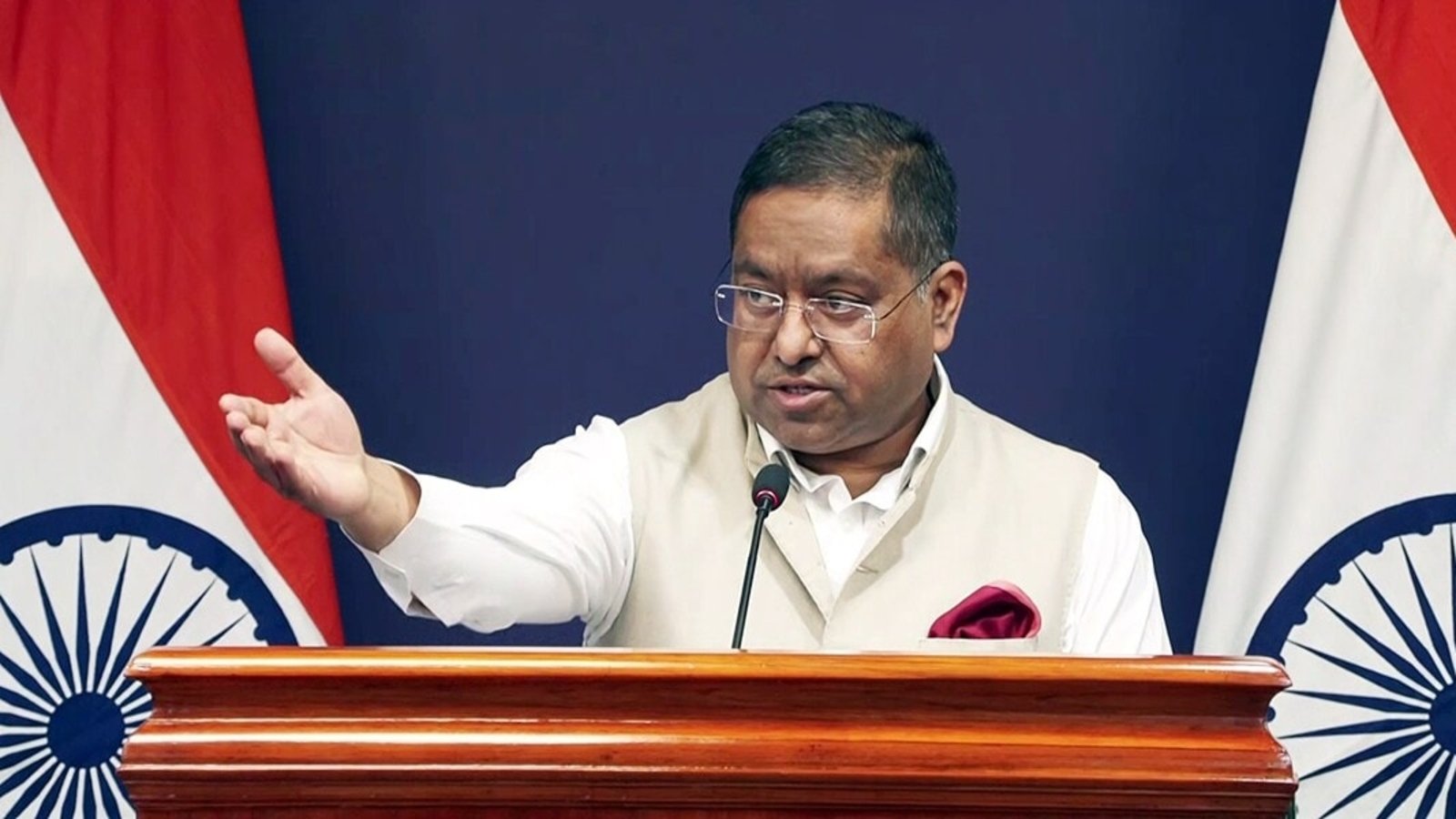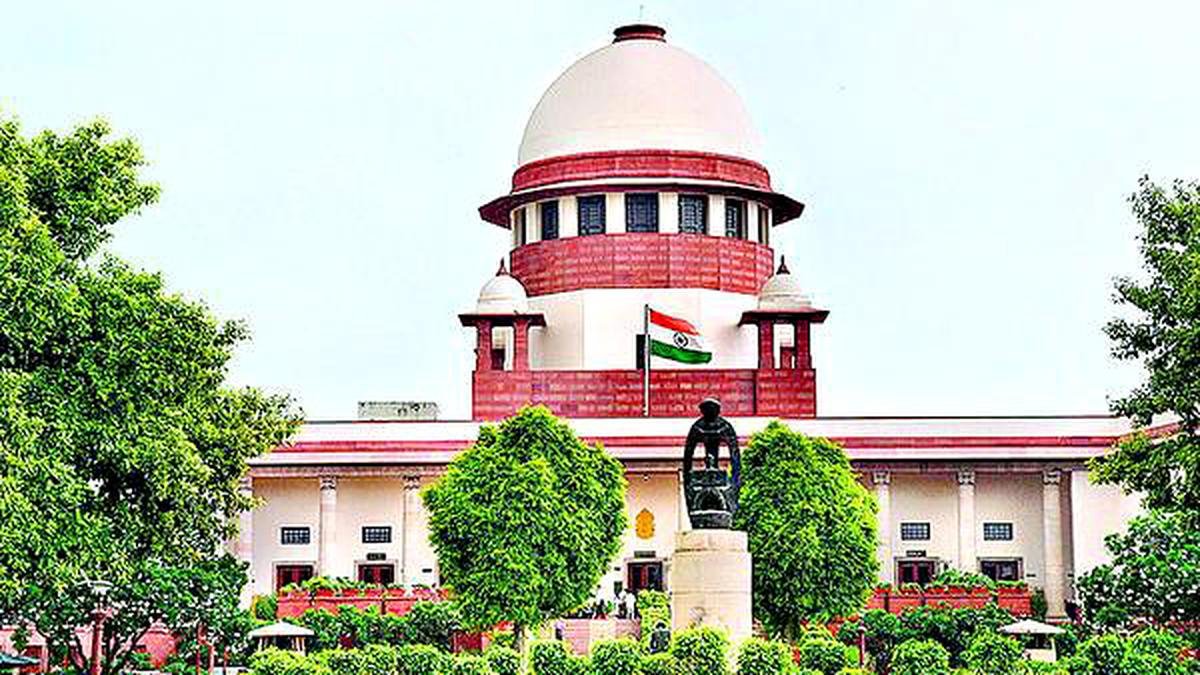
The Supreme Court on Wednesday (September 2, 2026) sought an explanation from Union Home Secretary Govind Mohan on the implementation of its May 2025 judgment directing the Centre to progressively reduce the deputation of Indian Police Service (IPS) officers to senior posts in the Central Armed Police Forces (CAPFs).
While hearing the contempt petition filed by retired CAPF officers, Justice Ujjal Bhuyan orally observed that there was a “strong lobby” and the cadre officers of CAPFs are “completely stifled”.
“Do you think there are no competent officers in CAPFs to hold responsible positions?
This is totally wrong.
There are officers who have served over 25 years in service, they are defending the borders, they are also fighting for us, supreme sacrifices they have made.
There is a strong lobby there... cadre officers are completely stifled,” he said.
Supreme Court issues notice to government on pleas against CAPF Act On May 23, 2025, a Bench of Justice A.S.
Oka and Justice Bhuyan had ruled that the deputation posts of IPS officers in the Senior Administrative Grade (SAG) or up to the rank of Inspector General in CAPFs should be “progressively reduced over a period of time, say within an outer limit of two years.” Justice Oka has since retired.
The court also ruled that Group A officers of CAPFs are “Organised Services” for “all purposes” and asked for a time-bound review of cadre and service rules in six months.
An Organised Group A Service (OGAS) is a structured, cadre-based Group A civil service with defined hierarchy, promotion pathways and cadre control, as distinct from isolated or general civil posts.
In an affidavit, Mr.
Mohan informed the Supreme Court that 46 IPS officers have been brought on deputation to the CAPFs up to the SAG level after the court’s 2025 judgment.
Over 3,000 serving CAPF officers move Supreme Court against CAPF Act In the affidavit, the Union Home Ministry said it had taken a series of steps to implement the Supreme Court’s directions, including initiating cadre reviews across all CAPFs, examining the issue of IPS deputation, and undertaking statutory changes.
The Ministry noted that following the dismissal of its review petition on October 28, 2025, all CAPFs were directed to submit detailed cadre review proposals, which have since been examined by the Ministry and forwarded to the Department of Personnel and Training (DoPT) with the approval of the Home Minister.
The affidavit was filed pursuant to a July 28 order of a Bench comprising Justices Ujjal Bhuyan and Atul S.
Chandurkar, which directed the Secretaries of the Ministry and DoPT to place on record the steps taken for the implementation of the May 2025 judgment.
According to the affidavit, the Border Security Force (BSF) received the highest number of IPS officers on deputation after the judgment, with 13 officers, followed by the Central Industrial Security Force (CISF) with 11, the Central Reserve Police Force (CRPF) with nine, the Sashastra Seema Bal (SSB) with seven, and the Indo-Tibetan Border Police (ITBP) with six.
DoPT told the court that cadre review proposals for the CRPF, BSF, CISF, ITBP and SSB were sent by the Ministry between July 27 and August 3, 2026.
The proposals were examined in accordance with the government’s cadre review guidelines and forwarded to the Department of Expenditure (DoE), along with DoPT’s observations and recommendations on August 17.
DoPT said that after comments are received from the DoE, the proposals will be placed before the Cadre Review Committee headed by the Cabinet Secretary, whose recommendations would subsequently be considered for approval by the competent authority.
The next date of the hearing is September 22.
To circumvent the 2025 judgment, the government enacted the CAPFs (General Administration) Act, 2026, which was published in the Gazette on April 9.
However, five writ petitions challenging the legislation have since been filed and are scheduled for hearing before the Supreme Court on November 18.
The Act, passed by the Parliament on April 2, states that in all CAPFs, 50% of the total posts in the rank of Inspector General, at least 67% posts in the rank of Additional Director General, and all posts in the rank of Special Director General and Director General shall be filled by IPS officers on deputation.
Until now, such postings were done based on executive orders.
The 50% cap on DIG posts, to be filled by Group A CAPF officers, was also done away with, paving the way for higher percentage of IPS deputation.