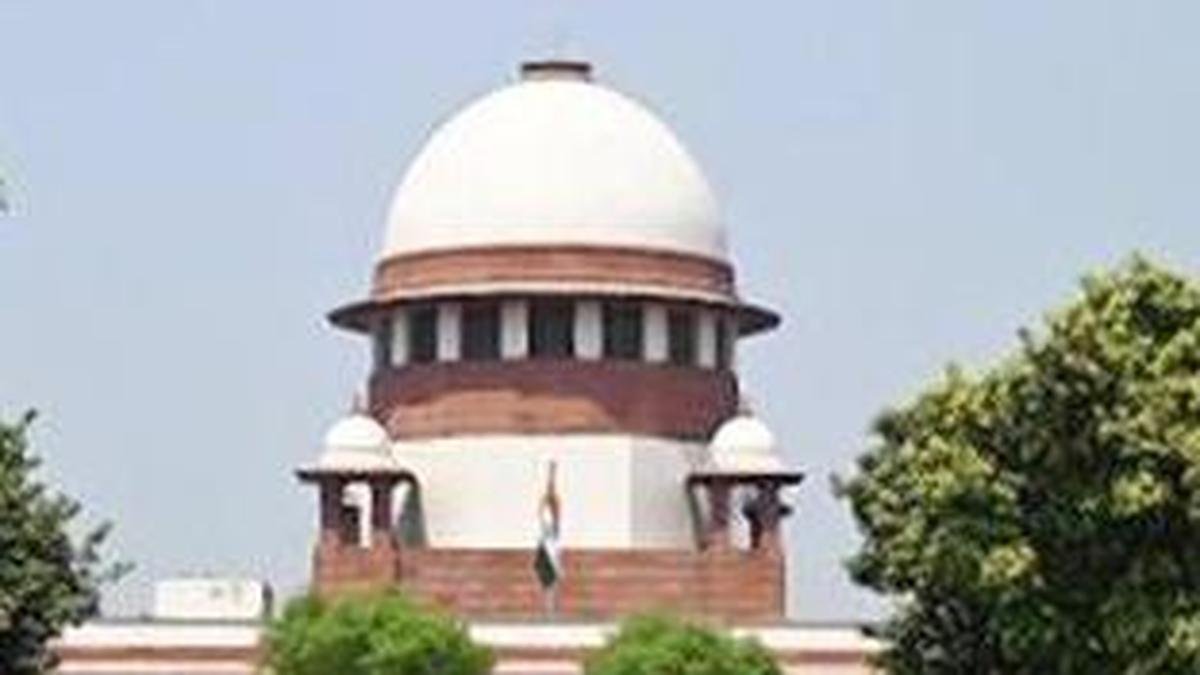
The Supreme Court of India on Thursday (July 16, 2026) passed a ‘standard order’ shifting contempt petitions alleging continued instances of ‘bulldozer justice’ to the State High Courts, reasoning it was too unwieldy to hear them all, and many would require an enquiry into facts.
The judicial move comes in less than two years after the Supreme Court declared illegal demolitions conducted by States on private properties and homes, especially of people accused in criminal cases, as an “arbitrary use of power”.
How ‘bulldozer justice’ undermines the law The court’s November 2024 judgment termed the “chilling sight of a bulldozer demolishing a building, when authorities have failed to follow the basic principles of natural justice and have acted without adhering to the principle of due process” as a lawless state of affairs where “might was right”.
The judgment issued a series of directions mandating due process before demolition and stressing that the State cannot engage in retributive action.
The court had established that erring officials would be hauled up for contempt and personally liable to restore the demolished property.
Why bulldozers threaten due process On Thursday (July 16, 2026), a three-judge Bench headed by Chief Justice of India Surya Kant said High Courts were better suited to hear petitions seeking contempt proceedings against officials for violating the November 2024 judgment.
Each one of the contempt petitions involves disputed facts which would require separate and in-depth enquiries, the Chief Justice said.
The CJI even suggested separate Benches to hear the contempt pleas.
Justice Joymalya Bagchi, on the Bench, pointed out that the 2024 judgment had not specified that only the Supreme Court could hear contempt petitions.
The third judge on the Bench, Justice S.V.
Mohana, said the contempt petitions were from all over the country.
“Whether there is contempt or not would itself be a disputed question.
Maybe these are title disputes after all… In the High Courts, you may get a better opportunity to make your case on facts… Besides, if there is a violation of this judgment throughout the country, as you allege, can everybody come directly to the Supreme Court?” Justice Mohana addressed the contempt petitioners.
Senior advocate Huzeifa Ahmadi, for one of the petitioners, said some of the violations raised in the contempt proceedings were egregious.
“Whether we could come directly to the Supreme Court depends on the facts of each case.
We could come, even if it gets a little cumbersome, if the Supreme Court’s directions are being violated all over India… Ultimately, it is the rule of law which stands at a much higher footing,” Mr.
Ahmadi responded to Justice Mohana.
Mr.
Ahmadi was appearing in a contempt petition on the partial demolition of the Madni Masjid in Hata town of Uttar Pradesh.
Senior advocate C.U.
Singh flagged that the court’s intervention in 2024 had come at a time when State authorities and local administrations would proudly display bulldozers near demolished structures.
“But the demolitions have continued in the teeth of the 2024 judgment, as if cocking a snook at the court,” Mr.
Singh submitted.
He was appearing in a contempt petition from Maharashtra.
Ahmadi said the powers behind the bulldozers pick and choose their targets.
“Bulldozers must be used when the rule of law is thwarted by a comfortable corruption between municipal authorities and illegal encroachers… Bulldozers should not be used as a means of targeted reprisal by the State,” Justice Bagchi agreed.
The court finally issued the standard order, transferring the contempt petitions to the relevant High Courts.
It said the High Court could obtain the necessary records and evidence from district courts while deciding these petitions.
Any interim protections granted by the Supreme Court in these cases would continue.
After dictating the order in open court, the CJI said the order would not be published for the next two days so that petitioners could file affidavits suggesting any factual additions to the order.