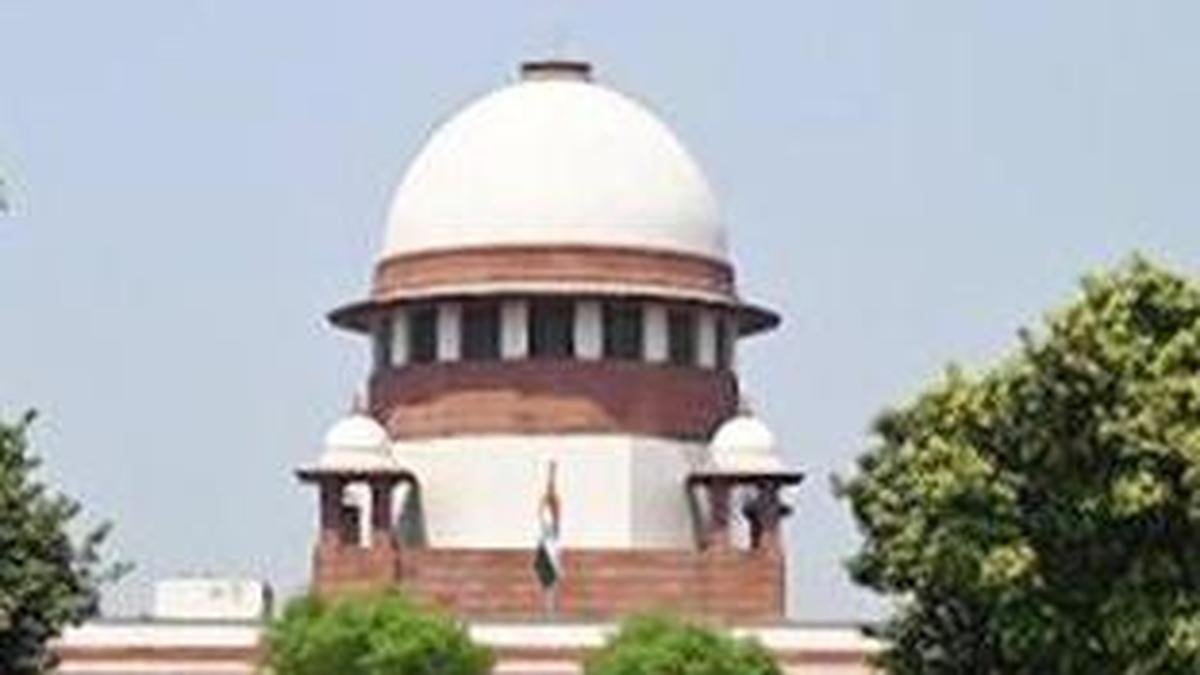
The Supreme Court of India sought responses from the Centre and States on Friday (July 17, 2026) on a petition seeking a declaration that persons born with congenital variations in sex characteristics constitute a distinct and identifiable class.
A three-judge Bench headed by Chief Justice of India Surya Kant issued notice on the petition filed by advocate Shamshravish Rein to direct the Union government to frame separate statutory guidelines within six months to provide distinct recognition, protection and an affirmative support framework for intersex persons, that is, individuals born with congenital variations in sex characteristics (differences of sex development or DSD).
The fight for intersex rights in India: a medical ethics and social justice perspective “On one hand are individuals who, after puberty or during the course of personal identity development, identify themselves as a gender different from the sex assigned at birth.
On the other hand are individuals who are born with congenital variations in sex characteristics, where the infant, at the very moment of birth, is medically identifiable as neither distinctly male nor distinctly female due to ambiguous genitalia, atypical chromosomal patterns, gonadal variations or other intersex conditions.
The latter category represents a biological reality present from birth and not a matter of later identity formation,” the petitioner explained.
Traumatic challenges These children face traumatic challenges, including pressure for forced medical interventions, social abandonment, lack of documentation clarity and exclusion from inheritance, education and employment structures designed around a strictly binary understanding of sex.
Supreme Court refers to three-judge Bench a plea to protect the rights of intersex children The petition urged the court to direct the government to constitute a National Medical Protocol Committee for Intersex Care within three months and order a nationwide prohibition of medically unnecessary, irreversible surgical or hormonal interventions on intersex infants and children unless necessary to address a life-threatening medical condition.
Ms.
Rein said recognition and legal safeguards for intersex persons would include reservations in education and public employment, clarification in inheritance laws, linguistic recognition through dignified terminology, and administrative inclusion in birth and identity documentation.
The failure to recognise this category distinctly violates Article 14 (equal protection of law), Article 15 (non-discrimination) and Article 21 (dignity, bodily autonomy, identity), the petitioner-advocate said.
‘Not a deviation but citizens’ “The Constitution of India is not a binary document.
It is a transformative charter.
Intersex persons are not an anomaly to be corrected.
They are citizens to be protected.
Intersex persons are not the ‘other’.
They are not a deviation.
They are citizens entitled to full Constitutional dignity.
Recognition must be precise, protection must be specific, and equality must be meaningful,” Ms.
Rein submitted.
The petitioner also sought interim relief from the court, including the suspension of medically unnecessary genital surgeries on intersex infants, a direction to allow provisional neutral birth entry, and the creation of an informed consent protocol.