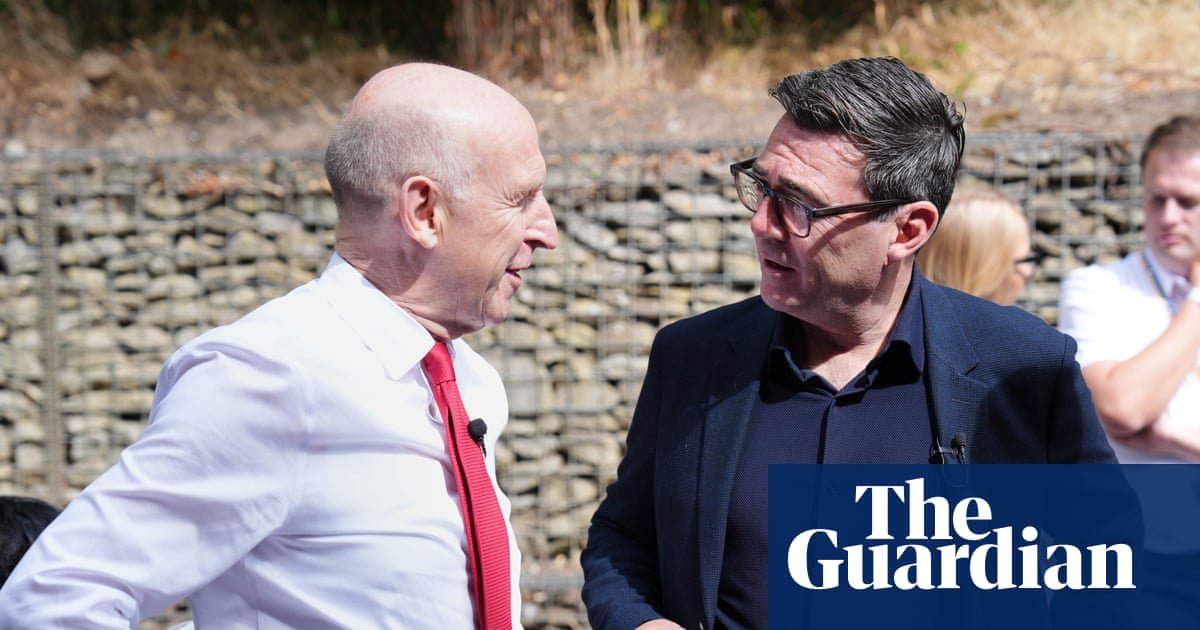
As economic circumstances worsen, the PM’s commitments have left him and the chancellor in a tight spot When Andy Burnham made his first speech after returning as an MP, he promised that as prime minister he would oversee “the most significant change moment in our politics for 40 years”.
His style, direction and communication has been a big shift from Keir Starmer’s approach, but as he heads into the autumn, the new prime minister faces some very similar problems.
With an early budget in late October, and worsening economic circumstances, Burnham has made promises and commitments that put him in a tight spot.
Here are some of the constraints over the coming months that Burnham and the chancellor, John Healey, must contend with in their autumn budget.
1.
Fiscal rules The biggest risk of Burnham as prime minister was always whether he would spook the bond markets and set in train a Liz Truss-style meltdown.
Starmer’s allies often played up this fear but there is no doubt that Burnham had to ensure that markets knew he was a serious operator.
Gilt yields rose after an interview last year in which he said the government was “in hock to the bond markets”.
So, Burnham has committed to Rachel Reeves’s fiscal rules on debt and borrowing, though he has indicated he will “use, obviously, any flexibility within them” where he can borrow to fund further investment.
2.
Tax promises Burnham has said he will “stick to the manifesto”, which promises no increases in income tax, national insurance or VAT, though he cautioned in an interview earlier this week that the public needed to be “realistic” about what needed to be funded and how difficult more spending would be.
That decision to stick to no rises in personal taxation had left businesses fearing a tax raid – and Burnham has been urged by some leftwing and union leaders to consider further wealth taxes.
But the prime minister told the FT this week he was loth to do more to increase the costs of doing business and did not want to target “wealth creators”.
With each utterance, the possibilities of revenue raisers become ever narrower.
Burnham hinted in the past that he hoped to unfreeze the personal allowance, which would amount to a tax cut, but has recently been more cautious about this because of the costs.
3.
Economic turmoil Reeves left £23.6bn of “headroom” in her last budget, which gives Healey a buffer to meet the fiscal rule of balancing day-to-day spending with receipts.
But the Iran war and subsequent rises in inflation and borrowing costs for servicing Britain’s national debt, which is now almost £3tn, are likely to have an effect on that headroom.
Treasury sources say the impact may not be as much as feared, but with the strait of Hormuz remaining closed, growth is sluggish and inflation creeping upwards.
4.
Cost of living Burnham has made a number of popular early interventions to help ease the cost of living.
Some, such as cutting VAT on energy bills, are ostensibly funded by cutting existing programmes such as the digital ID scheme, though, as the former minister Darren Jones pointed out, that was never properly costed in the first place.
Healey has suggested there are no further plans to offer energy support at this October price cap, though prices have risen by 4%, wiping out the impact of the VAT cut.
The Treasury will want a contingency plan in place in case more help is needed in January – probably a targeted scheme for more vulnerable households.
The Resolution Foundation has suggested that even a targeted scheme for those earning under £25k would cost about £2bn.
5.
Defence targets The Treasury confirmed on Friday that it would delay setting out when the UK would meet the target of spending 3% of GDP on defence, until next year’s spending review.