The story so far: On July 7, 2026, the Gujarat High Court upheld the verdict of a special court, four years after it had convicted 49 persons in the 2008 Ahmedabad serial blasts case. A Division Bench of Justices A.Y. Kogje and Samir Dave dismissed all appeals filed by the convicts against the special court’s February 2022 judgment, confirming death sentences for 38 members of the banned Indian Mujahideen (IM) and life imprisonment for 11 others. The Bench also accepted the State government’s plea seeking confirmation of the death sentences.
The High Court further directed the State government to pay compensation of ₹10 lakh to the next of kin of each person killed, ₹5 lakh to those who sustained grievous injuries and ₹1 lakh to those who suffered simple injuries. The court directed the State government to disburse the amounts by March 30, 2027.
What is the case about?
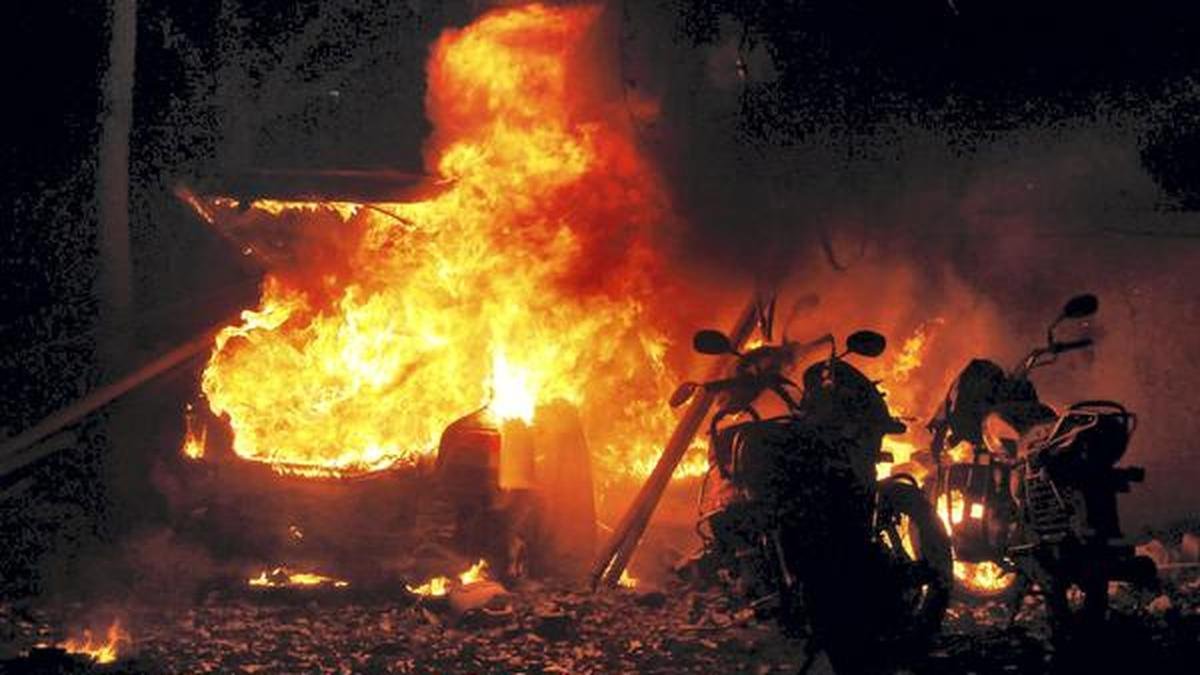
On the evening of July 26, 2008, Ahmedabad witnessed one of the deadliest terror attacks when 21 coordinated bomb blasts struck different parts of the city within 70 minutes, killing 56 people and injuring more than 200. The explosions targeted buses, and public places, besides the trauma centre of Ahmedabad Civil Hospital, where victims of the earlier blasts had been taken for treatment. The following day, another bomb was found and defused in Hatkeshwar, while two live Improvised Explosive Devices (IEDs) were recovered from Maninagar, then represented in the Assembly by the then Chief Minister Narendra Modi. Several other IEDs planted in Surat also failed to explode. They were found and defused.
Who were the convicts?
The Gujarat Police alleged that the attacks were carried out by members of the banned Indian Mujahideen (IM), who had planted low-intensity bombs concealed in tiffin boxes mounted on bicycles, and arrested several suspects over the weeks.
Of the 78 persons who stood trial, 49 were convicted and 28 acquitted for lack of evidence. The convicts included former Students Islamic Movement of India (SIMI) leader Safdar Nagori and several alleged members of Indian Mujahideen (IM) from Gujarat, Madhya Pradesh, Kerala, Telangana, Maharashtra, Uttar Pradesh, Karnataka and Rajasthan. Another Pakistan-based militant outfit, Harkat-ul-Jihad-al-Islami (HuJI), also claimed responsibility for the attacks.
What is Indian Mujahideen?
The Indian Mujahideen emerged around 2003 as a home-grown Islamist terror outfit allegedly formed by radicalised members of the banned Students Islamic Movement of India (SIMI), including Iqbal Bhatkal, Yasin Bhatkal and Riyaz Bhatkal among others. It was reportedly active since the bombing of Dashahwamedh Ghat in Varanasi in 2005. The banned outfit was accused of carrying out a series of coordinated bombings across cities, including Jaipur, Bengaluru, Ahmedabad and Delhi in 2008.
Investigators have maintained that IM functioned through decentralised modules operating across several States and used encrypted communications, sleeper cells and improvised explosive devices to execute attacks. The organisation was later designated a terrorist organisation under the Unlawful Activities (Prevention) Act (UAPA).
What was the motive behind the attacks?
The police alleged that IM operatives had planned and executed the blasts in retaliation for the 2002 post-Godhra riots in Gujarat. According to them, the accused viewed the attacks as revenge and had planned a coordinated series of explosions targeting crowded civilian locations.
Is it linked to 26/11 Mumbai attacks?
There was no direct operational link established by investigators or accepted by the courts between the Ahmedabad serial blasts and the November 26, 2008 Mumbai terror attacks.
The attacks were attributed to the IM, whereas the 26/11 Mumbai attacks were carried out by operatives of the Pakistan-based Lashkar-e-Taiba. Investigators treated them as separate conspiracies.
Why did the trial take so long?
It took more than a decade for the special court and another four years for the High Court as the case was among the most complex terror prosecutions in the country. During the lengthy trial, which saw several twists and turns, the prosecution examined more than 1,100 witnesses and produced thousands of documents, forensic reports, electronic records and material exhibits before Special Judge A.R. Patel, who began hearing the case in 2009, a year after the blasts.
The investigation covered multiple States and involved 35 cases together, including 20 FIRs registered in Ahmedabad in connection with the 21 explosions and 15 cases from Surat, where several IEDs were recovered.
Proceedings were also delayed by numerous interlocutory applications, challenges to confessional statements, procedural objections and the disruption caused during the COVID-19 pandemic.
The High Court itself heard arguments over the matter extensively from March 2025, with day-to-day hearings being conducted from February this year before reserving its verdict.
The proceedings initially took place inside Sabarmati Central Jail for security reasons before shifting largely to video conferencing. Twenty-six prosecution witnesses were designated as star witnesses and their identities were kept confidential for security reasons.
What evidence did the prosecution rely upon?
The prosecution presented a combination of forensic evidence, call detail records, electronic evidence, recoveries of explosives and other materials, witness testimonies and statements by four accused who turned approvers. The State argued that the cumulative evidence established the existence of a larger conspiracy behind the serial blasts.
What are the defence’s arguments?
The convicts challenged the special court’s judgment before the High Court, disputing the prosecution’s evidence and seeking acquittal. During the lengthy proceedings, some accused also attempted to retract confessional statements made earlier after turning approvers.
How was the compensation determined?
The High Court exercised its powers to direct victim compensation after affirming the convictions. Immediately after the attacks, the Centre and the Gujarat government announced separate compensation for the victims. Then Prime Minister Manmohan Singh initially announced an ex gratia payment of ₹1 lakh for the families of those killed, later increasing it to ₹3.5 lakh during his visit to Ahmedabad. He also announced ₹50,000 for each injured victim. The Gujarat government, headed by Mr. Modi, announced ₹5 lakh for the family of each deceased victim.
How unusual is this judgment?
When the special court delivered its verdict in February 2022, it became the first court in Indian judicial history to award the death penalty to 38 convicts in a single case. By upholding those sentences, the Gujarat High Court has affirmed one of the largest capital punishment verdicts ever delivered by an Indian court.
What happens next?
The High Court’s judgment is not the final stage of the legal process. The convicted persons are expected to challenge the verdict before the Supreme Court. If the Supreme Court upholds the death sentences, the convicts can still seek relief through review and curative petitions. The final constitutional remedy would be a mercy petition before the President of India.
How did the State government react to the verdict?
Hailing the verdict, Deputy Chief Minister Harsh Sanghavi said it was one of the biggest legal victories against terrorism and a landmark judgment in India’s judicial history. He said the investigation team had worked tirelessly over the years without any legal lapses or compromise, making the verdict possible.
“Today, the Gujarat High Court delivered one of India’s strongest and most historic verdicts, with near-total conviction and the maximum punishment upheld for the guilty,” said Mr. Sanghavi, who also holds the Home portfolio.