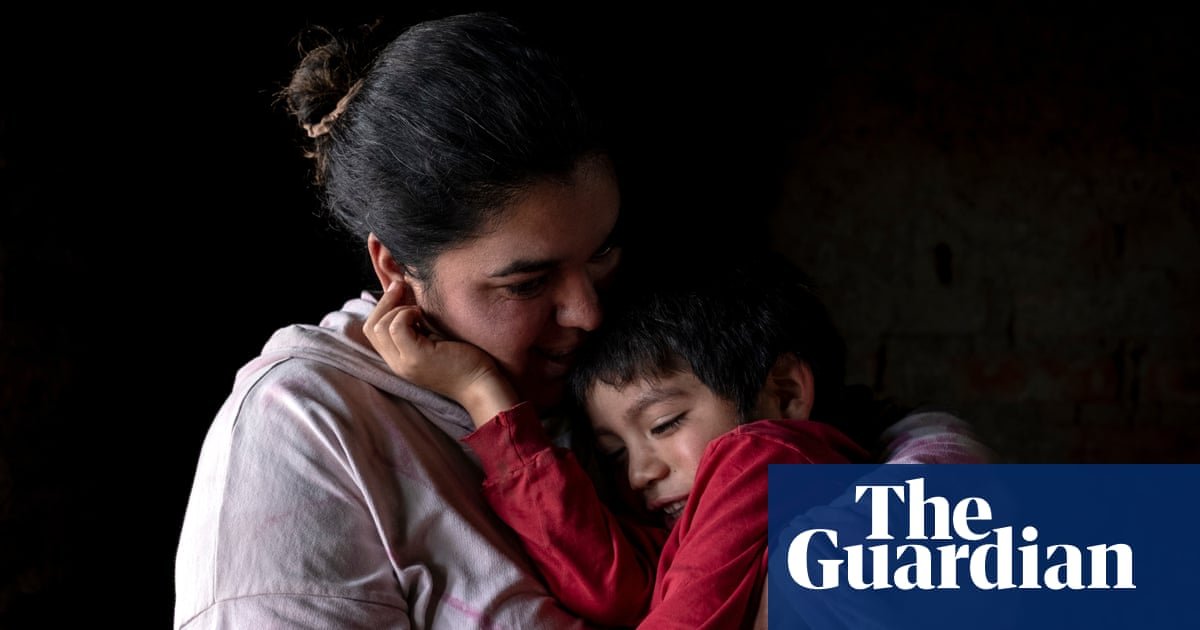
Families in Vaca Muerta, the centre of Patagonia’s shale operation, report cancers, miscarriages and pollution
In Allen, a small town in Argentine Patagonia, many people living on the same street ended up falling ill. For some, it was severe migraines, nausea or skin irritation. For others, cancers, congenital abnormalities, miscarriages or stillbirth seemed to affect foetuses or children. People say it all started 13 years ago – when a well was drilled near their homes to extract gas and oil.
Calle Ciega 10 [Dead-end Street 10] lies on the eastern edge of Vaca Muerta, a vital area for Argentina’s economy, home to the world’s second-largest reserve of shale gas and fourth-largest reserve of shale oil. The region has more than 2,600 active wells, including one on this small street where about 20 families live, most of them seasonal workers on fruit farms.
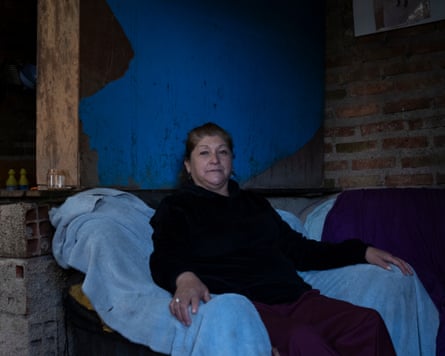
“There have been cases of cancer, and several women had to move away because they could not carry their pregnancies to term. They kept losing their babies. Some were born with illnesses, or died shortly after birth,” says Roxana Valverde, who has lived in the area for nearly 30 years. “Before the well, we didn’t experience these illnesses, or if we did, they were much less common.”
Valverde adds that, during medical appointments, doctors say the illnesses could be caused by pollution from fracking, while acknowledging that, without in-depth studies, it is hard to establish with 100% certainty.
Vaca Muerta covers more than 11,500 sq miles and spans four Argentine provinces. Since 2012, under the government led by Cristina Kirchner, the area has been extracting gas and oil using fracking, a technique that injects water, sand and chemicals at high pressure to fracture rock and release trapped hydrocarbons.
Now, under Javier Milei, the Argentine government is heavily reliant on Vaca Muerta’s gas and oil resources to help the country recover from years of economic crisis, and has opened the door to foreign companies to extract and export hydrocarbons.
By the end of 2025, the all-time production record had been broken. For the first time in the country’s history, crude oil overtook soya bean meal as its leading export, partly driven by European companies that invested in the Vaca Muerta region to find another option as well as Russian gas.
According to a report from the NGO OpSur, 33% of the unconventional gas and 39% of the unconventional oil extracted in Vaca Muerta are controlled by the state-owned energy company YPF, while the rest is handled by foreign companies, including the US company Chevron, France’s TotalEnergies and the UK’s Shell.
Fracking is a highly invasive technique that poses environmental risks and has been linked by numerous scientific studies to ecological harm and health issues for people living nearby, such as respiratory and skin conditions, cancer, congenital disabilities, miscarriages and pregnancy complications.
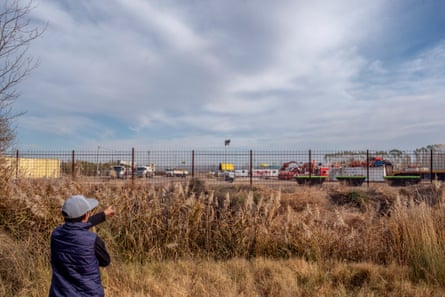
Calle Ciega 10 is in the countryside, and the families living there come from low-income backgrounds. The houses are small and dilapidated. Children play and ride bikes just a few metres from the well, while workers and a crane operate nearby.
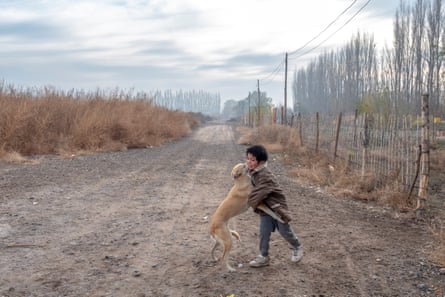
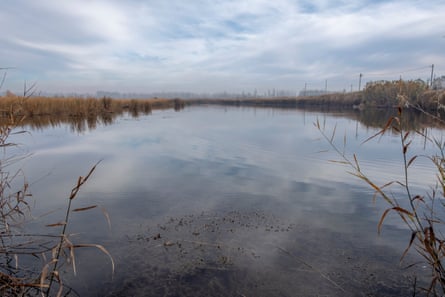
According to those who live in Calle Ciega 10, the well ceased operations in 2019, but work resumed in May this year. They have repeatedly tried to file complaints, but the courts have never heard their pleas. They suspect that several incidents at the well could have contaminated a pond from which they draw water for their daily needs.
The family of Analía Celeste Saldías has faced numerous health issues. In 2023, while pregnant with her youngest daughter, Bianca, Saldías faced complications, including what she described as the beginning of a stroke.
Her son Joel was born in 2020 with three lungs and had surgery as a baby to correct a severe congenital malformation. In 2019, her eldest daughter, Michelle, experienced serious skin problems, with painful patches on her back, arms and torso.
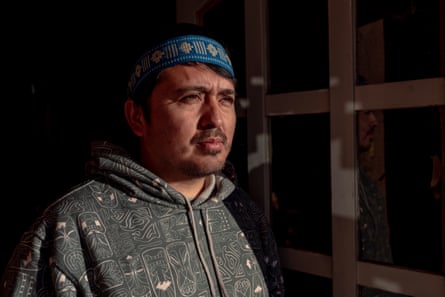
Since fracking operations began, health concerns have spread beyond Calle Ciega 10. Lef and Jorge Nawel are members of the Zonal Xawvn Ko Mapuche confederation, an organisation that brings together 14 Indigenous communities from different parts of Vaca Muerta.
The Mapuche people, the largest Indigenous group in Argentina, are frequently among those most affected in the region due to the widespread construction of wells on their ancestral lands.
The Nawels say that the community has seen numerous cases of miscarriage and nervous and respiratory system disorders, particularly among children.
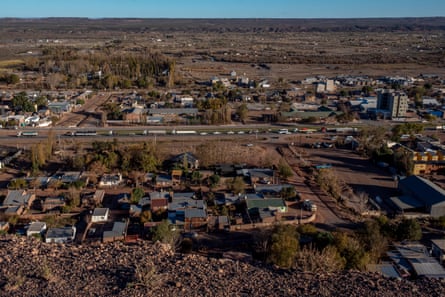
In Añelo, a small town considered the operational core of Vaca Muerta, Lorena Bravo Maripe, the ancestral leader of the Añelo Lof Campo Maripe Mapuche community with 106 members, also reports numerous health issues in her group. That includes several cancer cases – such as her mother’s breast cancer and her own cervical cancer – as well as numerous respiratory and skin ailments.
“This is a polluting industry and, instead of monitoring it, the state is completely absent,” she says, adding that the community raises livestock and has noticed that animals are often born disfigured or experience complications during birth.
The rise in serious illnesses is raising concerns among doctors working in Vaca Muerta. Silvia Ávila, dean of the faculty of medicine at the National University of Comahue, says the government must monitor citizens’ health, ensure transparency and publish results.
“The entire population, including healthcare workers, should be informed about the public policies and monitoring carried out by the state and companies regarding people’s health – but we are not,” she says.
“We lack medical and scientific research,” says Alan Rocha Varsanyi, a researcher at OpSur. “It is highly possible that we are already paying the health costs of this today, but we lack the tools to determine whether or to what extent this is the case.”
When approached for interviews, health ministers in Neuquén and Río Negro provinces declined to comment. YPF, Chevron, TotalEnergies and Shell were approached for comment.
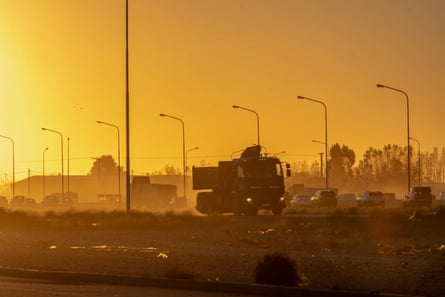
Añelo is surrounded by hundreds of active wells, yet hydrocarbon extraction is not the only threat to the health of people living in Vaca Muerta. The region also hosts numerous open-air toxic waste dumps, and hundreds of lorries pass through daily.
People’s wellbeing is at the heart of Vaca Muerta’s most critical environmental lawsuit: the Comarsa case, initiated after complaints from local people, environmental groups and civic organisations.
Comarsa, a waste management company, is accused of storing rather than properly handling and disposing of more than 300,000 cubic metres of toxic waste, now in a dump in Neuquén, a city with more than 300,000 inhabitants.
If the courts have not yet considered the allegations, prosecutor Maximiliano Breide Obeid, the head of the environmental offences and special laws unit in Neuquén, leads the new case and has no doubt about the dangers posed by toxic waste such as that found at the Comarsa dump.
“We have established that the nearest homes are just 200 metres from the toxic waste,” he says. “We believe there is an immediate danger to people’s health, and that there will be a future danger if the situation is not resolved.”
A crucial piece of evidence for the prosecution is a report by the forensic medical corps, where doctors state that contact with the toxic waste from the dump – polluting soil, water and air – can lead to severe health issues such as respiratory, skin, neurological, stomach and kidney problems, as well as cancer and miscarriages.
According to the doctors, the waste contains barium, cadmium, lead, copper, mercury and arsenic – heavy metals that can be toxic to humans. Comarsa has been approached for comment.
The prosecution says that the company stored toxic waste on the surface and underground without properly sealing the soil, violating safety regulations and risking contamination of water and soil. The air around the dump emits a very strong odour, making it unbearable to breathe, and within minutes, people’s eyes start to water.
Yet new plots for residential building are being developed around the dump, just a few dozen metres away.
This article was developed with the support of Journalismfund Europe
Southern frontlines: Latin America and the Caribbean