Composite: Guardian Design/Getty Images Composite: Guardian Design/Getty Images The hill I will die on: Cheques are still the best way to pay for things Claire Jackson A debit card might be quicker and easier, but there are thrills big and small to be had from whipping out your chequebook It often takes other people to identify your quirks.
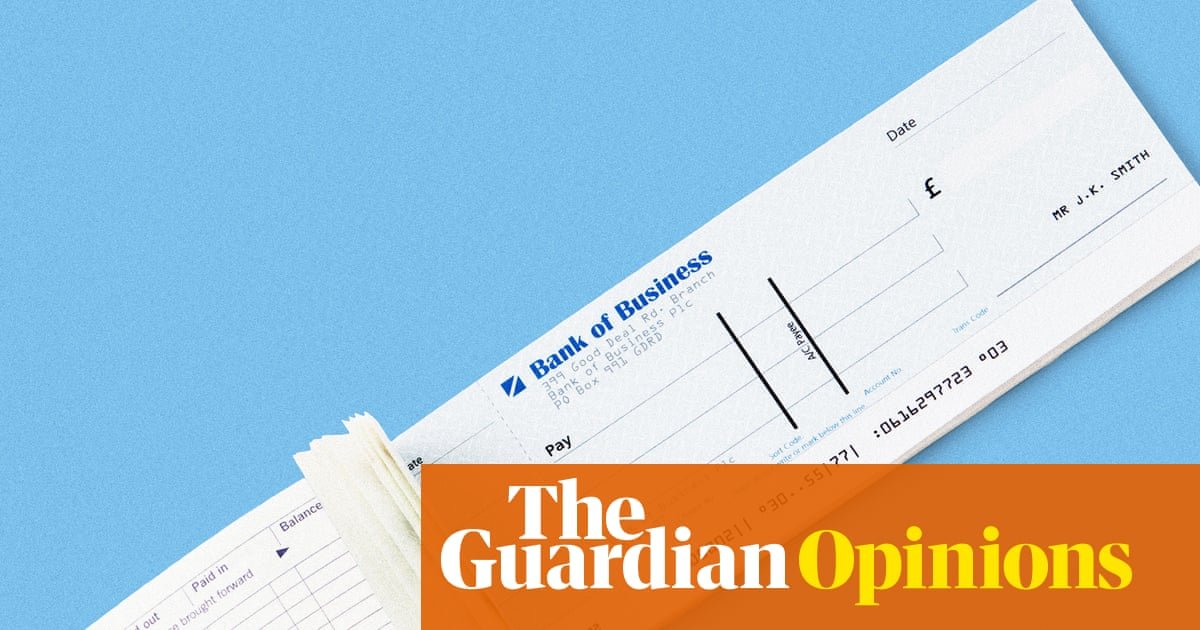
Mine is writing cheques, a fact I was made aware of recently by a younger colleague, who watched with bemusement as I filled one out.
He’d never seen a chequebook in the wild, he explained, with the air of a naturalist encountering a rare species.
He looked on as I, a millennial, wrote “one hundred and forty-one pounds and thirty pence only”, that last word thrilling in its assertiveness – I will pay my bill, South East Water, and not a penny more!
Having examined the whole procedure, including my procuring a stamp and envelope to send it off, he concluded – as so many have – that the process would be far better executed online.
A friend also politely fed back that, although she appreciates how I “enclose a cheque” in every birthday card to her daughter, could I perhaps just do a bank transfer like everyone else?
While many aspects of the 1990s have resurfaced – baggy jeans, Nirvana T-shirts and casual sexism – the cheque is viewed with the same disdain as dial-up internet.
But I maintain that, if you must pay for something, it is truly the ideal way.
First, scribbling – holding a pen or pencil and feeling it move across the page – is enjoyable.
Paying via cheque thus becomes a simple pleasure – selecting the correct ink (anything other than blue or black is frowned upon; graphite is completely unacceptable), and signing with a writing instrument rather than a finger.
Financial transactions can also be hasty – something I realised after finding myself in debt.
While I now (grudgingly) have a contactless card, I still fear I might tap without checking the amount and lose a fortune.
That would never happen with a cheque.
Inherent trust is required in accepting a cheque, which adds to its affability.
One of my favourite pubs, The Harrow Inn in Steep, Hampshire, politely warns: “We do not take credit or debit cards.
Cash and cheques are welcome.” I discovered this on a day I had neither, and the owner happily served me lunch on the understanding that a cheque would be sent in the post forthwith (it was).
Even when such goodwill is manipulated, the act is described with characteristically charming language – case in point, cheques “bouncing”.
Of course, there are benefits to digital banking, some of them unexpected.
A friend’s young son has a Monzo account for his pocket money.
Having ushered him away from the sweets being sold onboard as they were disembarking a Thames Clipper, she became occupied with her other child.
When she looked up, her son had disappeared.
Just as the boat slipped its moorings, her phone buzzed with a Monzo update that her son had just bought the contraband snacks – realising where he had gone, her family was swiftly united.
But this lady’s not for turning.
I recently got a letter from HMRC informing me that I had overpaid my tax, and outlining the ways in which I might receive my refund.
I don’t think I need to tell you which option I selected. skip past newsletter promotion after newsletter promotion Claire Jackson is a journalist who writes about classical music, art and animals Explore more on these topicsCheques The hill I will die on Banks and building societies comment Share Reuse this content