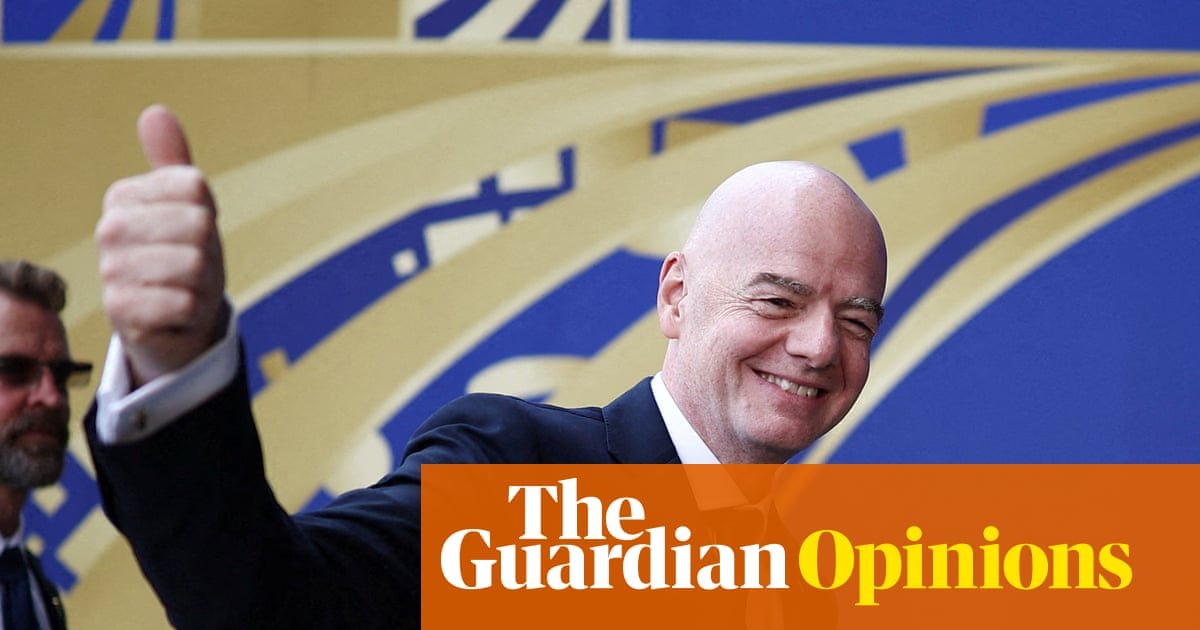
Gianni Infantino’s plan for a Fifa subsidiary is odious – but it’s hard to feel surprised
Just when you thought global soccer couldn’t get more odiously capitalistic, Gianni Infantino said: “Hold my beer” (as long as that beer you’re holding is a Michelob Ultra, one of the official sponsors of the 2026 World Cup).
The World Cup, one of the largest and most prestigious sporting competitions on the planet, is for sale. Infantino, the president of the soccer governing body Fifa, is the architect of a plan to sell up to 20% of a new subsidiary that would administer tournaments such as the World Cup and Club World Cup. The subsidiary, which would oversee Fifa’s commercial activities, would be called “Fifa Forward Enterprises”. If I see the word “forward” in a corporate initiative, I assume it’s either a diversity program that’ll get dropped after a couple years, a training video on how to exit a building during an emergency evacuation, or a blatant cash grab. Take a guess which one I think this is.
If you were waiting for a six-degrees-of-separation connection to Donald Trump in this story, here it is: the head of the potential investment group is Thrive Eternal – which sounds like the name of an obscure Star Wars villain or a nu-metal band from 2003. Thrive is the handiwork of Josh Kushner, brother of Trump’s son-in-law Jared Kushner. The scheme could rain down profits on anyone lucky enough to be able to invest in one of the surest bets in live entertainment. I’m not sure I’ll be able to grab a piece of the action, but if I could, I’d be in line to buy a private island, a private plane, and maybe even the Stanley Kubrick Criterion Collection box set if I’m lucky.
As it stands now, Fifa is registered as a non-profit entity in Switzerland. Infantino’s plan would preserve this, while creating a new company under Fifa control that would theoretically distribute money into the member nations. While this sounds like a great deal, in the way that an Amway salesperson can convince you it’s possible to make millions hawking vitamin supplements to your cousins, the backlash to the proposal has been swift and fierce. Uefa, Europe’s soccer governing body, lashed out almost immediately. The English Football Association and North and Central America’s Concacaf say they are “deeply concerned” by the plan, which is far from a done deal.
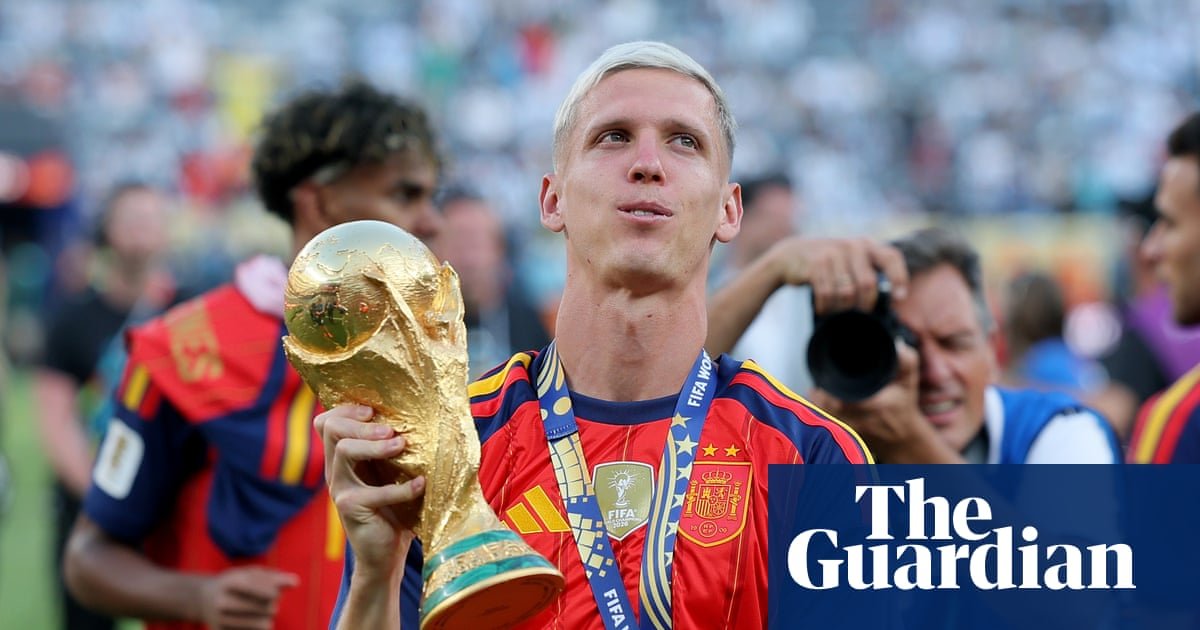
The deal has to be approved by a majority of the 211 countries in Fifa, with each country given an equal vote. There’s no version of the UN security council for Fifa. The Democratic Republic of Congo has the same power as the new World Cup champion, Spain. If Infantino can cobble together enough support from smaller countries that could use the influx of cash immediately, the soccer superpowers can’t do much to stop it. And Infantino made it very clear in his letter to the member nations that if they don’t approve the deal, they’ll lose access to $40m worth of funding and have to settle for a far smaller figure.
It all sounds pretty icky to my ear, with Uefa stating plainly that it believes Fifa is “[using the] sport to enrich themselves and their friends”. But, I guess, you know … that’s pretty much all sports? The amateurist spirit of the Olympics went out the window decades ago, as TV rights and sponsorships made the International Olympic Committee a non-profit worth nearly $5bn.
As suspicious as the English Football Association is about Fifa’s proposal, pretty much every soccer jersey in the top English league (and most other major leagues, including the US and Canada’s Major League Soccer) has sponsorships and corporate logos slathered on it. Stadium naming rights are sold to companies such as Etihad and Emirates Airlines, and American Express. The very formation of the English Premier League was deemed controversial when it launched in 1992, because it gave the top clubs more freedom to negotiate lucrative TV deals or sell naming rights for the league to Barclays Bank for 15 years.
I’m not saying we should just let Fifa sell the World Cup to the highest bidder. I’m no cynic. But I can’t pretend money isn’t the primary reason professional sports exist, especially soccer. Why else would Donald Trump have any interest in soccer all of the sudden, considering most of his supporters probably look at it as a game only for snobby coastal elites and infants? Trump’s other sports pal, UFC head Dana White, said soccer was the “least-talented sport on Earth” back in 2021. “There’s a reason three-year-olds can play soccer,” he continued, as though he was a bit jealous he couldn’t figure out a way to get toddlers into the Octagon to juice pay-per-view buy rates.
Soccer is the most popular sport in the world, regardless of what Dana White thinks. But the rhetoric from Gianni Infantino describes his proposal as the “next stage of growth” for a game that dwarfs all others in participation and interest. I don’t even know why it would need to grow any larger. At some point, you’re just growing for the sake of saying you can. What’s the goal here? To have a World Cup on Mars? To clone Lionel Messi? If every nation in Fifa gets the same payout, do lesser soccer countries get any sort of tangible advantage? Do world-class systems in England, France, Germany or Brazil need this money? How can Fifa blame anyone for thinking the whole thing is a grift?
All I see for the future of the World Cup is more branding, more commercial advertising masquerading as “hydration breaks”, and higher ticket prices. The World Cup is under siege, with the very real risk of it turning into the sports equivalent of a local restaurant chain swallowed up by private equity. The relentless drive for profit has strangled the purity out of sports, but it’s only gotten that way because we, the fans, have allowed it. Perhaps now, we can all finally agree that it’s bad enough.
Dave Schilling is a Los Angeles-based writer and humorist