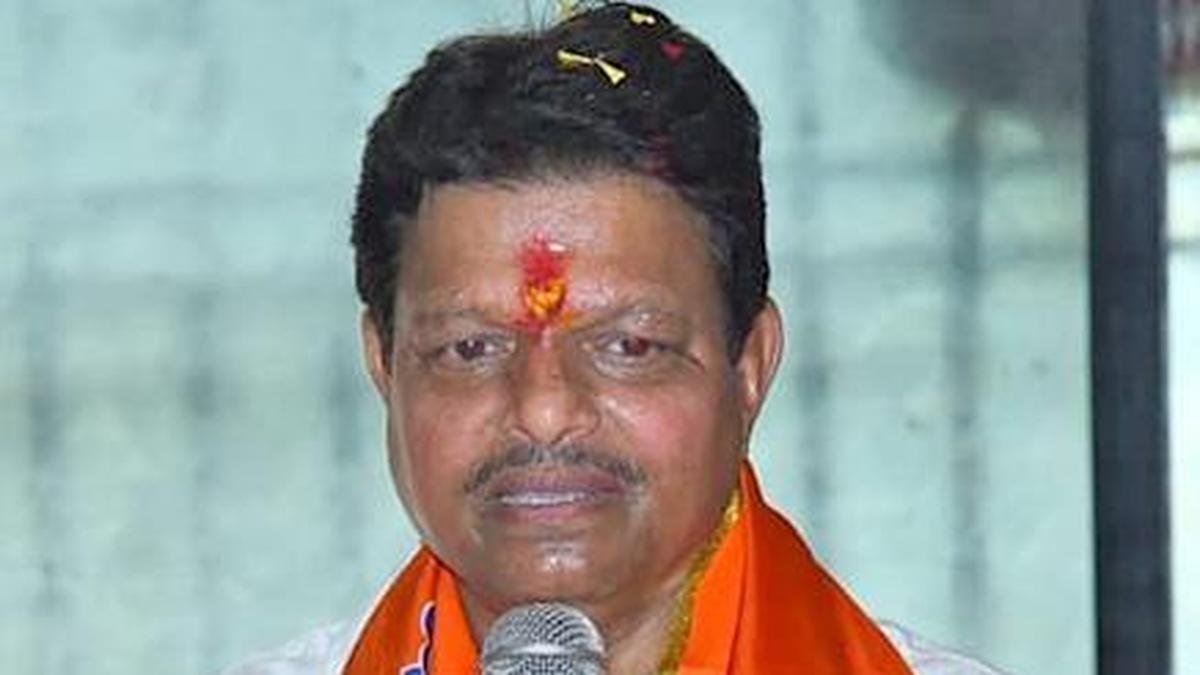
The Supreme Court on Monday (September 7, 2026) said that those who assault doctors and hospital staff “do not deserve to roam on the streets even for a minute”, prompting a Maharashtra corporator accused of attacking three municipal doctors in Thane to withdraw his plea after the Bench indicated that it could examine the cancellation of his bail.
A Bench of Justices Vikram Nath and Sandeep Mehta was hearing a plea filed by Shiv Sena corporator Ramesh Sukrya Mhatre challenging the Bombay High Court’s July 18 order staying the bail granted to him by the trial court, as well as its August 7 order imposing stringent conditions on his release, including that he remain outside Maharashtra until the commencement of the trial.
Doctors assault case: Bombay High Court grants bail to corporator, observes assault on voters harms democracy “This is their modus operandi.
These people do not deserve to roam on the streets even for a minute,” the Bench remarked, indicating that it intended to issue notice on the Maharashtra government’s appeal challenging the grant of bail to Mr.
Mhatre.
The court also referred to a recent incident in Palghar, where 17 Shiv Sena workers were booked for allegedly assaulting staff at a hospital on September 5 following a dispute over the treatment of a 19-year-old man injured during a Dahi Handi celebration.
“We are going to issue notice on the State’s appeal.
Yesterday, again the same group of people have assaulted doctors and hospital staff in Palghar,” the Bench said, adding that there appeared to be a “propensity to do these things”.
Senior advocate Mukul Rohatgi, appearing for Mr.
Mhatre, clarified that those booked in the Palghar incident were not the same persons accused in the Thane case.
He then sought permission to withdraw Mr.
Mhatre’s plea, saying he wanted to “put a quietus to this here”.
Bombay High Court denies immediate bail to corporator Ramesh Mhatre in doctor assault case “The writing on the wall is clear.
Therefore, I would want to withdraw,” Mr.
Rohatgi said.
Justice Nath, however, said the court needed to send a larger message against attacks on medical professionals.
“A message needs to go, not only to these people but to everyone, as a deterrent.
Such people do not deserve to roam freely on the streets even for a minute,” he said.
Accordingly, the Bench issued notice on the Maharashtra government’s appeal challenging the bail granted to Mr.
Mhatre and three other accused and directed that it be listed on September 28.
It also allowed Mr.
Mhatre to withdraw his petitions.
Earlier, the Supreme Court had indicated that it was inclined to cancel Mr.
Mhatre’s bail, observing that those who had “no respect for the medical fraternity” should not be enlarged on bail.
It had, however, decided to await a formal plea from the Maharashtra government seeking cancellation of the bail.
The case stems from an alleged assault on three doctors at the Kalyan Dombivli Municipal Corporation-run Shastri Nagar Hospital in Dombivli, Thane district, on July 6.
Bombay High Court refuses interim relief to corporator, orders change of investigating officer Mr.
Mhatre and others allegedly attacked the doctors after they advised that a pregnant woman be shifted to another hospital as all beds in the neonatal intensive care unit (NICU) were occupied.
The Bombay High Court subsequently initiated suo motu proceedings and, on July 18, stayed the bail granted to Mr.
Mhatre and the other accused by the trial court.
They surrendered the following day and were lodged at Aadharwadi Jail in Kalyan.
On August 7, however, the High Court granted bail to Mr.
Mhatre and some of the other accused, subject to stringent conditions.
It directed them to remain outside Maharashtra until the commencement of the trial, while allowing them to enter the State for the framing of charges.
They were also directed to stay away from the complainant doctors.
The High Court had further directed the Maharashtra government to provide adequate protection to the three doctors who were allegedly assaulted.
“In a rule of democracy, the principle is that an elected representative is by the people and for the people.
If an elected representative is accused of assaulting his own voters, such a situation is bound to dent the fabric of democracy,” the High Court had observed.