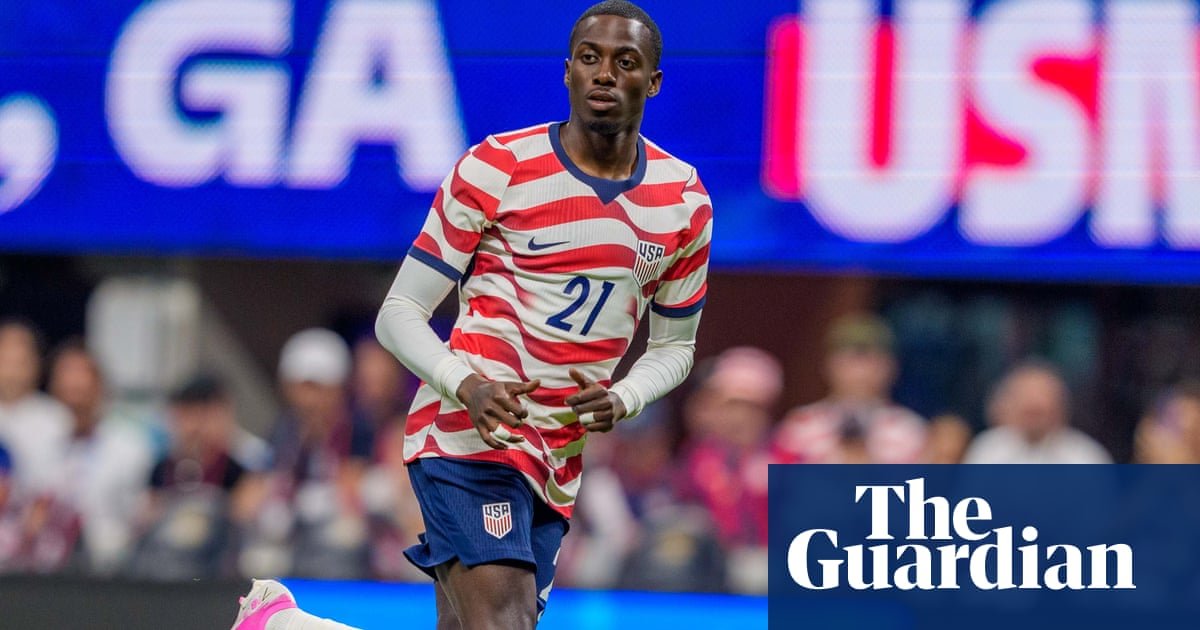
Timothy Weah has not played for the USMNT since the 3-2 loss to Turkey at this summer’s World Cup, which was also his only start at the tournament.
By extension, it was also that of the 26 players selected by Mauricio Pochettino to represent the nation at a home World Cup.
It didn’t live up to expectations for all of them, and certainly not for Timothy Weah.
“Obviously this summer wasn’t the best for me,” he says.
Weah was one of eight players in the squad to have started all four of the US’s matches in Qatar in 2022.
He remained a regular heading into this tournament but would ultimately start only one game in a campaign that came to an end at the hands of Belgium in the last-16.
“In every career you have moments where you’re a bit down, and you’re a bit in your head about things.
I think the World Cup was definitely that for me,” Weah says.
“On a personal level, I had to take a back seat and figure out where my place was in the squad.” “Never any excuses, though,” adds Weah, who is critical of his performance against Turkey, his one and only start.
“I went into the game overthinking a lot,” admits the 26-year-old.
“ When you’re overthinking, your feet stop working.
It was rough for me.
After the game I knew that’s not how I want to perform for my national team”.
To date, that remains Weah’s last performance for the US.
If Weah is to earn a 54th cap for his country it will be under a new manager following Pochettino’s departure to Manchester United.
The Marseille wide man does not believe the Argentinian’s absence will halt the momentum gathered by the US under his watch, regardless of who succeeds him.
“He set the foundation and whoever comes in is going to ride that wave,”says Weah.
“It’s an amazing group that they have and hopefully, they can continue levelling up and getting results against bigger opponents.
The next goal for us is to win against top European sides and top South American sides.” There is a degree of removal in the way Weah speaks about the national team.
For now he is a supporter, a role he assumes without “disappointment” even though he craves a return to the fold.
“I don’t want to force anything or beg,” he says.
“I’m good where I’m at.
If I end up back in the national team, and I don’t know when that will be, I’ll go.
I’m focused 100% on club football.” Weah’s route back in, as he acknowledges, is through his club form.
He returned to Marseille from the World Cup understandably dejected but quickly had his spirits lifted by being named captain of the Ligue 1 side.
“It’s an amazing feeling to be someone that’s looked upon as a leader, especially when it’s coming from the head coach [Bruno Génésio],” says the former Juventus and Paris Saint-Germain player.
“I’ve worked super hard here and the fact that everyone sees me as someone that can lead the team and continue to lead the team is an amazing feeling.” Génésio has said that Weah “incarnates what [he] wants from a captain,” highlighting his positive outlook and “irreproachable commitment”.
His nomination, however, came within a difficult context: Pierre-Emile Højbjerg was stripped of the role by the club’s hierarchy – and against the will of Génésio – after he rejected a move to Newcastle United in the summer.
One of Marseille’s top earners, the Dane’s exit was seen as a means to alleviate the club’s financial concerns.
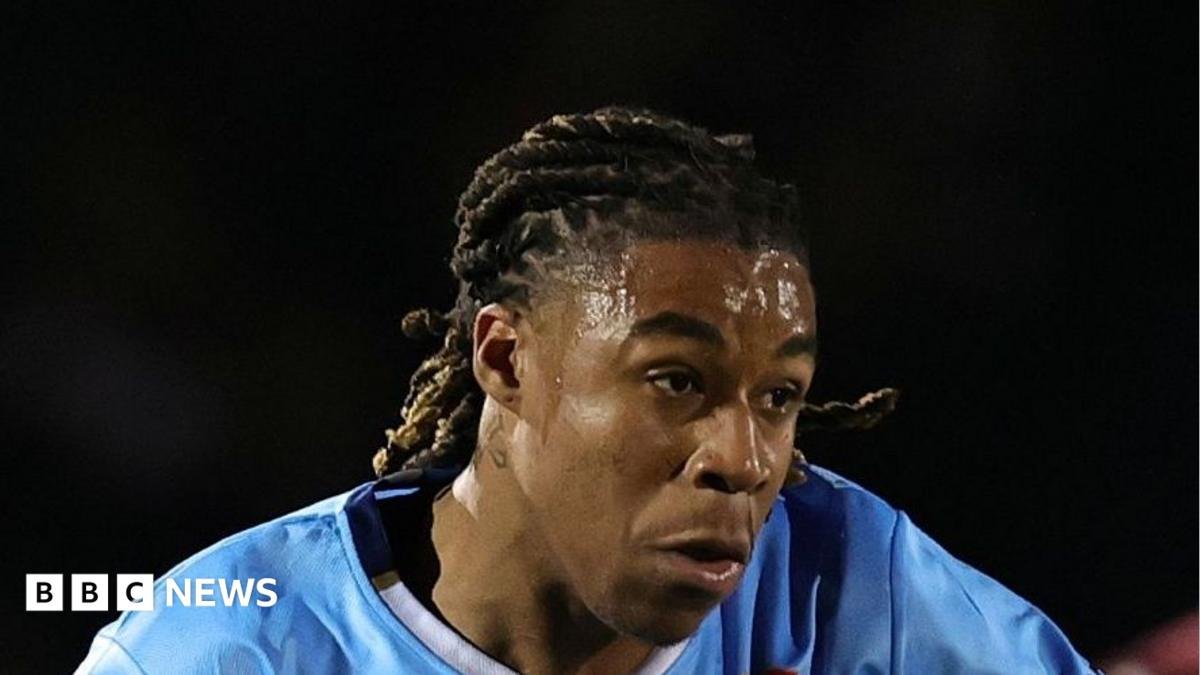
Timothy Weah in action for Marseille against Lens.
The 26-year-old describes captaining the club as an ‘an amazing feeling’.
“I felt like it was appropriate to let Pierre still have that importance and that leadership … Pierre, for me, is still the main captain, and I let him still be vocal.” Weah describes the “shared” leadership as a “wonderful thing” and insists that while he is undeniably more softly spoken than Højbjerg, his words retain the power to cut through.
And he is particularly punchy when addressing the siege mentality at the club.
“A lot of the media wants Marseille to lose, 100%,” Weah says.
“When we lose, everyone gets on us, and when we win, no one gives us credit.
Marseille’s a hated club, and there’s nothing better than playing for a hated club when you win.
I love being on the hated side of things because it gives you that drive, that want, that hunger to want to go and succeed and win things.” Weah, son of former Liberian president and Ballon d’Or winner George Weah, speaks with poise and openness, not shying away from broaching political agendas on both sides of the Atlantic.
“People need to speak more,” he says.
“The younger generation needs to be able to exchange ideas with the older generation in order to come to common ground.” On the wider impact of the World Cup in the US, Weah says: “The beauty of seeing everyone enjoy it, the beauty of seeing everyone together smiling, whether you were from the States or whether you were from Bosnia or the Netherlands, we all came together and made it something beautiful.
I think it definitely healed the world a bit in that moment.” skip past newsletter promotion after newsletter promotion “There was a lot of noise, there was just too much going on,” Weah adds in regard to the Folarin Balogun affair.
“I know about noise as well.” It’s inescapable in Marseille.
Angry, elated, never ambivalent sums up the fanbase in the working-class port city.
With that comes a pressure that is hard to find elsewhere.
“It’s a sink or swim environment,” says Weah in the auditorium of the club’s training centre, La Commanderie, which feels far removed from the bustling city below.
“You have to be mentally prepared and mentally ready to be able to handle the rough days when they come and to be able to enjoy the good days.
It can make or break you if you let it get into your head too much.
The fans are very demanding.
They’re spending their hard-earned money to come and watch us, and when we lose, it affects the city; and when we win, the city’s bumping.” At the start of the season there were groans rather than cheers at the Vélodrome and a heavy atmosphere that pervaded the entire city, the result of a difficult summer and an inability to recruit due to the club’s financial struggles.
“The situation is a tough one at the start of the season and then you’re limited in some aspects as well,” says Weah, who sensed understanding on the terraces, rather than anger, as the club went into the first international break of the season in the relegation zone.
The trend has since been reversed, with a run of five wins in a row in Ligue 1 prior to Sunday’s home loss to Le Mans pushing Marseille back in contention for Champions League qualification.
Weah praises Génésio for going “back to the drawing board” and also for a persona that coalesces with his own.
“I’m really calm and positive and forward-thinking, and he’s the same,” says Weah.
“We’re in a great moment now but who’s to say tomorrow that there’s a possibility you can lose?
The ball’s round; football is football”.
For Weah, 2026 has been a year that has taught him to live in the moment.
Explore more on these topicsUSA Marseille US sports interviews Share Reuse this content