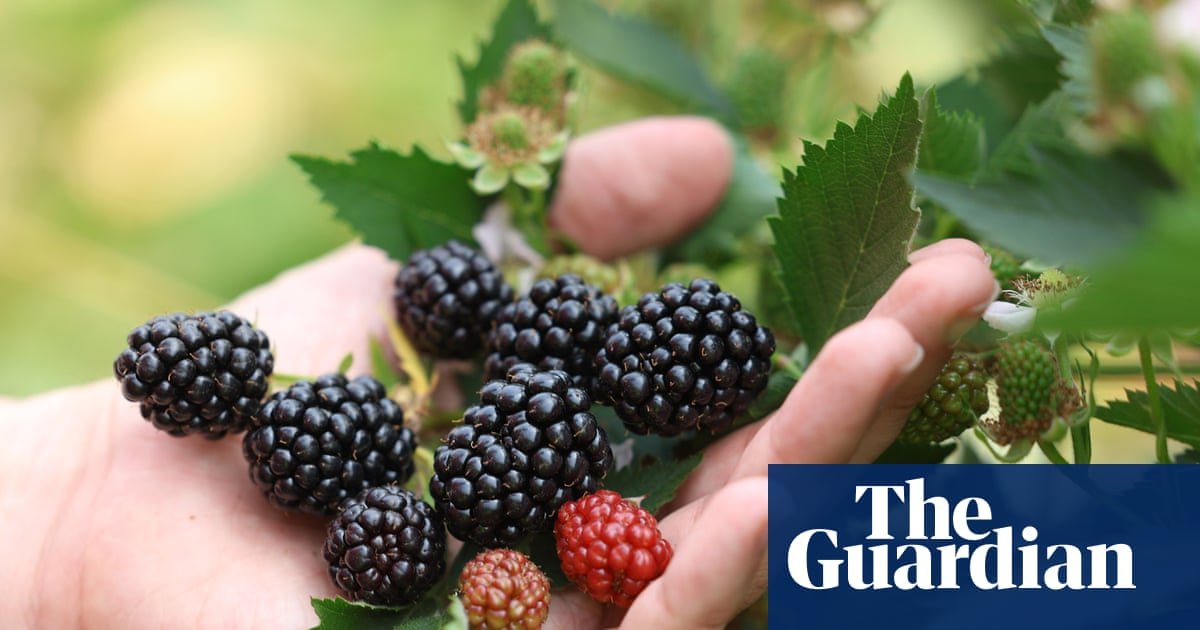
Blackberries, blueberries and raspberries have done particularly well this year.
Investment in climate-resilient irrigation enables this year’s haul to rise 6% on 2025’s already bigger-than-usual yield British farmers have faced a sweltering summer tested by heatwaves, wildfires and water shortages – but a bumper berry harvest could prove a rare bright spot.
With two-thirds of the harvest now picked, this year’s haul is 6% up on last year’s already unusually large crop, according to British Berry Growers (BBG).
Volumes of blackberries, blueberries and raspberries picked have been particularly strong, the trade body said.
The hot conditions have helped the berries grow rapidly and most UK berry crops are grown under polytunnels in the UK on drip irrigation, insulating them from the punishing heat, the trade body said.
There are, however, fears late season strawberry production will be slower than hoped in early autumn as plants become exhausted from heavy cropping during the heatwave, while blackcurrant production is expected to be down 10%.
Much of Britain has sweltered under a record five heatwaves this year and endured drought and wildfires, with the hot, dry conditions damaging crops and reducing yields of domestic produce.
Farmers in the UK have faced challenging conditions this summer.
“That includes developing secure water supplies, from winter storage reservoirs to highly efficient, computer-controlled drip irrigation systems that deliver water precisely where it’s needed.
“The hot weather could reduce the size of fruit as berries ripen sooner but the industry had a good start to the season with a dull April and May and berries remained within supermarket specifications.” In 2024, it was predicted that two-fifths of British growers of strawberries and raspberries could go out of business by the end of 2026.
However, growers have since experienced consecutive strong summers.
But the summer has been difficult for other UK food producers exposed to climate crisis-driven heatwaves.
The UK’s cereals harvest has also been hit by the weather, with wheat 13% below the five-year average, according to the latest report from the government-backed Agriculture and Horticulture Development Board (AHDB).
Spring barley yields are expected to be about a quarter below the five-year average and the lowest since comparable records began in 1999.
Anthony Hopkins, AHDB’s director of cereals and oilseeds, said: “The cumulative effect of successive poor harvests will be placing immense financial pressure on many arable businesses right now.” skip past newsletter promotion after newsletter promotion The hot summer has been good for vineyards and growers of oilseed rape, but salad and vegetable growers have also had a tough time.
Marston said berry growers had been able to afford to invest in building reservoirs to cope with the drought as they were producing “a high-value crop”.
However, about 40% of berry producers still did not have a reservoir or licensed borehole, leaving them more reliant on mains water or river extraction licences – supplies which could be limited in times of drought.
The drought conditions mean it is “absolutely accurate that some farms are starting to struggle if they are reliant on mains water”, said Marston.
He praised new government measures which have eased planning restrictions for on-farm reservoirs from this month, but said changes also needed to be made to licensing of river abstraction.
The system currently allows relevant farms to take a set amount from rivers year-round and Marston said they should be able to take more in winter for storage during the drier months.
“The long-term picture seems that climate change is going to [lead to] hot summers and wetter winters.
Government can assist.
Growers have already invested in water security but a lot more needs to be done, he said.
With support, Marston said UK berry growers had an opportunity to expand production to meet demand as farms in southern Spain, north Africa and other areas which provide fruit to the UK in winter faced water shortages and even more extreme heat than their British counterparts.
Explore more on these topicsFarming Fruit Food Extreme heat news Share Reuse this content