Traders on edge!
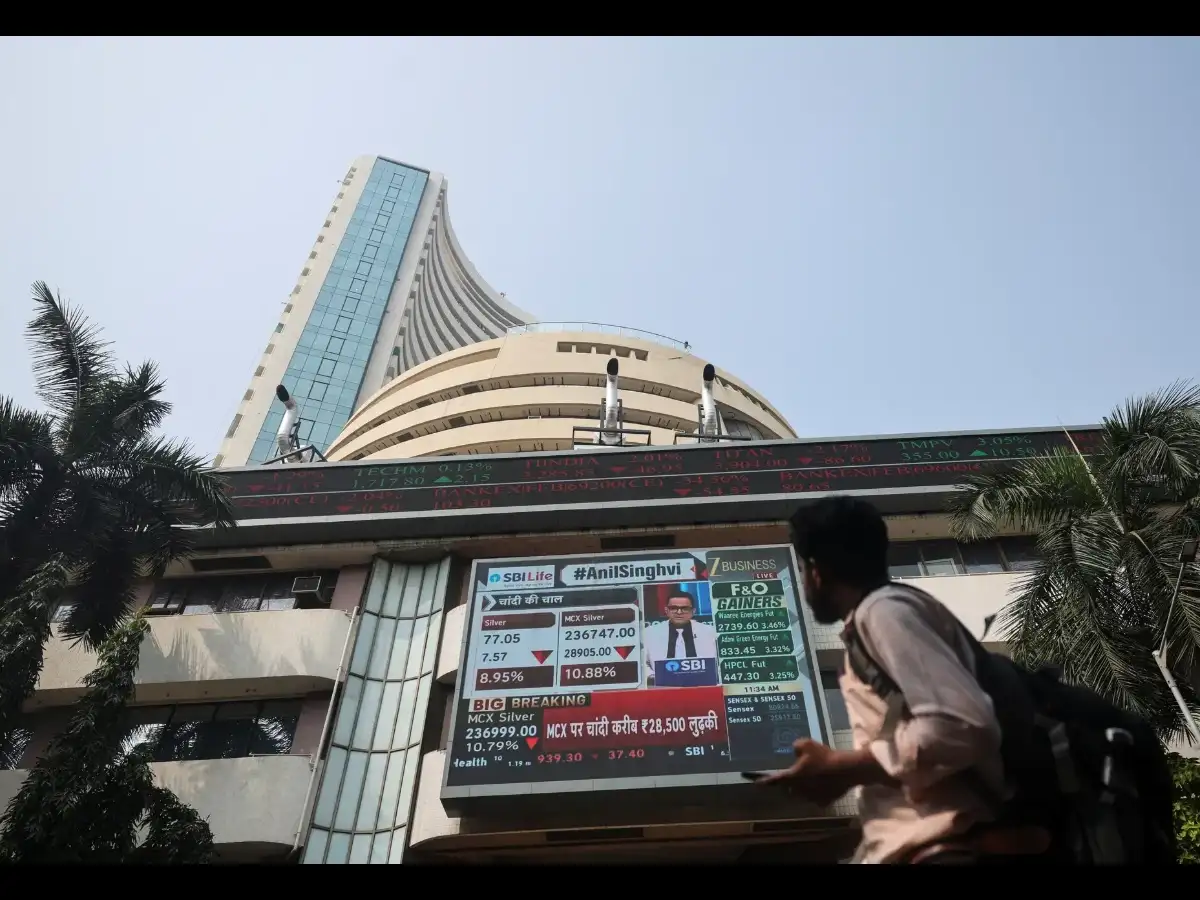
Why Nifty jumped 150 points in final minutes again Agencies Nifty’s late rebound underscored the influence of the new closing auction system, with expiry-day volatility and technical adjustments driving sharp end-of-session moves.
Synopsis Nifty rebounded nearly 150 points during Tuesday’s closing auction after spending most of the session in the red, highlighting the impact of the new Closing Auction Session.
Analysts attributed the volatility to expiry-day adjustments and early implementation issues in the revised closing price mechanism.
By Akash Podishetti, ETMarkets.com Aug 04, 2026, 06:56:00 PM IST Follow us India's benchmark Nifty saw another sharp late-session move on Tuesday, jumping nearly 150 points in the final few minutes during the closing auction window, a day after a similar end-of-day spike of around 200 points surprised traders.
The index still ended lower for the day, closing at 24,614, down 159 points, or 0.64%.
But the late rebound helped it recover from the day’s low of 24,427 and close well above the bottom.ADVERTISEMENT The move came as traders continued to adjust to the newly introduced Closing Auction Session, or CAS, which has changed how the closing prices of large F&O stocks are decided.
The system came into effect from August 3 and applies to stocks that are part of the futures and options list.On Monday, the Nifty had jumped nearly 200 points in just two minutes near the close.
Tuesday’s 150-point recovery again showed that the closing auction window can now have a visible impact on index levels.
The index remained under selling pressure for most of the session as investors booked profits after the recent rally.ADVERTISEMENT Largecap stocks in financial services and IT weighed on the index.
The Sensex held up better, but the Nifty remained under pressure through most of the day.
The index later slipped to an intraday low of 24,427.
Despite the fall, the Nifty continues to trade above key moving averages, which indicates that the broader bullish structure remains intact.ADVERTISEMENT ADVERTISEMENT Closing auction in focus againThe late move has put the new closing auction system back in focus.
From August 3, stocks that are part of the F&O list no longer trade continuously until 3:30 pm Continuous trading in these stocks stops at 3:15 pm After that, they enter a closing auction process.ADVERTISEMENT Other stocks continue trading until 3:30 pm, while index and stock F&O contracts trade until 3:40 pmThe key point is that F&O-linked stocks do not fully shut at 3:15 pm Only normal trading stops.
A 20-minute auction process then runs until 3:35 pm to decide their official closing price.ADVERTISEMENT Since many Nifty stocks are part of the F&O list, the closing auction price of these stocks directly affects the final index level.
That is why the Nifty can move sharply near the close, even after regular continuous trading in those stocks has ended.Earlier, the closing price of a stock was calculated using the volume-weighted average price, or VWAP, of trades in the final 30 minutes of continuous trading.
Under the new CAS system, buy and sell orders are pooled during the auction and matched at one equilibrium price.
This price becomes the official closing price.Expiry adds to volatilityVinod Nair, Head of Research at Geojit Investments, said Tuesday’s weekly expiry, along with the new mechanism for deciding F&O closing prices, had distorted market trends.
"Tuesday's weekly expiry, combined with the implementation of the new mechanism for determining F&O closing prices, has led to a distortion in market trends," Nair said.He said the gap between the 3:30 pm and 3:40 pm closing prices of Nifty stocks and the index, along with the divergence with the Sensex, suggested that the new system was not functioning as intended."This has triggered forced square-offs of positions, particularly among retail investors, ahead of the 15 minutes blind derivatives window closing session," he said.
Nair said these appeared to be initial teething issues and that exchanges and the market regulator need to address the discrepancies.
He added that the impact was currently limited to the F&O segment of trading stocks and main indices.