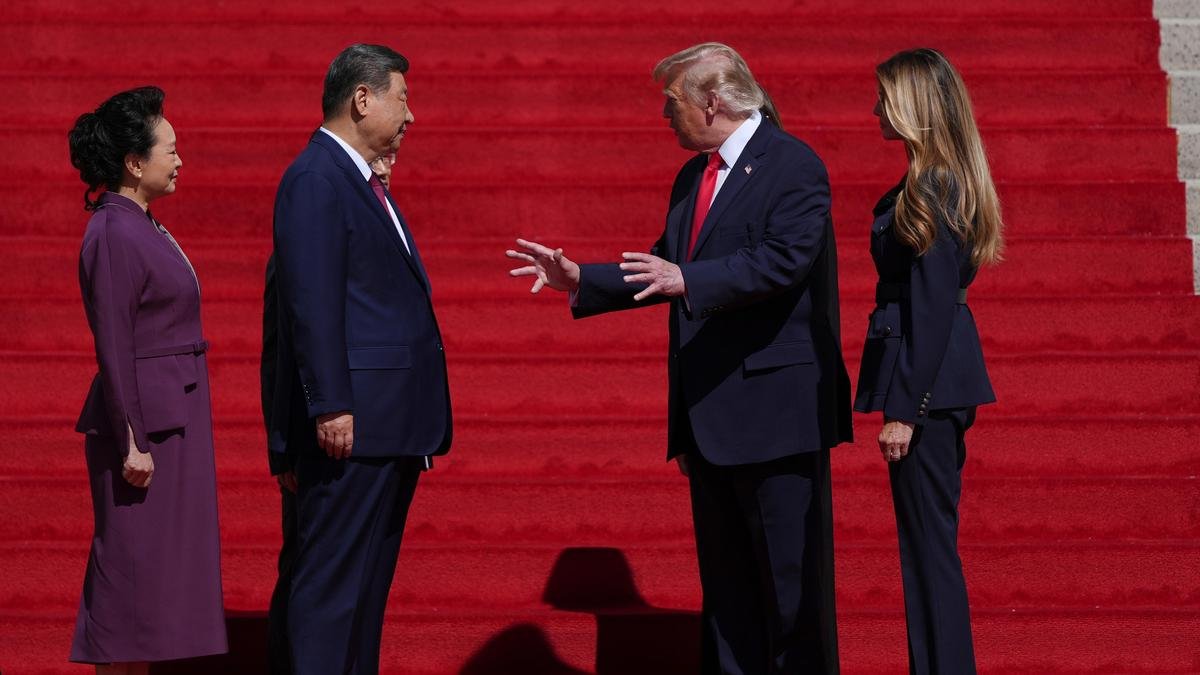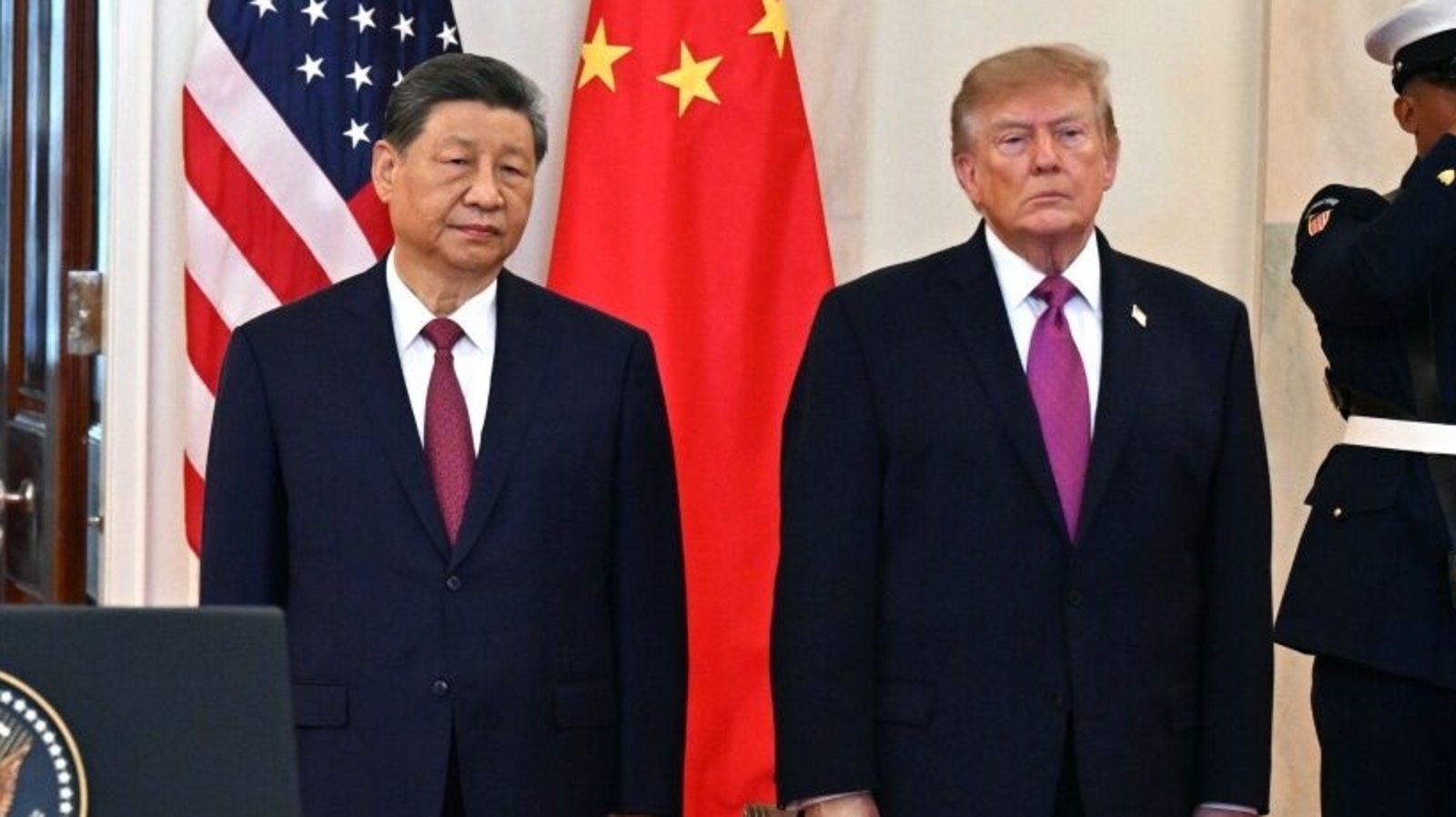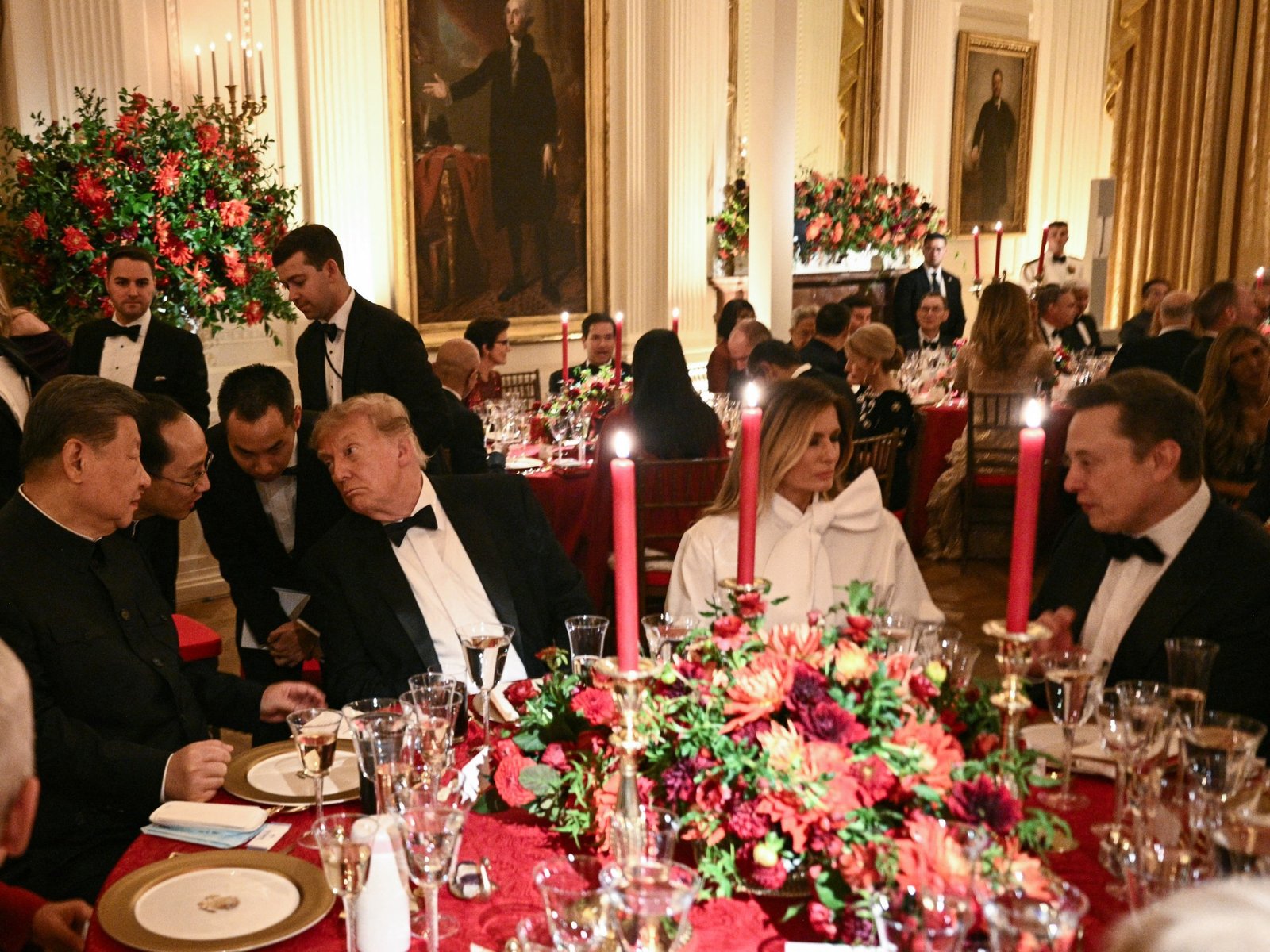
Chinese President Xi Jinping, left, and US President Donald Trump speak through interpreters as first lady Melania Trump listens to Elon Musk, right, during a state dinner in the East Room of the White House in Washington, DC, on September 24, 2026 [Brendan Smialowski/AFP] By Al Jazeera Staff, AFP and Reuters Published On 25 Sep 202625 Sep 2026 United States President Donald Trump has hailed “very productive” talks with his counterpart Xi Jinping, which included a conversation on AI and the war in Iran, during the Chinese leader’s three-day state visit to Washington, DC.
When asked by reporters on Friday if the two leaders had discussed the war in Iran, Trump replied, “We did,” adding without providing details: “I think we’re going to do great.” Trump also confirmed he will meet twice more this year with Xi: “We will be meeting again in November, in China, and then at the G20 in December, in Miami, Florida,” he said on Truth Social.
Trump added that this week’s meeting “was one of Friendship, Strength, and Success, for both China and the USA”.
During a tea ceremony at the White House on Friday, Xi – who was on his first visit to the US in more than a decade – said, “We invite the president and his wife to visit China,” also noting that the two leaders could have two further opportunities to meet this year.
Before departing at the end of his state visit, Xi told state-run Xinhua news agency that the future of China-US ties was “bright”.
Earlier on Friday, Trump wrote on Truth Social that “tremendous things will be happening” between the US and China, adding that his meetings with Xi were productive for both sides, emphasising the issue of artificial intelligence.
“[Xi] seemed to like calling the poorly and inaccurately named Artificial Intelligence to a far more accurate and important name, SUPER INTELLIGENCE.
That would be ‘SUPER!’ Everyone last night agreed, also,” said the US president.
Advertisement Trump told the United Nations General Assembly earlier this week that the US would rename artificial intelligence “super intelligence” in all US government documents.
AI, Iran war Trump hosted a lavish state dinner on Thursday for Xi, which included high-profile guests like Amazon’s Jeff Bezos and Tesla head Elon Musk, who was seated at the main table alongside the Chinese and US presidents.
Despite being locked in a fierce strategic rivalry over AI, Trump and Xi have rebuffed recent calls from inside the US tech sector to slow the pace of development over concerns about controlling the rapidly advancing technology.
On Friday, US Trade Representative Jamieson Greer told Al Jazeera’s Alan Fisher that creating channels of communication on AI is one of the main challenges Washington and Beijing are seeking to overcome.
“I think with every government in the world right now, there isn’t a department of AI, and so there can be a question of who do you call when you have an issue,” Greer said, adding: “When I think about it, I think about the red zone between the Kremlin and the White House during the Cold War.” Greer said another meeting on AI is planned within the next month between the representatives of both countries.
Separately, Greer told US media on Friday that the current talks did not cover the sale of a small amount of high-quality US-made chips requiring licences.
“These are the crown jewels of American technology.
It’s the way we stay ahead in the race for superintelligence, or AI, and so those conversations … [are] not really happening in these negotiations,” Greer said.
On the Iran war, David Perdue, the US ambassador to China, told US-based business news network CNBC that Trump told Xi that direct or indirect support for Iran was “totally unacceptable”.
Perdue later told Fox News that China was already moving away from supporting Iran, saying, “That’s what the commitment is.
They assured us yesterday they’re not doing that.” Xi and Trump made a show of working to preserve harmony between the world’s two largest economies during the visit, though there were no major breakthroughs on issues such as trade or AI safety.