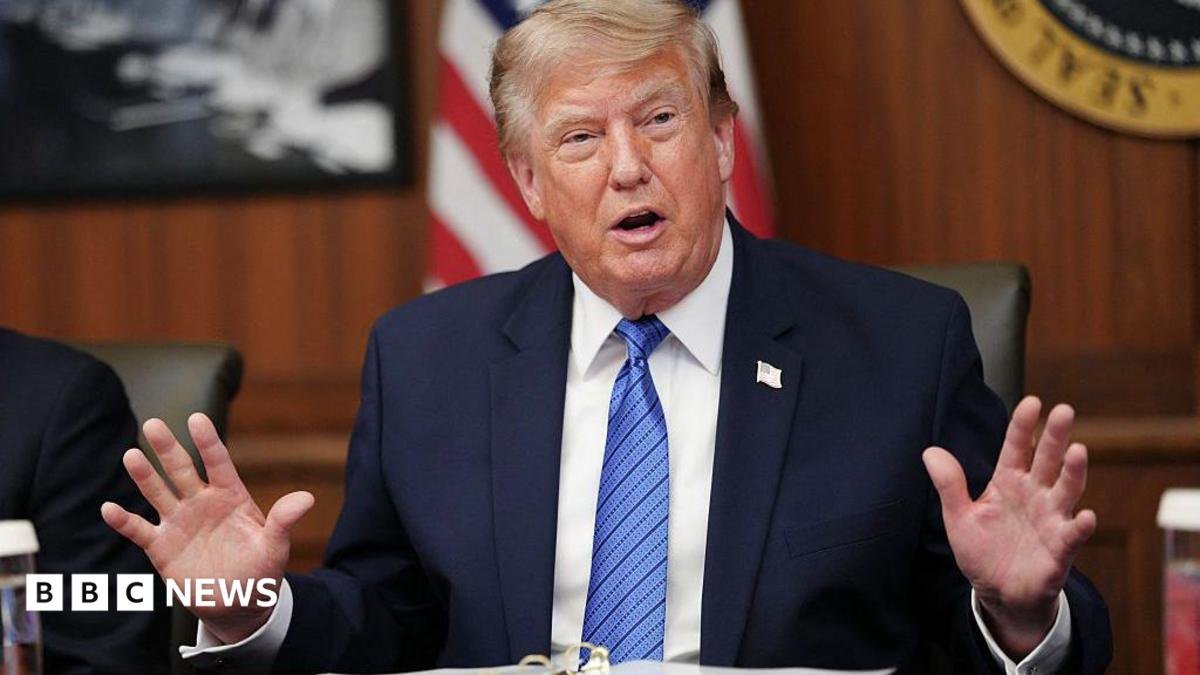
Published on: Aug 6, 2026, 18:52:39 IST WSJ Prefer HTon Google Share via Copy link President Trump chatting with Kevin Warsh in May at Warsh’s swearing-in as Federal Reserve chairman.
WASHINGTON—President Trump has spoken repeatedly with Kevin Warsh since he became chairman of the Federal Reserve, according to people familiar with the matter, maintaining a line of communication between a president and a central bank chief that departs from recent precedent.
The president calls Warsh in bursts, the people said—several times in a stretch of days, then quiet for longer periods.
Trump has sought Warsh’s counsel on a range of matters, including how the war in Iran and the rapid rise of artificial intelligence are affecting the economy, some of the people said.
Warsh has been on the job for less than three months.
It wasn’t clear if Trump and Warsh have discussed monetary policy.
A person familiar with the conversations insisted the president hasn’t broached the topic of interest rates since Warsh was confirmed by the Senate.
Presidents appoint Fed chairs, but the central bank sets interest rates independently, a separation meant to keep politics out of decisions that shape borrowing costs across the economy.
It isn’t unusual for presidents and Fed chairs to meet on occasion, but in recent decades the contacts have generally been more formal and arranged in advance, choreographed to avoid the perception the president is influencing rate decisions.
Trump regularly bypasses formal communication channels, keeping up with a wide circle of contacts—including world leaders, business executives and lawmakers—through his personal cellphone.
Some past presidents have had closer working relationships with Fed chairs than others.
Bill Clinton liked Alan Greenspan, and seated him next to first lady Hillary Clinton at his first joint address to Congress.
Joe Biden only had a handful of interactions with Jerome Powell during his term.
Recent presidents, from Clinton through Barack Obama, avoided publicly putting pressure on the Fed.
Contact between the White House and the Fed chair was more frequent in the 1960s, when the two sides met routinely.
Such meetings became more limited after President Richard Nixon’s pressure campaign on Fed Chairman Arthur Burns preceded the inflation of the 1970s.
By the 1980s, communications with the Fed chair were handled largely through the Treasury secretary.
Hillary Clinton, in red, sitting with Fed Chairman Alan Greenspan on her left at President Bill Clinton’s first joint address to Congress in 1993.
Trump has chafed at the Fed’s independence more than any recent president.
In an interview with The Wall Street Journal last December, Trump said he wanted the Fed chair to consult with him on where to set interest rates.
“I’m a smart voice and should be listened to,” he said.
At Warsh’s swearing-in ceremony less than six months later, Trump said the opposite.
“I want Kevin to be totally independent,” the president said.
“Don’t look at me, don’t look at anybody.
Just do your own thing and do a great job.” In his conversations with Trump, Warsh has often expressed a positive view of the economy, according to some of the people familiar with the matter.
Those sentiments echo his public statements.
“The most striking feature of the economy is the strong growth of business investment,” he said at a news conference last week.
The president has told his political allies that he sees Warsh as a valued outside economic adviser.
That is a contrast with the way the president viewed Warsh’s predecessor, Jerome Powell, whom Trump chose over Warsh for the job in 2017.
Trump derided Powell as “too late” for declining to cut rates and for not cutting them enough when he did.
He repeatedly threatened to fire him and compared conversations with him to “talking to a wall.” Trump has spared Warsh that treatment.
Before last week’s Fed decision to hold interest rates steady, Trump praised Warsh and said he knew Warsh wanted to do “the right thing” but added, “He’s got a board, and the board members are very political.” Powell is still on the board, having stayed on as a governor after his term as chairman ended.
The president often raves about the Fed chair’s looks after he sees Warsh on television, according to a person who has been in the room for the president’s remarks.
Since returning to Washington, D.C., Warsh has become a presence on the city’s political circuit, in the manner of Greenspan, who for years was a fixture of the social scene.
Warsh dined Tuesday at a popular Georgetown restaurant with Army Secretary Dan Driscoll, an ally of Vice President JD Vance.
Last month, Warsh attended a dinner in Georgetown honoring Nick Luna, the incoming chief of staff to Vance, and Cliff Sims, Vance’s national security adviser, according to Politico.
Trump’s relationship with Warsh could animate concerns about the independence of the central bank.
Democrats on the Senate Banking Committee, which oversees the Fed, have repeatedly pressed Warsh for more disclosure about his interactions with the president.
The White House said the president believes in an independent Fed.
“President Trump has repeatedly stressed that he is giving Chairman Warsh the space he needs to restore confidence and competence in Fed decision-making,” White House spokesman Kush Desai said in a statement.
“While the President has his First Amendment right as an American citizen and duty as Commander in Chief to voice his thoughts about the Fed, he also repeatedly reaffirmed Chairman Warsh and the Fed’s independence.” The Fed declined to comment.
Powell met presidential pressure with stoic nonengagement.
He took Trump’s calls and dined with the president at the White House in 2019.
But the contacts were sparse and carefully handled: In-person meetings were disclosed immediately with a readout, and phone calls were listed in monthly appointment calendars released on a one-month lag.
President Trump touring the Federal Reserve’s building renovations last year with then-Chair Jerome Powell.
Critics of Powell’s approach say his detachment heightened tensions with the Trump White House, and that a chairman who gave the president a sense of being heard could have built good will without conceding anything on policy.
Warsh’s cultivation of any relationship with Trump could be seen as corrective, engaging Trump directly to head off the sense that the Fed is his adversary.
Whether Warsh’s relationship is an asset or liability turns on what he does if the Fed’s judgment differs from the president’s wishes.
Last week the Fed held rates steady.
While Warsh said at a news conference that rate increases “could well be part of” the answer if inflation stays elevated, he leaned more heavily on the Fed’s ability to reduce inflation by convincing the public that it is serious about hitting its 2% goal.
Short-term Treasury yields fell and long-term yields rose—a pattern that suggests investors expected slightly looser policy than before the meeting, and a little more inflation later.
Ellen Meade, a former Fed economist now at Duke University, said she had expected Warsh’s relationship with Trump to give him room to lead the Fed toward higher rates if conditions warranted.
The press conference last week made her less sure of this.
At his confirmation hearing in April, Warsh said Fed independence is “up to the Fed” and that it isn’t threatened when elected officials “state their views on interest rates.” At Warsh’s swearing-in, Trump said he wanted the new Fed chair ‘to be totally independent.’ Asked by Sen.
Chris Van Hollen (D., Md.) last month whether he would follow Powell’s practice of disclosing his appointments, including contacts with the president, Warsh said he would comply with the law.
He declined to say if he had spoken to Trump.
“The president has not, before I took this office, before I raised my right hand, he has not tried to influence the conduct of monetary policy,” Warsh said.
“And if he tried to, I would continue to keep my head down and do the job.” The cautionary example is Burns, a respected economist who Nixon appointed as Fed chairman in 1970 after years as a trusted adviser.
Nixon leaned on Burns relentlessly to loosen policy before the 1972 election.
Oval Office recordings captured a phone call in December 1971 in which Burns boasted of how he was pressuring his colleagues to cut rates the following week.
“Great,” Nixon replied.
“Just kick ‘em in the rump a little.” Nixon was re-elected in a landslide, but inflation later soared.
The experience changed how the two institutions dealt with each other.
Write to Brian Schwartz at brian.schwartz@wsj.com, Philip Wegmann at philip.wegmann@wsj.com and Nick Timiraos at Nick.Timiraos@wsj.com Federal Reserve
Follow major international events on Hindustan Times.
Home/World News/Trump Has Called Warsh Repeatedly Since He Became Fed Chair See Less