President signed the legislation championed by late senator Lindsey Graham last month but has waived the restrictions as they were due to come into effect
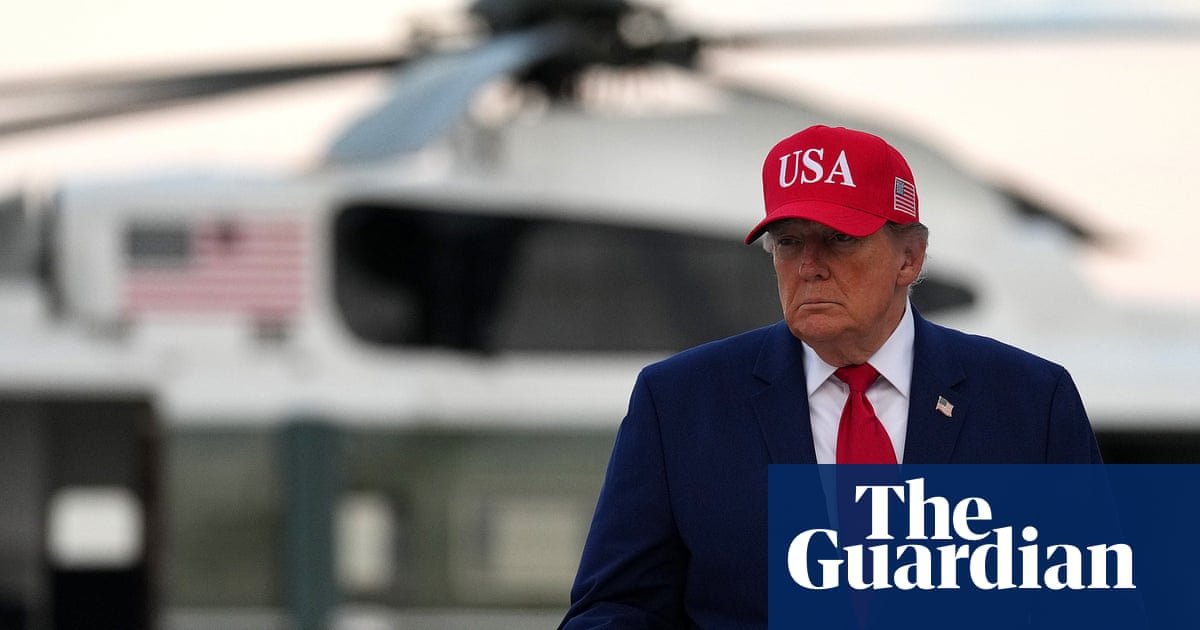
Donald Trump has put on hold a sweeping new sanctions package targeting the Russian economy, telling Congress the pause on the legislation passed by both chambers was in the national interest.
In an executive order on Friday, the US president said he was waiving many sanctions, restrictions and duties on Russia, in a move that comes as he has been publicly criticising Ukrainian president Volodymyr Zelenskyy, including suggesting that Ukraine needs a new leader.
The move was greeted by Russian presidential envoy Kirill Dmitriev, who wrote on social media: “The Trump administration’s suspension of the Graham Act is an important and truly historic moment.”
Trump signed the legislation last month, after Congress passed the measure in an act of rare bipartisan agreement. It sought to clamp down more quickly on the flow of financial resources fuelling Russia’s war against Ukraine.
The legislation – whose primary backer in Congress was the late senator Lindsey Graham – sanctions Russian officials, banks and a shadow fleet of tankers that keeps Russian energy moving and was due to be implemented in two days.
It also directs Trump to impose up to 100% tariffs on the top five importers of Russian oil or natural gas, with an exception for countries that import less than 15% of Russia’s natural gas exports and have taken significant steps to reduce those imports.
Friday’s announcement comes a week after Trump said the US had agreed to purchase diesel from Russia to try to bring down global energy prices, upending years of US and western pressure on the Kremlin to end its war against Ukraine.
Trump said last week that Russia would immediately supply more than 300,000 metric tons of diesel, followed by an additional 500,000 tons in November and 1m tons “immediately thereafter”. Russia would deliver an additional 3m tons “within a short period of time” after that, he wrote.
The president has face widespread criticism after making the announcement, with a dozen US senators – including six Republicans – calling on Trump to rescind his diesel deal.
A letter from the bipartisan group of lawmakers sent on Tuesday urged Trump to execute the sanctions authorities included in the legislation passed last month, called the “Lindsey O. Graham Sanctioning Russia and Iran Act of 2026”.
Under the legislation he signed into law, Trump had until 18 October to impose the sanctions and tariffs on Russian energy, or waive them. The administration had not told lawmakers whether it would impose the sanctions or issue a waiver.
Zelenskyy said on Friday the diesel deal would mean cash “will start flowing back into Russia”, as he met European leaders in Brussels.
Trump blindsided Zelenskyy last weekend by announcing that Ukraine and Russia had agreed not to target each other’s energy facilities. Facing midterm elections next month, Trump has blamed Ukrainian strikes on Russian refineries for pushing up energy prices that could cost his Republican party its thin majorities in the US Senate and House of Representatives.
Trump’s administration is suspected of withholding intelligence from Ukraine on incoming Russian ballistic missile strikes, and of throttling Starshield, the military version of the Starlink satellite internet network, to prevent it from being used on drones flying faster than 100mph (161km/h). Neither has officially been confirmed.
The US sanctions legislation has also become a campaign centerpiece for Senator Darline Graham, Lindsey Graham’s sister appointed to serve out the remaining months of his term, who is also running to replace him in the Senate more permanently.
In a debate earlier this week with South Carolina Democratic nominee Annie Andrews, Graham – who has Trump’s endorsement and is expected to campaign with him in South Carolina next week – said she had been “so proud” to help get the measure passed but acknowledged it was Trump’s purview as to how he implemented it.
“It gives the president tools that he can use, if he so chooses, to end the war through economic sanctions,” Graham said during the debate in Columbia. “So that’s up to him as to whether or not he wants to use it, or whether he wants to use something else, but I think the purpose of it is to bring down the gas prices and ultimately end the war. And when the war ends, gas prices will fall.”
With Reuters and the Associated Press