Residents would welcome the development, but the president’s past false promises cast doubt on the proposal
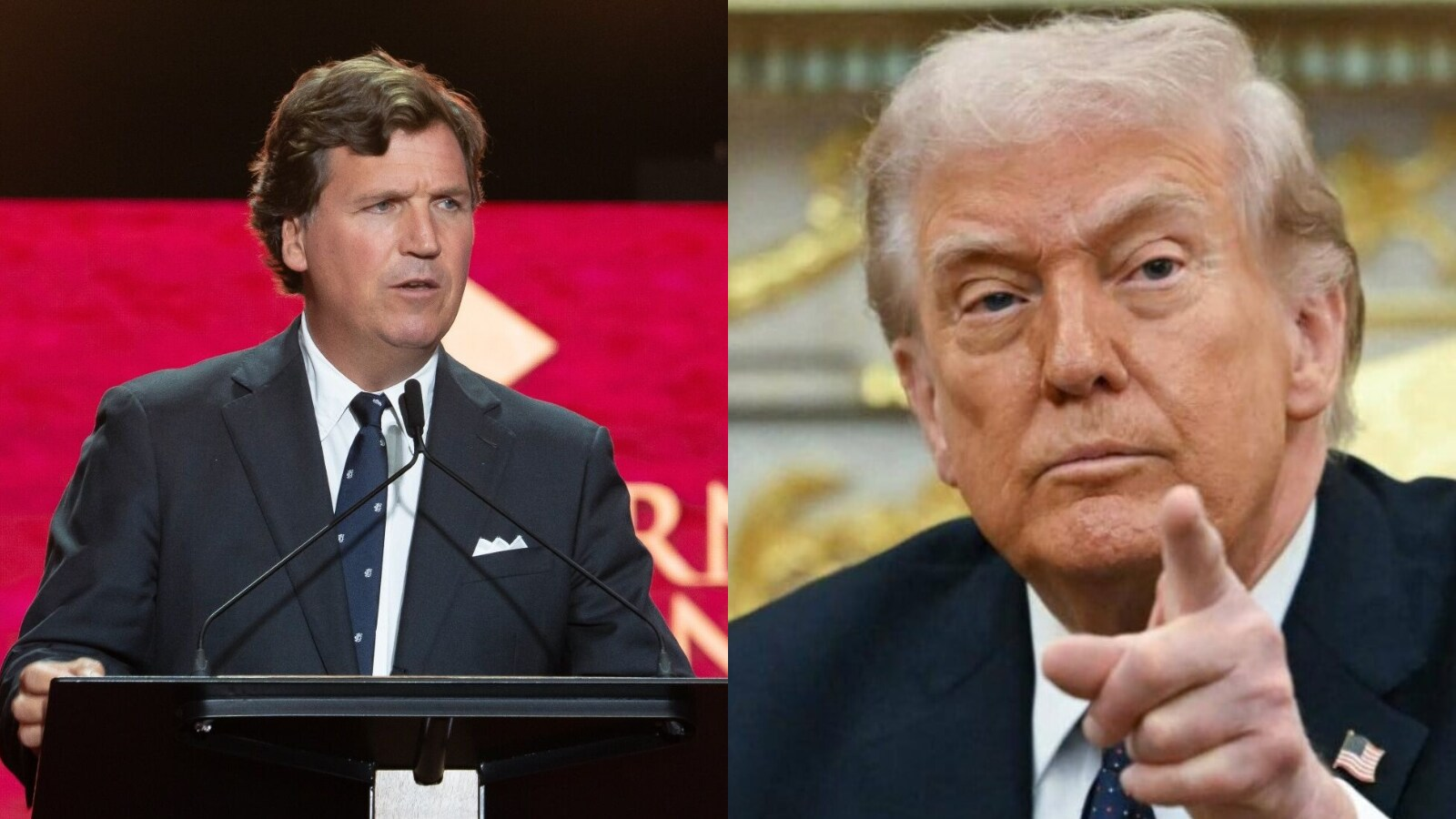
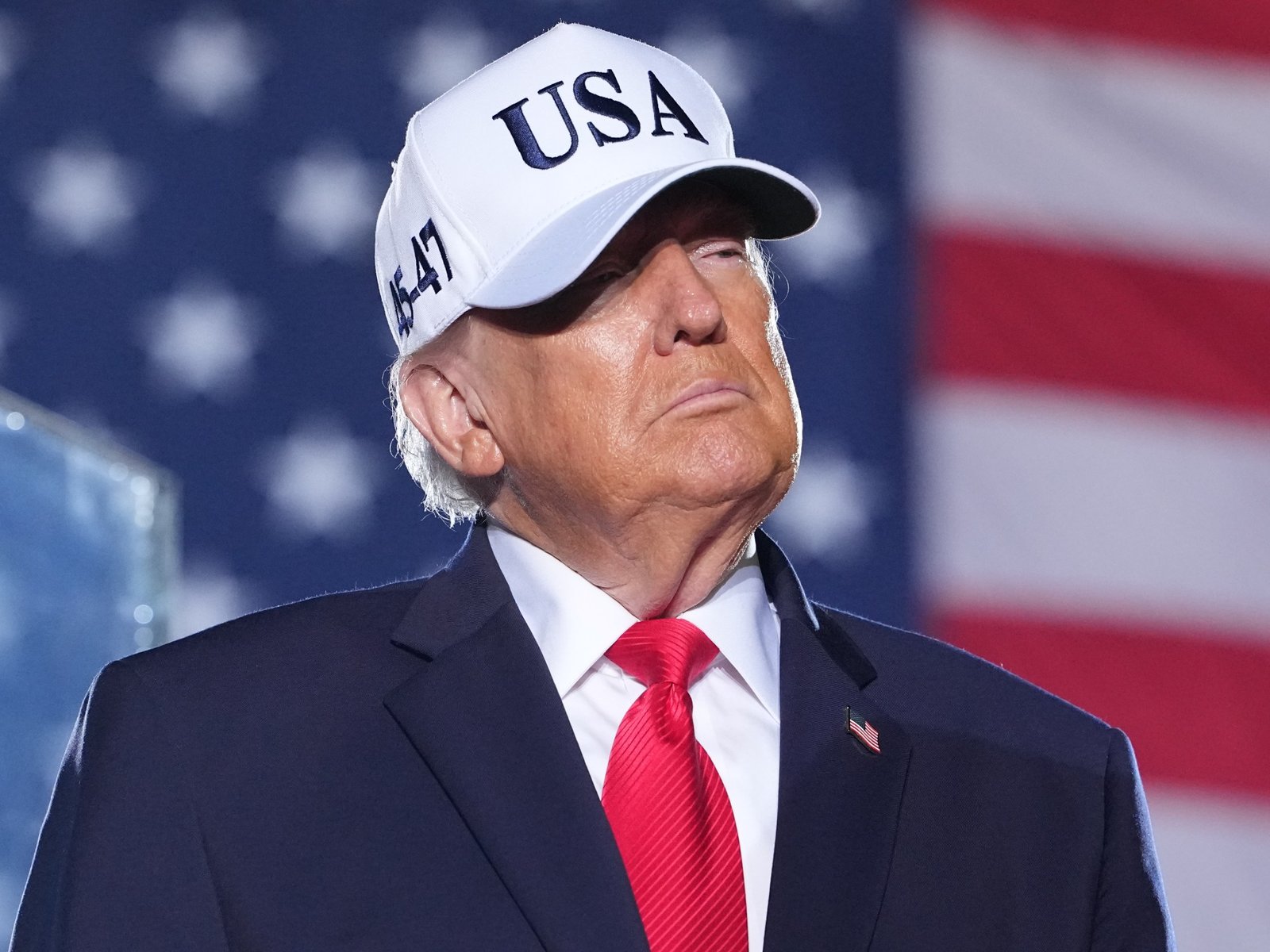
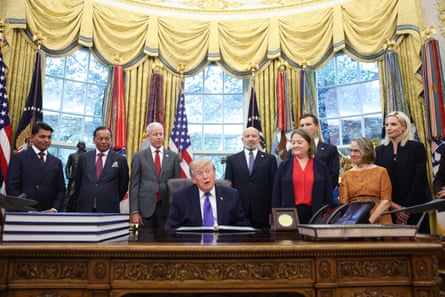
On a Monday afternoon in late September, Donald Trump gathered Iowa Republicans in the Oval Office to make a big announcement: the firm Mesabi Metallics would invest $15bn to make the midwestern state the site of the largest steel mill in the country.
One month later, and just days before the midterm election, word has spread in the small town of Wever, population 142, that the mill will be built somewhere nearby. And that’s been about it – no shovels in the dirt, workers on a job site or machinery on the dirt roads leading down towards the Mississippi River.
Ask about the project in town, and the reaction isn’t enthusiasm, but skepticism.
“More jobs,” Missy Pollpeter, 52, said of the project’s potential as she dined at the Green Bay Bar and Grill, Wever’s only restaurant.
“If they bring it here,” her husband, Mike Pollpeter, 60, said as he finished a burger.
On paper, a steel mill seems like a great development for a corner of Iowa that has a long history both of manufacturing and the disinvestment that has struck so much of the industrial midwest. According to the White House, the project would create 6,000 jobs during its construction and then 1,750 when it is complete, and generate $95bn in economic activity.
What people can’t get over is how the project was debuted, and who was announced it. The president made the plan public just over a month before Tuesday’s midterm elections, when Iowa will play a major role in determining if Democrats regain control of Congress amid Trump’s downbeat approval ratings. Wever itself lies in a congressional district that is viewed as the most competitive in the state.
And then there’s the fact that Trump has a history of making proclamations that don’t quite pan out.
“Remember Foxconn?” asked Jeff Thompson as he served drinks at Green Bay “Bottoms Up”, the town’s only bar. Foxconn is the electronics manufacturing giant that Trump famously declared would build a massive factory in neighboring Wisconsin during his first term, only for the project to wind up flopping.
A similar situation may be playing out elsewhere this year. Just days after debuting plans for the Iowa steel mill, the president said South Korea would invest $54bn in building a long-discussed natural gas pipeline in Alaska, only for officials in Seoul to say they’d agreed to no such deal.
But Iowa’s Republican-controlled legislature was undeterred, and quickly approved $1.4bn in tax breaks to make the mill happen.
Charles Sutton, a spokesperson for Mesabi, a Minnesota-based firm that is part of the Indian conglomerate Essar Group, said they are on track to produce steel by 2030 from a site in “eastern Iowa”, the location of which will be announced “in the very near future”.
“The project is in active development with strong momentum,” Sutton said. “We anticipate being able to make several announcements in the coming weeks in line with the project schedule.”
Mariannette Miller-Meeks, the Republican who represents south-eastern Iowa, said that “the project is for sure happening”. Elected to a third term in 2024 by less than 800 votes, she is a top target of Democrats this year as they vie to regain control of Congress’s lower chamber.
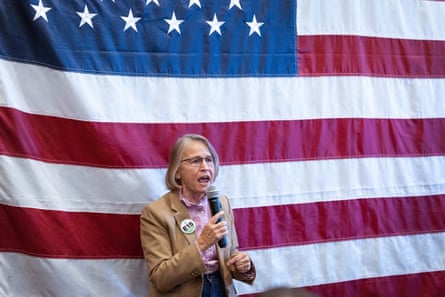
As she campaigned in Fort Madison, 10 minutes south of Wever, Miller-Meeks credited Trump’s tariff regime and his major domestic policy bill with making the project possible, but said that the details of the mill are under negotiation between the county and Mesabi. “It will be on the outcome of those negotiations, but it will be coming to south-east Iowa,” she said.
Blaine Watkins, a Republican who represents the area in the state legislature, said the mill would “completely change” Lee county, where Trump won almost two-thirds of the vote in 2024. Talks to make it happen had been going on for seven or eight months, he said, and he had a hard time believing they wouldn’t come to fruition.
“As far as I’m concerned, unless someone says we’re not going to do it, they’re doing it, and we’re negotiating like they’re going to do it,” he said.
Just a short drive north from Wever is Burlington, the closest small city to the proposed plant. It was long known as the “Backhoe Capital of the World”, since the excavators were first produced there. Earlier this year, the multinational firm CNH closed the plant that made the machines, putting about 200 people out of work.
Burlington’s mayor, Jon Billups, said many who lost jobs found other work at manufacturers in the area, and welcomed the idea of a steel mill being built within commuting distance.
“What happens that’s good for the region is good for Burlington, and what happens in Burlington is normally good for the region,” he said.
To the Democrats hoping to win statewide office in Iowa after years of losses, the plant is a good idea to them as well – if it happens.
“I hope so,” Josh Turek, the Democratic state representative running for US Senate, replied, when asked if he thought the facility would get built. Noting that he had voted for the tax breaks in the legislature, Turek said: “We need the jobs and we need American manufacturing to return here, and return here to Iowa because this is a state that is uniquely hurting and struggling.”
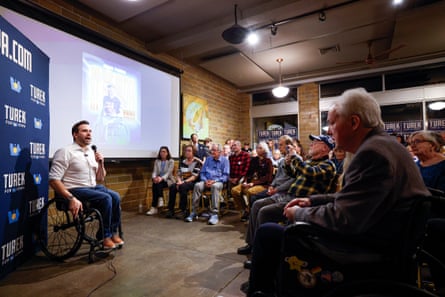
Rob Sand, the Democratic nominee for governor, said: “A good deal for Iowans that gets the steel plant done would be a priority. But I’m not going to give away the farm to get there.”
Local trade unions would normally be excited about such a massive project, but have their doubts about this one.
“I want it to be real, right? I think it’d be great for the area. I think it’s great for the workers, but I’m skeptical,” said Chris Tucker, the international representative for the International Association of Machinists and Aerospace Workers, which has endorsed Turek and Sand. He, too, was mindful of the saga of Foxconn.
For Ryan Drew, president of the Des Moines-Henry County Labor Alliance, seeing Trump announce the news in the Oval Office along with Miller-Meeks and Ashley Hinson, the US congresswoman facing Turek in the Senate race, gave him pause.
“You’ve got the three, either people up for election in the Congress or up for re-election … standing there in the Oval Office, somehow feeling they like they had a piece in this,” he said.
“It’s just kind of the way it was unveiled in there that it kind of makes you wonder if it’s legitimate or not.”
Mike Strom, who owns both the bar and the restaurant in Wever, has been determined to find the answer. He’s poured through public records and talked to his neighbors, and turned up nothing – no records of land sales, not even confidential ones that could be a sign that deals are being done. People he knows that live down in a floodplain where locals suspect the mill could be built haven’t reported anyone coming by to ask about their land.
“I’m a huge proponent of, I’ll believe it when I see it,” Strom said. “Because you hear a lot of things.”