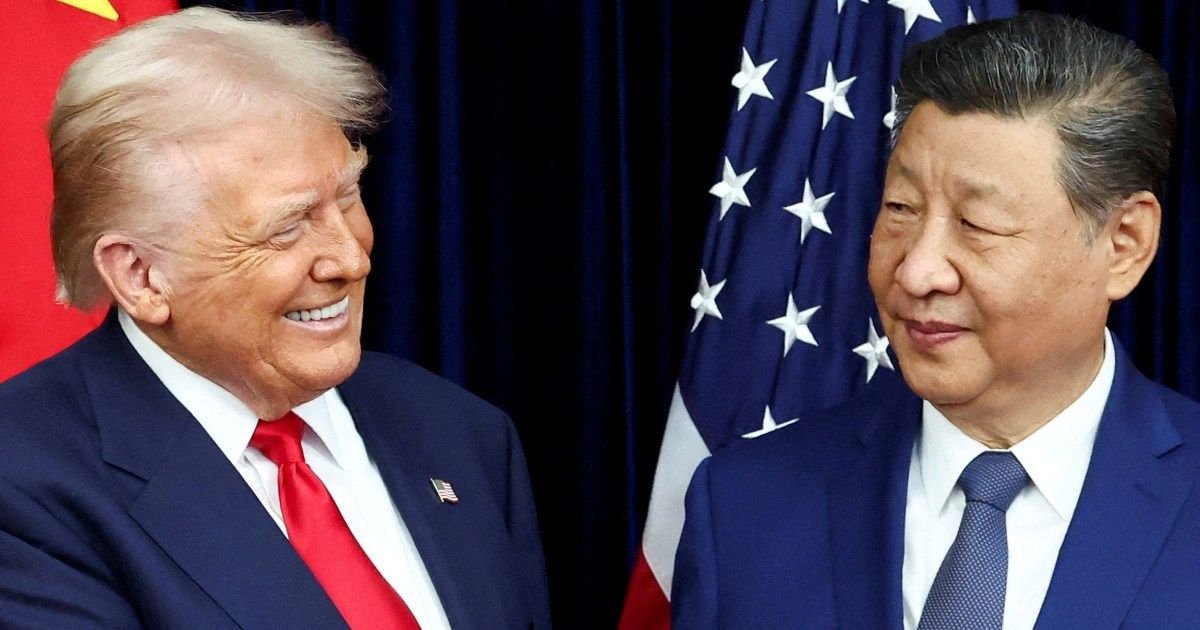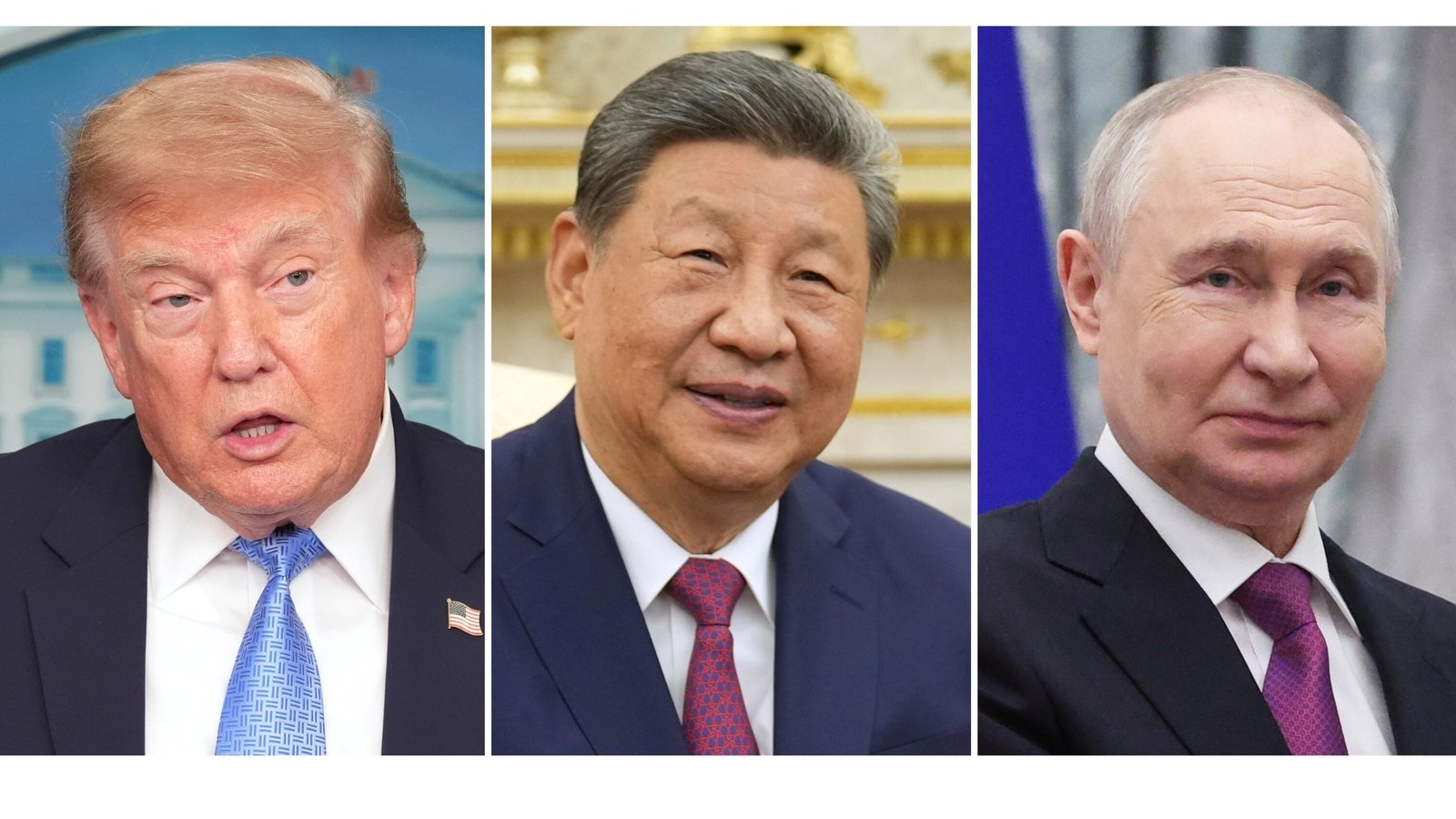
Updated on: Nov 14, 2026, 21:45:17 IST By HT News Desk Prefer HTon Google Share via Copy link Russian President Vladimir Putin, Chinese President Xi Jinping and US President Donald Trump are set to hold a trilateral meeting in China's Shenzhen on November 19 on the sidelines of the Asia-Pacific Economic Cooperation (APEC) summit, the Kremlin confirmed, Reuters reported, citing Russian news agency RIA on Saturday.
Kremlin confirmed meeting of three leaders in Shenzhen next week, with discussions expected on nuclear arms control. (AP Photo) (AP Photo/) The meeting would bring the leaders of the three major powers together on the sidelines of the regional summit.
The APEC leaders’ meeting is scheduled to take place on November 18-19 Earlier, the White House had confirmed the meeting saying that nuclear arms control will be a central topic alongside regional conflicts, including the war in Iran.
Reuters noted that the proposed meeting has drawn comparisons, particularly in Russia, with the 1945 Yalta Conference, where the US, Britain and the Soviet Union formalised spheres of influence and helped shape the post-World War II world order.
The conference has since become synonymous with major powers striking deals that affect smaller countries.
Why comaprisons with Yalta?
Held in February 1945 in Yalta, the conference brought together then-US President Franklin D Roosevelt, British PM Winston Churchill and Soviet leader Joseph Stalin to discuss the post-war future of Europe.
Over time, the Yalta Conference became shorthand for agreements between major powers that shape the geopolitical future of smaller nations, often without their meaningful participation.
The prospect of an updated version of Yalta has generated excitement among Russian nationalists, who see it as a possible opportunity for an agreement to end the four-year-old Ukraine war on terms favourable to Moscow, Reuters reported.
They also believe that holding such a meeting would elevate Russia to the status of a superpower alongside China and the US.
Russian nationalist ideologue Alexander Dugin told Radio Sputnik that the proposed meeting was deeply symbolic, arguing that it reflected a multipolar world order that the West denies.
However, the prospect of such a meeting has also triggered anxiety in several other places, from Kyiv to Tokyo, Reuters reported, citing people familiar with the reactions of the respective governments.
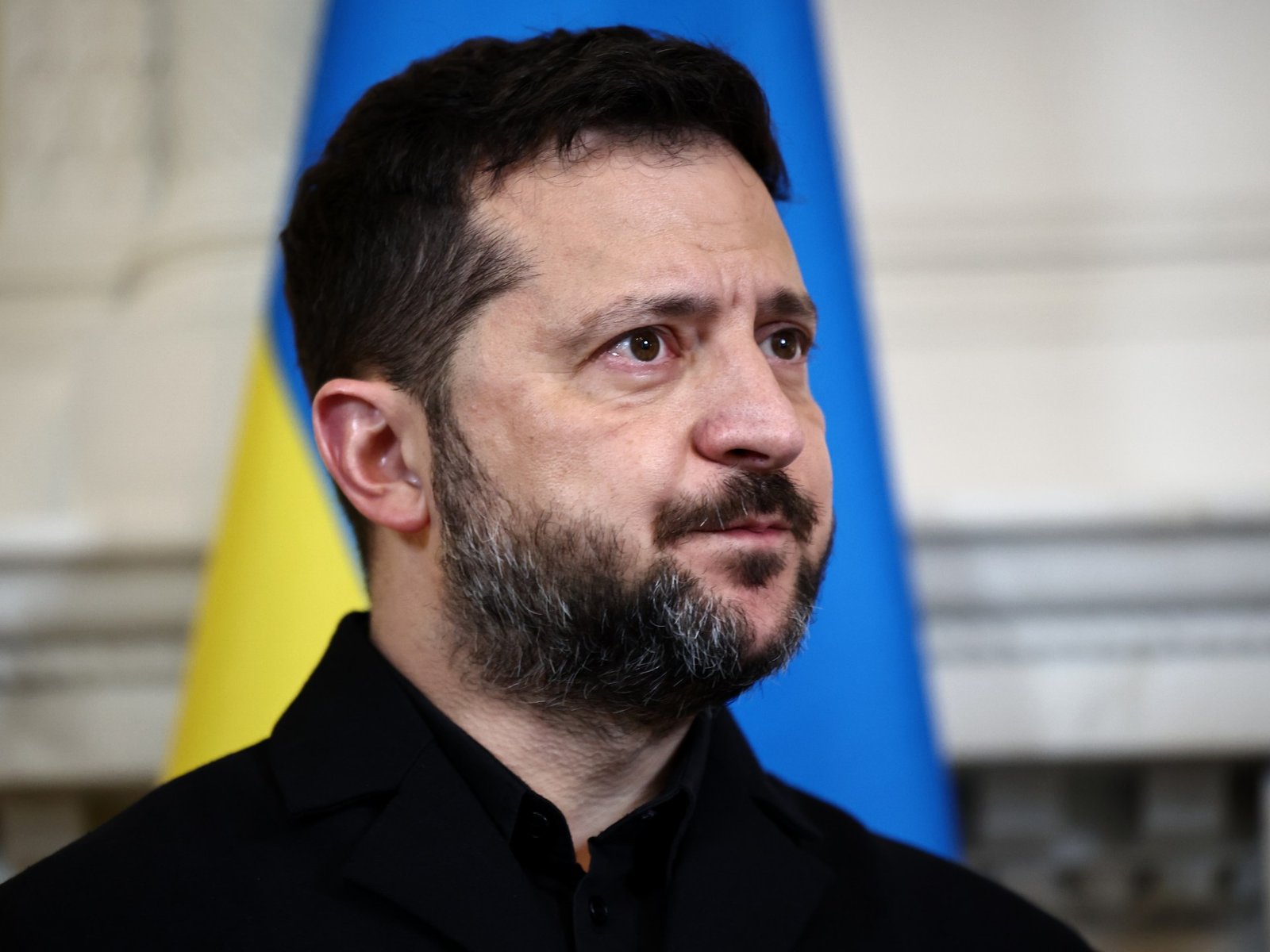
Ukrainian President Volodymyr Zelensky had expressed concern last month over the possibility of a new Yalta-style arrangement, saying Kyiv did not want the meeting to result in a redistribution of global influence.
The proposed meeting also presents a diplomatic challenge for China, which was not part of the 1945 Yalta Conference and has sought to position itself as an advocate for smaller countries, Reuters noted.
US seeks nuclear arms control talks, while Russia wants Ukraine war on agenda While the agenda for the meeting remains unclear, Trump had indicated earlier this month that he expected to meet both Xi and Putin during his visit to China to discuss "denuclearisation".
Reuters reported that Moscow was seeking a discussion on the war in Ukraine.
However, Beijing may not be interested in either of these discussions.
China has resisted including the Ukraine conflict on the agenda, according to a person briefed on the meeting and a European diplomat, both of whom spoke on condition of anonymity, according to Reuters.
Trump has long advocated a trilateral nuclear arms control agreement involving the United States, Russia and China.
Since his first presidency, he has argued that maintaining vast nuclear arsenals is financially burdensome and strategically unnecessary.
However, reaching such an agreement could prove challenging, AP News.
While the United States and Russia each possess nuclear stockpiles exceeding 5,000 warheads, China's arsenal is estimated to be considerably smaller.
Beijing has consequently shown limited interest in joining formal nuclear arms reduction negotiations with Washington and Moscow.
Operating round the clock, the desk brings together experienced editors, reporters and correspondents to deliver fast, accurate and contextual reporting across subjects that influence public policy, governance, business, society and international affairs.
The HT News Desk covers politics, elections, government policies, the economy, business and markets, science and technology, the environment, law and order, infrastructure, education, climate issues and geopolitics, while closely tracking developments across states, institutions and global capitals.
The team also leads coverage of major breaking news events, policy announcements, court proceedings, natural disasters, public emergencies and significant international developments.
Reports published by the newsdesk are based on information gathered from reporters on the ground, official statements, government agencies, court records, regulatory filings, recognised institutions and other authoritative sources.
Stories undergo editorial scrutiny and verification processes to ensure accuracy, fairness and relevance, and are updated as events evolve and additional information becomes available.