‘It starts here’: is the AfD’s win in Saxony-Anhalt just the beginning for the far-right’s European resurgence?
In today’s newsletter: The AfD’s local election triumph has shocked Europe, and raised questions about how to counter the rising far right Good morning.
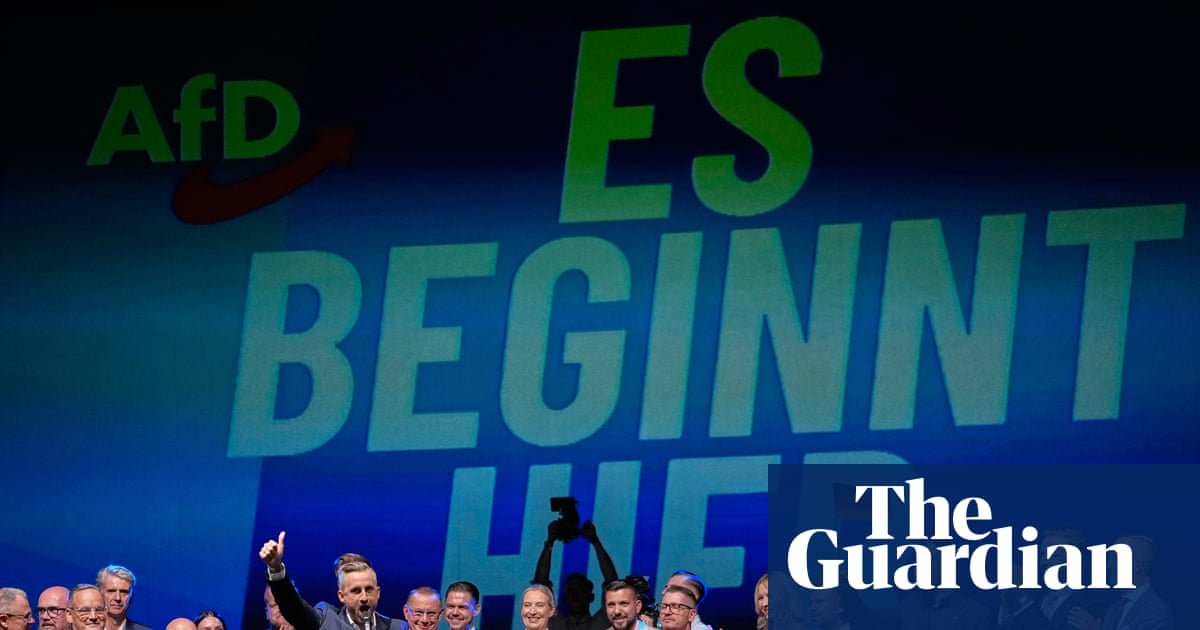
Across Germany – and Europe more widely – there has been a palpable sense of shock and disbelief after the far-right Alternative für Deutschland (AfD) swept to a historic state election victory in the early hours of Monday.
It was, according to France’s European affairs minister, Benjamin Haddad, “a very grave moment for Europe”.
The resonance was stark in the UK too: as the results came in, hundreds of black-clad activists intent on blocking migrant arrivals were battling with police for a second night along England’s south coast.
While seasoned observers stress the context that Saxony-Anhalt, a small state in the former communist east of the country, has traditionally voted further to the right, a red line has been crossed.
A far-right party has been propelled to the brink of power at regional level in Germany for the first time since the Nazis – despite 13 years of increasingly desperate efforts by mainstream parties to shut them out of government.
For today’s newsletter, I spoke to the Guardian’s Berlin correspondent Kate Connolly from the state capital Magdeburg, and our Europe correspondent, Jon Henley, about why Germany’s famous firewall against the far right has failed, and what happens next.
First, this morning’s headlines.
Five big stories UK news | Batons and synthetic pepper spray were used to repel hundreds of masked, black-clad vigilantes in Portsmouth on Sunday, it has emerged, as the policing minister said officers had been injured as they repelled organised “aggression”.
Israel | Ed Miliband will announce what he has described as a broad reset of the UK’s relations with Israel on Tuesday, promising the government will take a more active approach in supporting the Palestinian cause.
US | The Trump administration has raised “serious concerns” over Downing Street’s plan to force digital platforms to hand more prominence to established broadcasters, warning the move risks “facilitating censorship”.
Climate crisis | Nepal is demanding $20m in climate compensation for the recent devastating floods, as a senior minister called on the world’s most polluting countries to “wake up” and accept shared responsibility.
UK politics | There is little appetite for cuts to disability benefits even among Conservative and Reform voters, and proposals to reduce spending could prove politically risky, according to an authoritative national survey.
In depth: ‘A palpable sense of disbelief’ Ulrich Siegmund, leader of the AfD party in Saxony-Anhalt, has been labelled Germany’s “most dangerous man” by Der Spiegel.
He explained how his father had spent years working to obtain a German passport after migrating from Guinea.
“Already that day he felt the mood on the street had become more hostile,” Kate told me.
I know from experience how difficult it can be to persuade strangers to elaborate on their private voting decisions – especially when you have copy to file in a hurry – but yesterday was different, she said: “Everybody had very profound thoughts to share.” She described conversations with a “heartbroken” older couple, who had grown up under communism; a 16-year-old who arrived from Syria under Angela Merkel’s open borders policy in 2015 and was frightened she would be first on the list to send back; another woman who’d voted for the AfD and said she didn’t appreciate being “tarred with the same brush” as supporters of Hitler in the 1930s.
Kate interviewed her as they stood by a Stolperstein, a memorial plaque to a victim of Nazi persecution.
As we spoke, thousands were gathering at Berlin’s Brandenburg Gate to express their opposition to the AfD, and where there was a palpable sense of disbelief and dread as news of the results filtered.
Why is the AfD on the rise?
The German chancellor, Friedrich Merz, was elected leader of the centre-right Christian Democratic Union (CDU) in 2022 on a pledge to halve the AfD’s vote.
Instead it has doubled, and support for his centrist coalition that has tumbled.
A “deeply shocked” Merz vowed to stay in office yesterday after the nativist party triumphed with 44% of the vote, just short of an absolute majority The turnout in Saxony-Anhalt was breathtaking.
At 77.8%, compared with 60.3% in 2021, it suggests the AfD – classified as extremist by Germany’s security services – has succeeded in energising many who didn’t vote at all five years ago.
Detailed polling analysis suggests that, while one in three AfD supporters align with the party’s extremist ideology, its growing popularity is driven by a diversity of voters who feel alienated from mainstream politics.
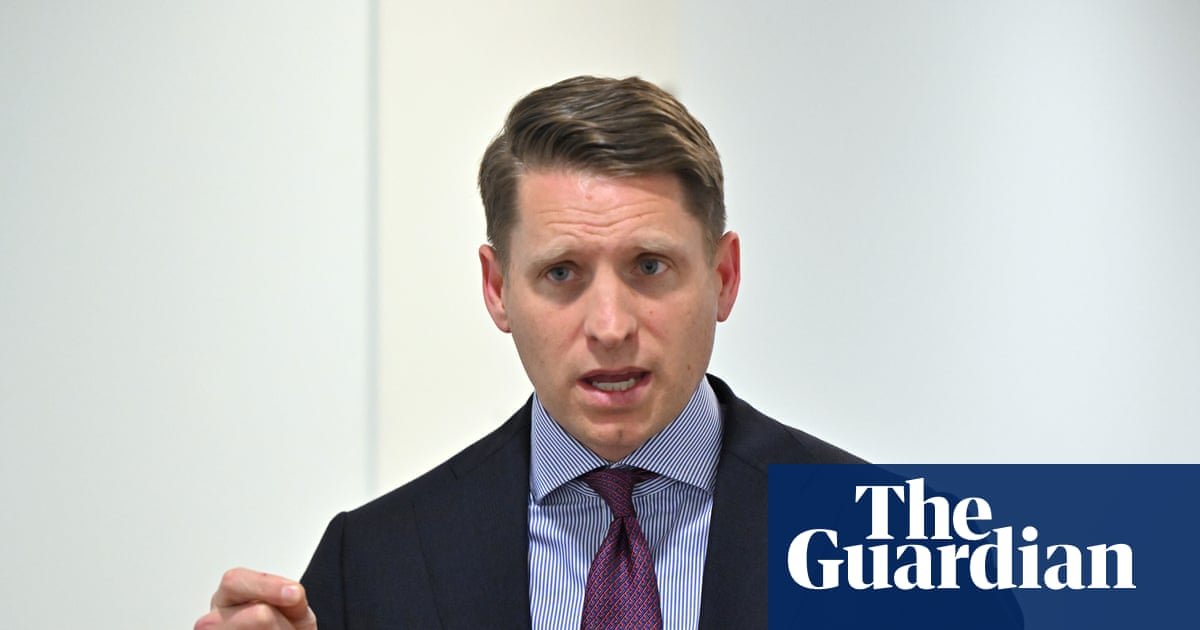
Ulrich Siegmund, the AfD’s lead candidate in Saxony-Anhalt, is a charismatic former perfume salesman who has weaponised voter discontent around the faltering economy and migration – even though irregular immigration has reduced since Merz came into office.
Research from 2023 found a direct link between rent increases – particularly amonglower income voters – and likelihood of supporting the AfD.
Last month, Der Spiegel put Siegmund on its front cover, with the tagline “Germany’s most dangerous man”.
He responded by filming himself signing copies for his 800,000 TikTok followers.
Siegmund has capitalised on a mood of ostalgie – nostalgia for communist East Germany – and bubbling resentment among poorer east Germans who view themselves as second-class citizens compared to people from the west.
Strikingly, it appears one of the highest shares of the AfD’s vote came from the 35- to 44 age group, who were children or infants when the Berlin Wall came down.
What does the result mean for Germany?
There’s now debate about whether the previous consensus over how mainstream parties should deal with the far right – the so-called “Brandmauer”, or firewall – has horribly backfired.
Sceptics believe this non-cooperation with AfD at any level from local councils up to federal government has allowed the party to escape the scrutiny that comes with holding office.
Another criticism is that it has neutered the political mainstream.
“The argument runs that in order to keep the far right out, it forces mainstream parties into unnatural coalitions,” Jon says.
The compromises that they have to strike have resulted in ineffective government and in turn feeds the extremes further.” Now, there are complex coalition talks ahead for the parties in Saxony-Anhalt.
While Siegmund has rejected leading a minority administration, initial indications are that the AfD could govern with the hard-left, pro-Russian Bündnis Sahra Wagenknecht party, which received 5.3% of the vote.
If he succeeds in becoming the state’s first far-right governor, Siegmund will have control over significant policy areas including education, policing and public broadcasting.
AfD has already proposed revisions to the school curriculum, in what one party member described as “more Bismarck, less Hitler”, as well as defunding anti-racism initiatives and removing pride flags.
Jon also suggests the AfD might make changes to civil service recruitment “to create a more supportive environment”.
But securing the Saxony-Anhalt government would also give the AfD seats in the Bundesrat upper house: while they wouldn’t have enough seats to block legislation they could still act as a disruptive force.
And with the AfD leading the polls nationally, there’s a likely ripple effect across the country.
There are more state elections later this month – including in traditionally liberal Berlin, where the AfD is now polling at 18%, with the CDU maintaining a slim lead in the early 20s.
If their vote share rises across states, options for coalition building without the AfD become increasingly convoluted, further flattening the mainstream’s ability to govern confidently. … And for Europe?
Not all of Europe’s far-right leaders have welcomed this development.
Jon, who is based in Paris, has been listening to France’s National Rally – which under Marine Le Pen has spent years successfully detoxifying its image – on the airwaves insisting that, in his words, “these guys are way too extreme for us”.
To give you one example, two years ago the National Rally expelled the AfD from its European parliamentary group, which includes Italian prime minister Giorgia Meloni, following revelations that the party backed mass deportations and downplayed the crimes of the Nazi SS.
But any domestic shock waves in Europe’s largest economy will inevitably affect the bloc.
“A weakened German government in complete upheaval would obviously be bad news for Europe,” says Jon.
“It could affect things like the bloc’s policy towards migration; the environment, because the AfD is famously climate-sceptic; and Ukraine, because it’s also pretty much pro-Kremlin.” In a press conference yesterday, an ashen-faced Merz drew a fairly explicit link between the AfD and Russia, noting that “2,500 km in the east, the election results were being celebrated.” This may reflect growing calls within the CDU and their coalition partner, the Social Democrats, for Merz to toughen his stance on Russia.
After a drone attack on Leipzig airport in August, the German government took a month before publicly blaming Moscow, though the language could not have been more direct when foreign minister Johann Wadephul stated: “We are not at war, but we are a daily target of hybrid warfare.” With a series of federal or presidential elections taking place in Spain, France, Italy, Poland, and Germany over the next two years, the AfD’s landslide can be viewed as an indication of coming peril and a challenge on how to meet it. skip past newsletter promotion after newsletter promotion “The far right’s ideas have been steadily normalised by the media and the political centre,” says Jon.
“They have completely framed the immigration debate, and everybody else is just scrambling to react to them”.
As Keir Starmer’s government discovered with Reform in the UK, repurposing populist rhetoric doesn’t convince disaffected voters.
“Political scientists across Europe would say this result is down to that, and the failure by mainstream parties to come up with inspiring policies that will actually make a real difference to people’s lives and address some of the reasons why they choose to vote for the far right,” he said.
For more on the far right in Europe, sign up to This Is Europe, our free weekly with selection of the most pressing stories and debates.
What else we’ve been enjoying ‘In fact, we’ll be blood brothers for life.
Come on, buddy.
Let’s go home,’ what Brian Clark said to Stanley Praimnath when he saved him on the 81st floor of the north tower.
Photograph: Courtesy Brian Clark I thought David Smith’s re-telling of 9/11, through the eyes of two strangers who met in the middle of the smoke and became some of the only people who survived the incident, was brilliant.
Poppy Noor, newsletters team Nesrine Malik is the best voice in Britain writing about Israel and Gaza.
Her column on the horrific plans of Israeli ministers is well worth your time.
Hettie One of the most interesting things about working at the Guardian is the letters we get from our readers.
This recent series of responses about how to solve the prisons crisis made many good suggestions.
Hettie I enjoyed Naomi Klein and Astra Taylor’s recent piece in the Financial Times (£) about “end times fascism” and the Nazi warships revealed as rivers in eastern Europe dried up this summer.
Naomi Klein and Astra Taylor will be speaking at a Guardian event later this month (tickets here).
Hettie The Guardian Australia has just launched a new politics newsletter to bring you up to speed on the stories that really matter, and what they mean for you.
Sign up here.
Sport Zheng Qinwen waves to the crowd after booking her spot in the last eight at Flushing Meadows.
Cricket | Pakistan have launched an investigation into the “discipline and conduct” during their tour of England, with two players understood to have had their mobile phones confiscated as part of the probe.
F1 | Bernie Ecclestone was detained in Portugal on Monday after customs authorities found him in possession of an undocumented shotgun.
The front pages ’s front page today, while the Times has “PM to declare trade ban on settlements in West Bank”.
The FT leads on “Pressure builds on Germany’s Merz as far-right AfD toasts ‘dream result’”, the i Paper says “New ISA to help Britain’s older first-time buyers”.
On small boats protests Metro has “Port in a storm”, the Mirror says “Now they try to stop the lifeboats”, while the Express’s take is “Don’t ignore public anger over illegal migrants”.
The Telegraph splash with “King tells Harry: No return to the firm”, Mail writes “King puts Harry and Meghan in their place”, and the Sun writes “Megxit means Megxit”.
Today in Focus: The Latest Far-right protesters descend on Dover and Portsmouth The government has condemned the ‘thuggish and intimating behaviour’ of far-right activists clad in black and balaclavas who caused disruption and unrest in Dover and Portsmouth over the weekend in an attempt to obstruct asylum seekers arriving on small boats.
The action was seemingly organised by Daniel Thomas, an agitator better known as Danny Tommo, who has close ties with the far-right extremist Tommy Robinson.
Thomas was recorded on the ground saying Portsmouth was now ‘ground zero’ for small boat crossings, and has threatened further action.
Lucy Hough speaks to political correspondent Ben Quinn.
Cartoon of the day | Ben Jennings Illustration: Ben Jennings/The Guardian The Upside A bit of good news to remind you that the world’s not all bad The much-celebrated beetles and their ‘love torches’ have vanished from the British countryside.
In recent decades, the bioluminescent female invertebrates had vanished from the British countryside.
But after a budget reintroduction programme led by volunteer “glow-getters”, they’ve been spotted over multiple weeks this summer at Nosterfield nature reserve near Ripon.
Sign up here for a weekly roundup of The Upside, sent to you every Sunday Bored at work?
And finally, the Guardian’s puzzles are here to keep you entertained throughout the day.
Until tomorrow.
Quick crossword Cryptic crossword Wordiply Explore more on these topicsThe far right First Edition newsletter Germany Alternative für Deutschland (AfD) Europe newsletters Share Reuse this content