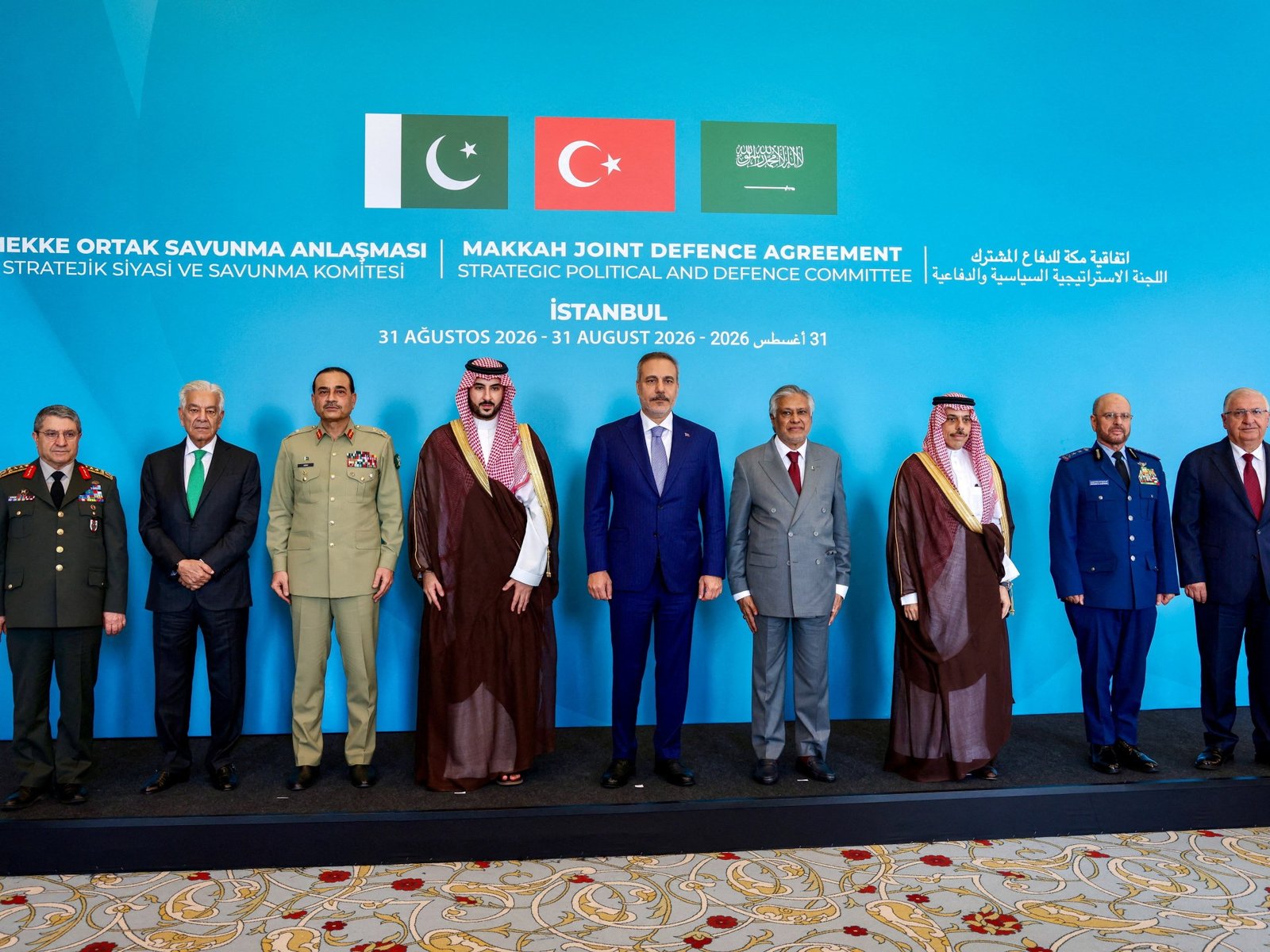
Leaders and representatives of member countries before the first committee meeting of the Mecca Joint Defence Agreement in Istanbul, Turkiye, on August 31, 2026 [Murad Sezer/Reuters] By Al Jazeera Staff and Reuters Published On 20 Oct 202620 Oct 2026 The trilateral defence pact between Turkiye, Pakistan and Saudi Arabia, also known as the Mecca Joint Defence Agreement, has been submitted to the Turkish parliament for ratification.
The pact, signed on August 7, contains 16 articles, according to the document submitted to the Turkish parliament, seen by the Reuters news agency.
It aims to create a joint defence architecture in the region, in the case of an armed attack on any member, and lays out provisions in each article accordingly.
In Article 1 of the accord, for example, the signatories shall use “all necessary means” to eliminate threats to one another’s territorial integrity.
Once the first article is invoked, in case of an attack on any member state, the document lays out provisions for what follows next, as outlined in Article 2 of the draft seen by Reuters.
“In the event one of the parties is subjected to an armed attack or military aggression by another country or group of countries, the parties shall immediately provide assistance to the party under attack, utilising the full range of mutual assistance measures available to them,” says Article 2.
This point is similar to Article 5 of the North Atlantic Treaty, NATO’s founding document, which treats an armed attack on one member as an attack on all.
Article 2 goes on to say that each signatory – Saudi Arabia, Pakistan and Turkiye – “will decide on the scope and nature of the support to be provided following an objective assessment of the assistance required”, adding that the three countries will cooperate within their available resources, including military capabilities and resources.
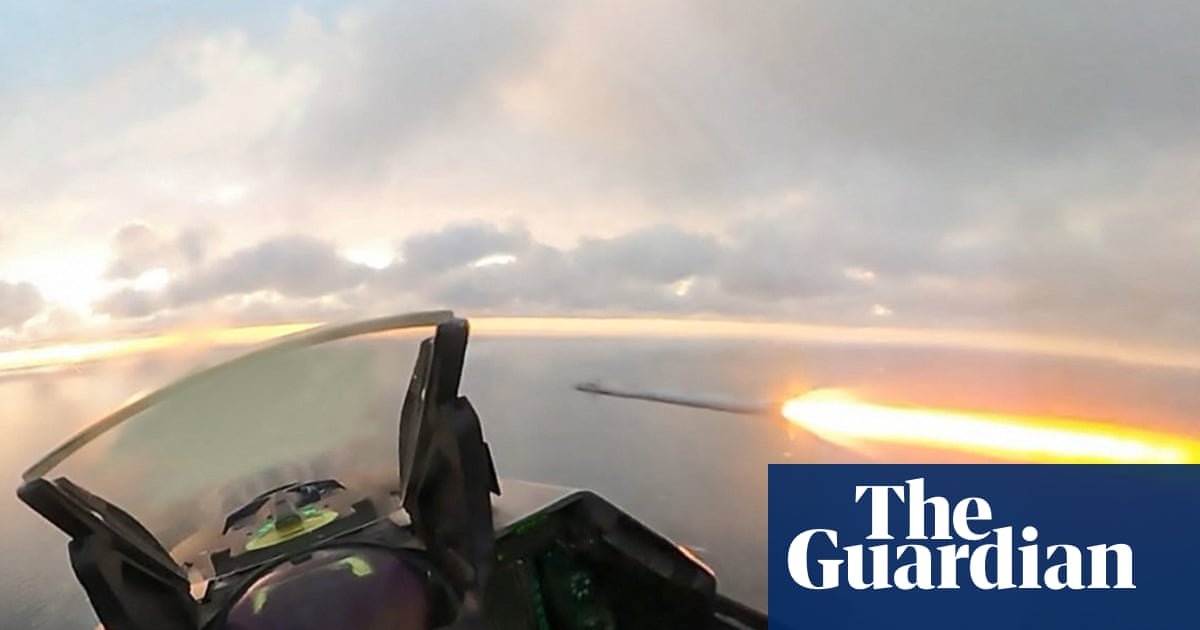
Earlier this month, Turkiye, Pakistan and Saudi Arabia agreed to activate “deterrence measures” under the mutual defence pact and rapidly deploy forces to the Gulf kingdom to counter attacks by Yemen’s Houthis – an armed group also known as Ansar Allah (Arabic for Supporters of God).
Advertisement Articles 3, 4, 5 and 6 of the draft agreement, submitted to the Turkish parliament, also lay out details on defence industry cooperation, intelligence sharing, logistical support and joint training and the fight against “all means of terrorism”, including at the operational level.
Other provisions talk about joint research, development and innovation projects in the field of advanced technology and ensuring military readiness.
There is also mention of setting up a defence committee, which will include foreign and defence ministers from all three signatory states.
And there is a mechanism for allowing other states to join the agreement, with aspirants needing the approval of all three founding members.
The agreement will last 10 years, after which any country can withdraw according to the draft submitted to the Turkish parliament.
Next steps for ratification Al Jazeera’s Resul Serdar speaking on the submitted pact said the process of ratification is going to take “quite some time”, despite the ruling coalition needing a simple majority.
“The various political parties that are represented in the Turkish parliament are going to discuss the provisions in the pact, and we could witness heated debates because the opposition has its own objectives,” he said.
Serdar said even if the deal is ratified, it would not lead to a deployment of Turkish troops, a move which will require other legislative processes.
Turkiye’s parliamentary speaker will refer the agreement to the parliament’s foreign affairs commission.
The commission could debate the agreement as early as Friday, according to a source who spoke to Reuters.
Once it is submitted to the commission, the contents and details of the agreement are expected to be made public.
“This strategic partnership developed between our countries aims to strengthen collective deterrence, enhance joint capabilities in the defence sector, and safeguard security and stability in our region,” Burhanettin Duran, the Turkish presidency’s communications director, said on X.
Duran added that the process marked an important milestone towards the “institutionalisation” of strategic cooperation between the three nations.
‘Ring of fire’ On Monday, Turkish President Recep Tayyip Erdogan spoke of the escalating violence between Saudi Arabia and Yemen’s Houthis.
“As I often say, we are surrounded by a ring of fire.
That is exactly the situation we face,” Erdogan said, while referring to the Houthi attacks on Riyadh airport.
In recent weeks, the Houthis have carried out missile and drone attacks against the kingdom, including oil facilities and Riyadh’s main airport, while the Saudi-led coalition supporting the Yemeni government has launched air attacks on Houthi positions.