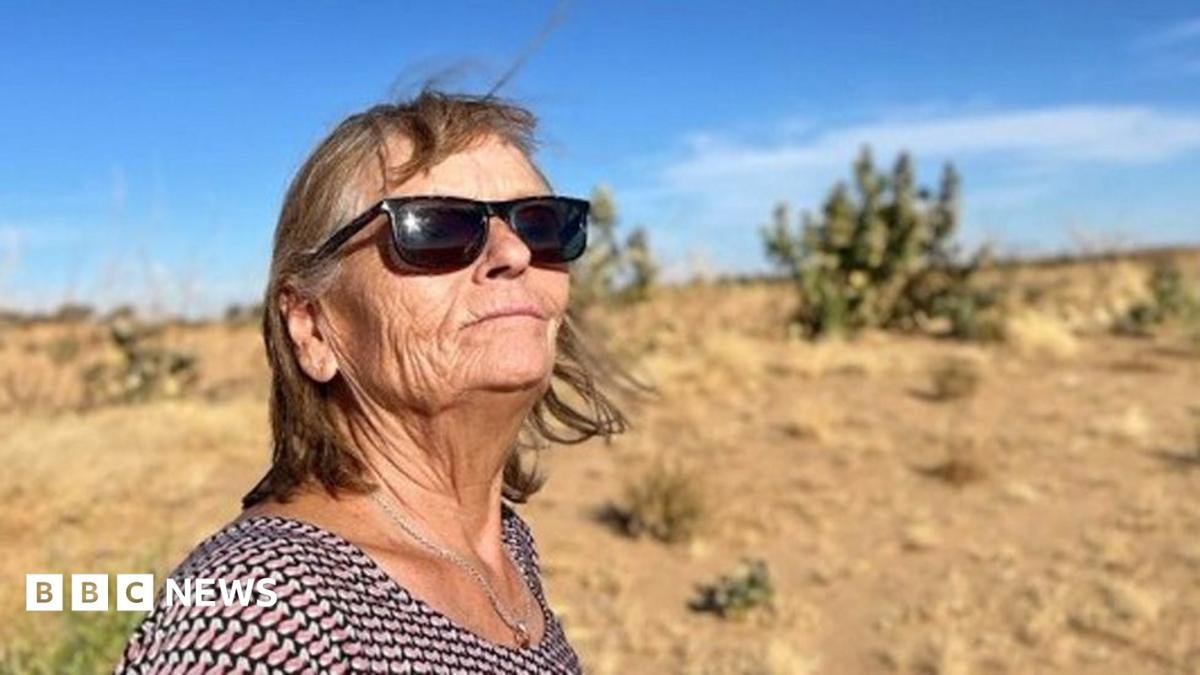
Image source, Christoph Greztmacher Image caption, Eva Greztmacher, 76, had spent many years in Niger as an aid worker ByBasillioh Rukanga and Makuochi Okafor, BBC Africa Published 22 October 2026, 09:21 BST Updated 1 hour ago Two women - a Swiss and an Austrian – have been freed after more than a year in captivity in Niger and handed over to authorities in the Libyan city of Benghazi.
Austrian national Eva Gretzmacher, 76, and Swiss Claudia Abbt, 69, were kidnapped separately in the northern Nigerien city of Agadez in January and April last year.
No details have been given about who was holding them or their demands, although some reports have previously linked the kidnapping to Islamic State militants.
The circumstances of their release were not disclosed.
The Austrian and Swiss governments have both confirmed the release of their citizens.
The Swiss government said Abbt was free and on her way back to Switzerland, while Austria said Gretzmacher had been released after "intensive diplomatic efforts".
"We are all very relieved that Eva G. is free again after more than 21 months...
For many months, we worked closely, discreetly, and in a spirit of trust with our regional, European, and international partners.
These joint efforts have paid off," Foreign Minister Beate Meinl-Reisinger said in a statement.
Kidnapping of foreigners soars in Africa's lawless Sahel region Published 2 March The Swiss foreign ministry said the country's federal administration officials had met Abbt in Benghazi and she had received medical care.
"She is doing well under the circumstances and is currently on her way back to Switzerland," it added.
Federal Councillor Ignazio Cassis thanked those involved in her release, adding that he was "relieved that [she] is free again after more than a year and a half".
The government said it had established a task force - including the foreign affairs department, police and other agencies - after the kidnapping became known.
It added that Switzerland had maintained regular contact with Austria from the outset.
Earlier, Libyan officials were reported as saying the women would be handed over to authorities in their respective countries after necessary procedures were completed.
Libya's al-Masar TV showed the two women entering what looks like an ambulance and later being attended to by a health worker.
Speaking in French, the women thanked Khalifa Haftar, military commander of eastern Libya, and his son, Saddam Haftar, for their release.
Gretzmacher was an aid worker who had lived for many years in Niger, while Abbt had spent several years living and working as a community worker in Agadez.
A plane was expected to leave Benghazi on Thursday, first stopping in Vienna to transfer Gretzmacher to Austrian authorities before continuing to Switzerland with Abbt, privately owned Air Info Agadez news outlet reported.
Libya has struggled to recover from the chaos that followed the 2011 Nato-backed uprising that toppled long-time ruler Muammar Gaddafi.
It is split between two administrations - one in the east backed by Haftar, and the other in the west in the capital Tripoli, led by Prime Minister Abdulhamid Dbeibah.
Under Gaddafi, many ethnic Tuaregs from Mali and Niger were recruited to join armed groups loyal to him in Libya.
After he was killed, many went home.
Analysts say this has been a major factor in the spread of instability in the Sahel region.
Niger and its neighbours have faced years of jihadist violence, including kidnappings and deadly attacks, carried out by different groups linked to al-Qaeda and Islamic State.
The country has been under military control since 2023 when Gen Abdourahmane Tchiani deposed the country's elected President, Mohamed Bazoum.
You may also be interested in: 'I thought I would die' - freed captive tells BBC of life in West African jihadist base Published 16 December 2024 How an al-Qaeda offshoot became one of Africa's deadliest militant groups Published 7 July 2025 The horror of being trapped in the country everyone wants to leave Published 7 September 2017 Go to BBCAfrica.com, external for more news from the African continent.