Rolling coverage of the latest economic and financial news
8m agoHealey promises to 'clamp down' on supermarket price gouging
15m agoIntroduction: UK economy faces recession if strait of Hormuz remains closed

Good morning, and welcome to our rolling coverage of business, the financial markets and the world economy.
EY has kicked off the week with a warning that the UK could fall into recession next year if the strait of Hormuz remains closed.
The consultant’s latest economic outlook has suggested that gross domestic product (GDP) could slow sharply to 0.5% this year and contract by 0.2% next year if the conflict is not resolved and the vital waterway – through which a fifth of the world’s oil and gas is normally carried – remains shut until early or mid-2027.
On the other hand, if the strait reopens by the end of the third quarter of this year, EY’s base case forecast suggests growth will remain fairly resilient, at 0.9% in 2026 and 1.2% in 2027.
Peter Arnold, EY UK chief economist, said although the UK economy was more resilient than many expected this year (which has prompted his team to upgrade its growth forecast for the year from an 0.8% estimate made in May to 0.9%), there is still uncertainty ahead.
Ongoing disruption to global energy markets will now start to test this economic resilience. If the strait of Hormuz reopens in the coming months, we expect the UK to avoid a more pronounced downturn, but an extended closure into 2027 would raise inflation and could push the economy into contraction next year. As growth becomes harder to sustain, the UK is likely to rely increasingly on those sectors that have underpinned economic performance in recent years, particularly technology and high-value business services. At the same time, longstanding pressures in construction remain a concern. Rising project costs, persistent labour shortages and weak productivity growth risk constraining the delivery of major infrastructure projects at a time when demand remains high. Enhancing productivity in the sector will be critical if the UK is to deliver its infrastructure ambitions while supporting broader economic growth.”
Ongoing disruption to global energy markets will now start to test this economic resilience. If the strait of Hormuz reopens in the coming months, we expect the UK to avoid a more pronounced downturn, but an extended closure into 2027 would raise inflation and could push the economy into contraction next year.
As growth becomes harder to sustain, the UK is likely to rely increasingly on those sectors that have underpinned economic performance in recent years, particularly technology and high-value business services. At the same time, longstanding pressures in construction remain a concern. Rising project costs, persistent labour shortages and weak productivity growth risk constraining the delivery of major infrastructure projects at a time when demand remains high. Enhancing productivity in the sector will be critical if the UK is to deliver its infrastructure ambitions while supporting broader economic growth.”
The warning comes as oil prices have fallen back today, with the international benchmark Brent crude now down about 5% to $83.49 a barrel as tensions in the Middle East ebb.
Over the weekend, Donald Trump said he cancelled planned military strikes against Iran on the basis of “rapidly” reaching a deal on its nuclear programme and the full reopening of the strait of Hormuz.
The US president paused the strikes in expectation of a breakthrough and in response to requests from Iran and other countries in the region, he claimed on his Truth Social platform on Saturday.
Based on this request, I have agreed, for the future benefit of the WORLD and, likewise, the survival of a successful and prosperous Iran, to cancel the attack, subject to being able to rapidly make a DEAL.”
Elsewhere this morning, there are reports that the UK drugmaker AstraZeneca is in talks to combine with US rival Bristol Myers Squibb, in a deal that would create a pharmaceutical group worth nearly $400bn.
The Financial Times first reported that the companies have held discussions about a tie-up in recent months, citing unnamed people familiar with the matter.
AstraZeneca, which is London’s second most valuable listed company, has a market value of about £196bn, while BMS is worth roughly $133bn. A combination of the two would make one of the biggest pharmaceutical companies in the world.
The agenda
9am BST: Eurozone manufacturing PMI
9.30am BST: UK manufacturing PMI
3pm BST: US manufacturing PMI
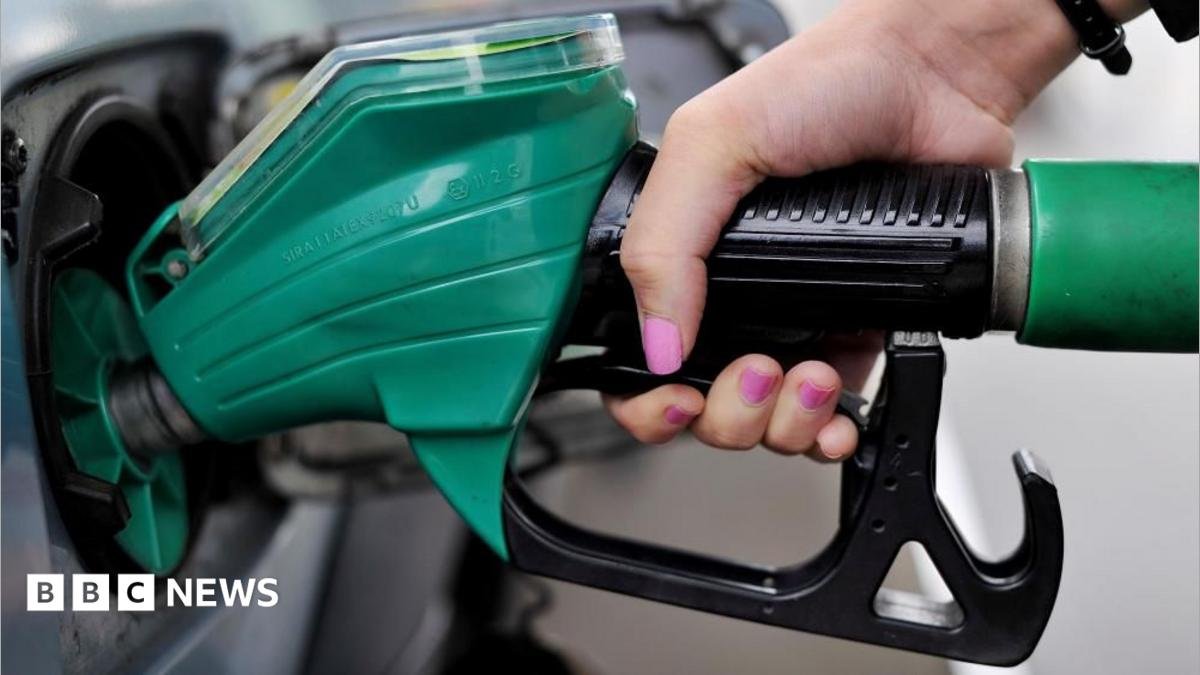
The warning from EY follows comments from the new chancellor, John Healey, that the government is standing by to prevent the public from “being taken for a ride at the pump or the till” as the Iran war continues to hit prices.
While he said there had been “no significant evidence of so-called price gouging” during the crisis, he used a weekend column to tell the big retailers that ministers were “watching closely” for any signs of profiteering.
Healey faces a difficult economic balancing act as the energy price shock caused by the months-long conflict in the Middle East reignites the cost of living crisis.
Last week the Bank of England kept UK interest rates on hold as it warned that a further escalation in the Iran war could drive inflation above 4% next year, adding to financial pressures on households.
Healey wrote in the Sunday Telegraph:
The conflict affects our national security, our UK bases, personnel and allies in the Middle East. But it also threatens our economic security: impacting the family finances of millions of British people. And I know that many British businesses have been put under pressure by increasing costs too. Conflict and uncertainty increases inflation, threatens growth and pushes up costs for businesses and governments alike.”
The conflict affects our national security, our UK bases, personnel and allies in the Middle East. But it also threatens our economic security: impacting the family finances of millions of British people.
And I know that many British businesses have been put under pressure by increasing costs too. Conflict and uncertainty increases inflation, threatens growth and pushes up costs for businesses and governments alike.”