CorrectionBritain will introduce an import ban on goods from Israeli settlements, Ed Miliband tells parliament.
France, Britain, Canada are among 12 countries that have backed restrictions on trade with illegal Israeli settlements in the occupied West Bank.
“Today, Canada, Denmark, Finland, France, Iceland, Ireland, Norway, Poland, Portugal, Spain, Sweden and the UK confirm their intention to introduce national and or support European restrictions on trade in goods with settlements which are illegal under international law, or that they are actively considering these and other measures, in accordance with their national procedures,” the statement of the 12 countries’ foreign ministers said on Tuesday.
“The Government of Israel’s actions in the West Bank are undermining the possibility of a two-state solution,” the statement said.
The move came soon after United Kingdom Foreign Minister Ed Miliband announced sanctions on illegal Israeli settlements in the occupied West Bank in coordination with France and Canada.
Britain will introduce an import ban on goods from Israeli settlements, Miliband told parliament on Tuesday.
He said that Canada and France will also announce a ban on goods from Israeli settlements, while Denmark, Finland, Iceland, Poland, Portugal and Sweden have pledged to “support further action”.
Miliband said that there will also be a comprehensive sanctions regime put in place, adding that Britain could no longer simply “call out” injustice and suffering, but told the House of Commons that the country now had to “act” to oppose the expansion of settlements.
“Today we refuse to be bystanders to further suffering and to the destruction of the two-state solution,” Miliband said, referring to Britain’s long-held support for the two-state solution, which Israel opposes.
French Foreign Minister Jean-Noel Barrot said on X that “France is going to put an end to its commerce with Israeli settlements in Palestine, along with 11 other countries which have also undertaken similar engagements”.
Advertisement “Why are we doing this?” Barrot asked, adding, “because the West Bank is close to exploding – there is frenzied expansion of the settlements, a flare up of violence against Palestinians by extremist settlers, and acts of terror which have been attacked by Israeli authorities themselves”.
The United States, through its ambassador to Israel, has already criticised Britain’s plan to impose sanctions, while two Israeli ministers called for measures to be taken against Britain.
Miliband, who became Britain’s foreign minister in July, also said the UK’s position is that the occupation in the West Bank is unlawful, and that London believes that there is “ethnic cleansing” of Palestinians in areas of the West Bank.
Details remain unclear The impact on the 6 billion pound ($8.12bn) annual bilateral trade between the UK and Israel is likely to be minimal, with details remain unclear of how the UK will differentiate between goods originating in West Bank settlements and products made in Israel.
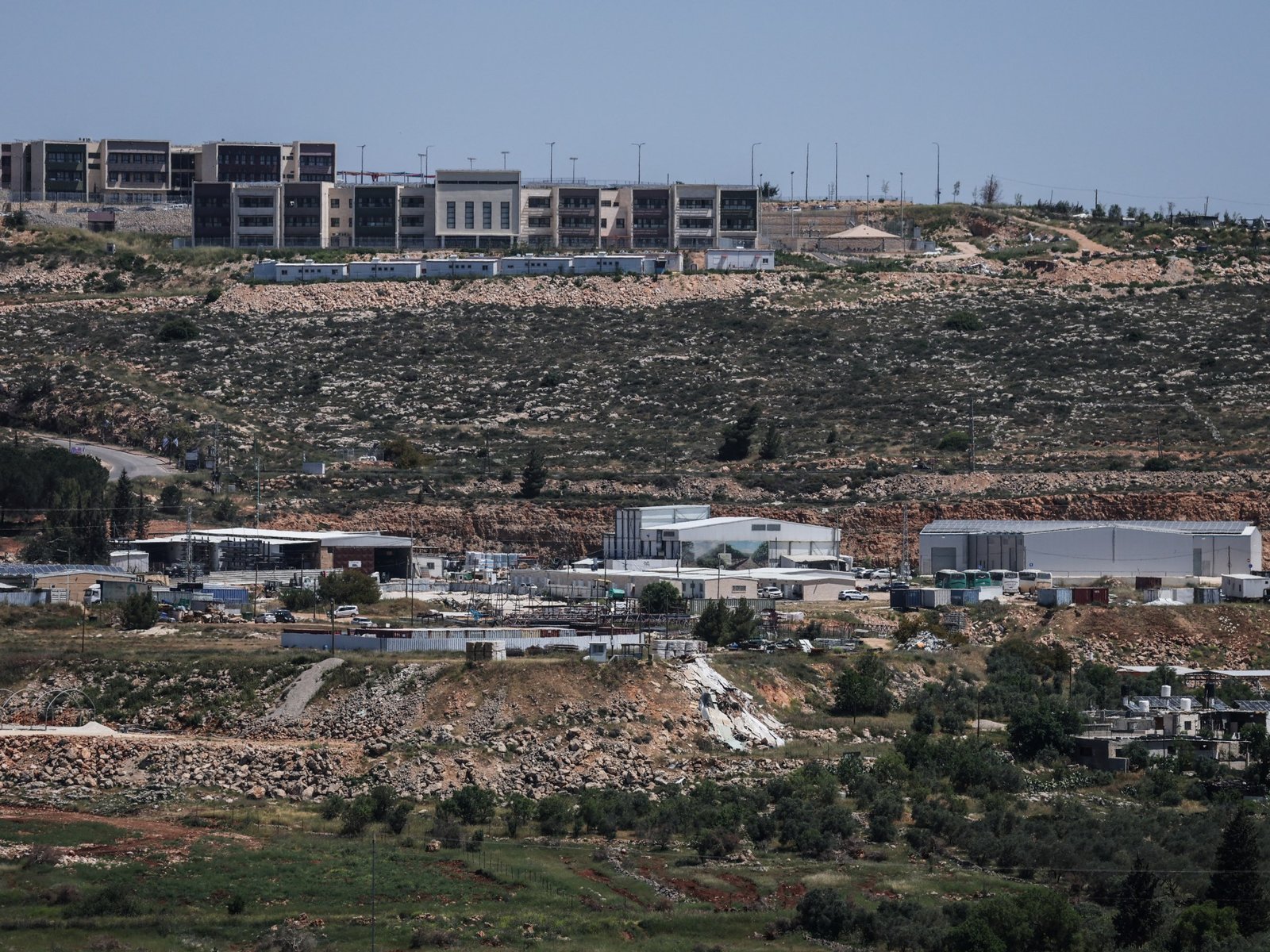
Israeli settlements and outposts across the West Bank are illegal under international law.
According to the Palestinian Colonization and Wall Resistance Commission, Israeli settlers now number approximately 780,000 across the West Bank and occupied East Jerusalem.
They live in 192 settlements and 400 outposts, making up 71 percent of Area C in the West Bank, which is under full Israeli civil and military control, and 91 percent of the Jordan Valley, the commission said.
Settlers often set up outposts without formal approval around Palestinian villages, from which they launch a campaign of harassment, including killing and stealing livestock, cutting off water, electricity and supplies, and damaging property to drive local residents out.
Once they establish a more formal settlement, they often receive retrospective approval from the Israeli government for the settlement.
In some places more recently, settlers have laid siege to individual family homes, such as in the Ras al-Ein area of Qusra, cutting off water and other supplies, as well as damaging orchards or harming livestock.
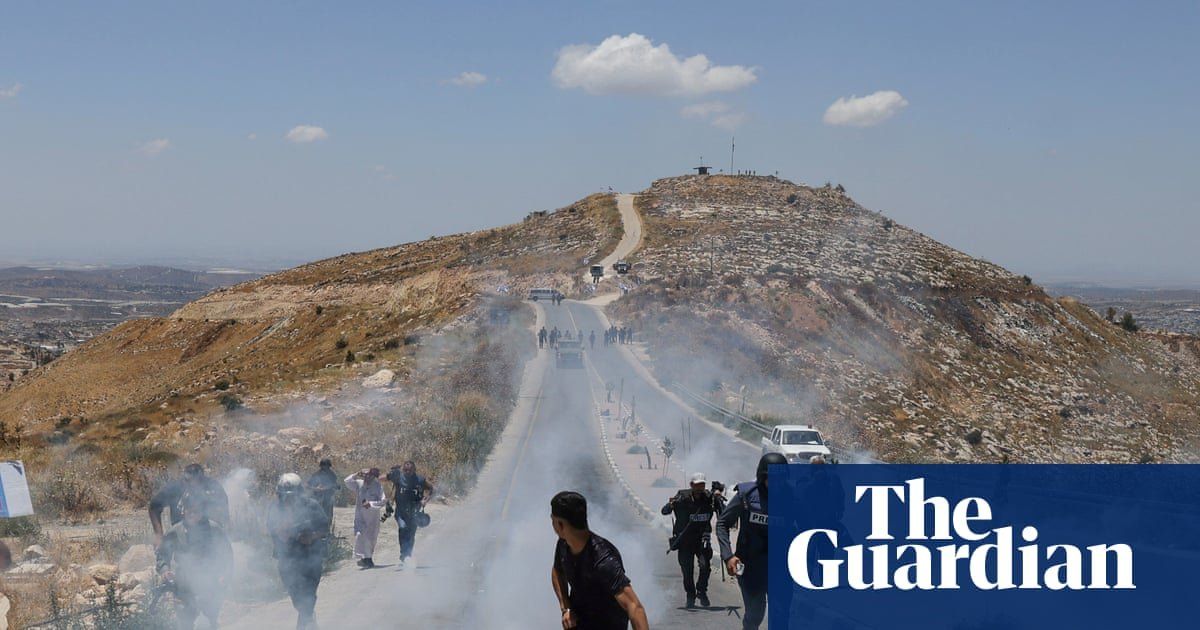
Attacks on Palestinian communities by Israeli settlers in the occupied West Bank, which are often supported by Israeli forces, have gathered pace over the past few month since settlers from the Havat Gilad settlement attacked Palestinian homes on the eastern edge of Tal, southwest of Nablus.
Israel is also pushing ahead with plans for the so-called E1 settlement expansion close to Jerusalem, which human rights organisations warn would essentially sever the West Bank in two, further hampering the freedom of movement of Palestinians on either side of it and endangering the possibility of a Palestinian state.