As Ukraine, Russia and the United States engaged in their first peace talks since February this week, the front lines continued to deteriorate for Moscow as its casualties rose to a possible new record without any significant territorial gains.
Ukraine’s military said it had caused more than 26,000 Russian casualties – meaning those killed and seriously wounded – in the first 10 days of November, suggesting this month’s figure could mark a new record topping October’s 54,400.
Recommended Stories
list 1 of 4Regional security dominates European talks in Dublin amid hybrid attacks
list 2 of 4Russian court jails rights lawyer for 12 years on treason charge
list 3 of 4Russia and Ukraine report overnight attacks amid US diplomatic push
list 4 of 4Why is Ukraine attacking Russian warships in the Baltic Sea amid talks?
On November 9, Ukraine also claimed a new daily record of 2,980 Russian soldiers killed or wounded. That marked the fourth reported daily record this year.
Al Jazeera cannot independently verify casualty claims by either side.

This cluster of new casualty records in the autumn, accompanied by a lack of any significant territorial gains by Russia, suggested that Moscow was not coming any closer to its goal of seizing the last remaining quarter of Ukraine’s eastern Donbas region this year.
A group of pro-Ukrainian hackers from Belarus said they had accessed records of the Russian state statistical service, Rosstat, and discovered an official tally of 450,000 Russian fatalities for the entire full-scale invasion, since 2022.
Independent assessments indicate that Russia has seized a net 117sq km (45sq miles) this year, a poor showing for its pains.
Yet, Russia was as defiant as ever at peace talks in Abu Dhabi on November 10-11.
Presidential aide Vladimir Medinsky, who headed the Russian delegation, told Vesti television after the talks concluded that he would be satisfied “only when we win and sign a peace agreement on our terms”.
Russia has demanded territory Ukraine is not willing to surrender, and said NATO needs to pull out of all the former Soviet bloc countries which joined it since 1997.
Medinsky called for “a new, comprehensive, and just security system in Europe,” because the one put in place after World War II “is functioning very poorly, and, in fact, the entire system is sick. In Ukraine, a festering wound has simply burst.”
Ukrainian President Volodymyr Zelenskyy saw it differently.
“When the Russians now talk about a security architecture for themselves … What they really want is to freely interfere in the affairs of other countries, and to use force whenever they want, and to make sure that no one can support liberty inside Russia,” he told the Danish parliament, the Folketing, on the day the talks concluded.
Although US negotiators agreed to table the subject of a European security architecture at Abu Dhabi, the three European powers present – Germany, France and the United Kingdom – did not, and they were excluded from the proceedings.
“We did not communicate with them. We don’t really understand what their status is here,” Medinsky said.
Europe agrees with Ukraine that such a discussion puts the cart before the horse.
“The idea of discussing European-Russian security infrastructure is a complex and potentially dangerous one,” Zelenskyy said on the eve of the talks. “First, we must discuss how to end Russia’s war against Ukraine. Second, what the security infrastructure will be for Ukraine.”
Ukraine has asked for an ironclad guarantee of military intervention if it is attacked again, as offered in NATO’s Article 5.
Instead, Zelenskyy said, the Trump administration offered “something similar to NATO”.
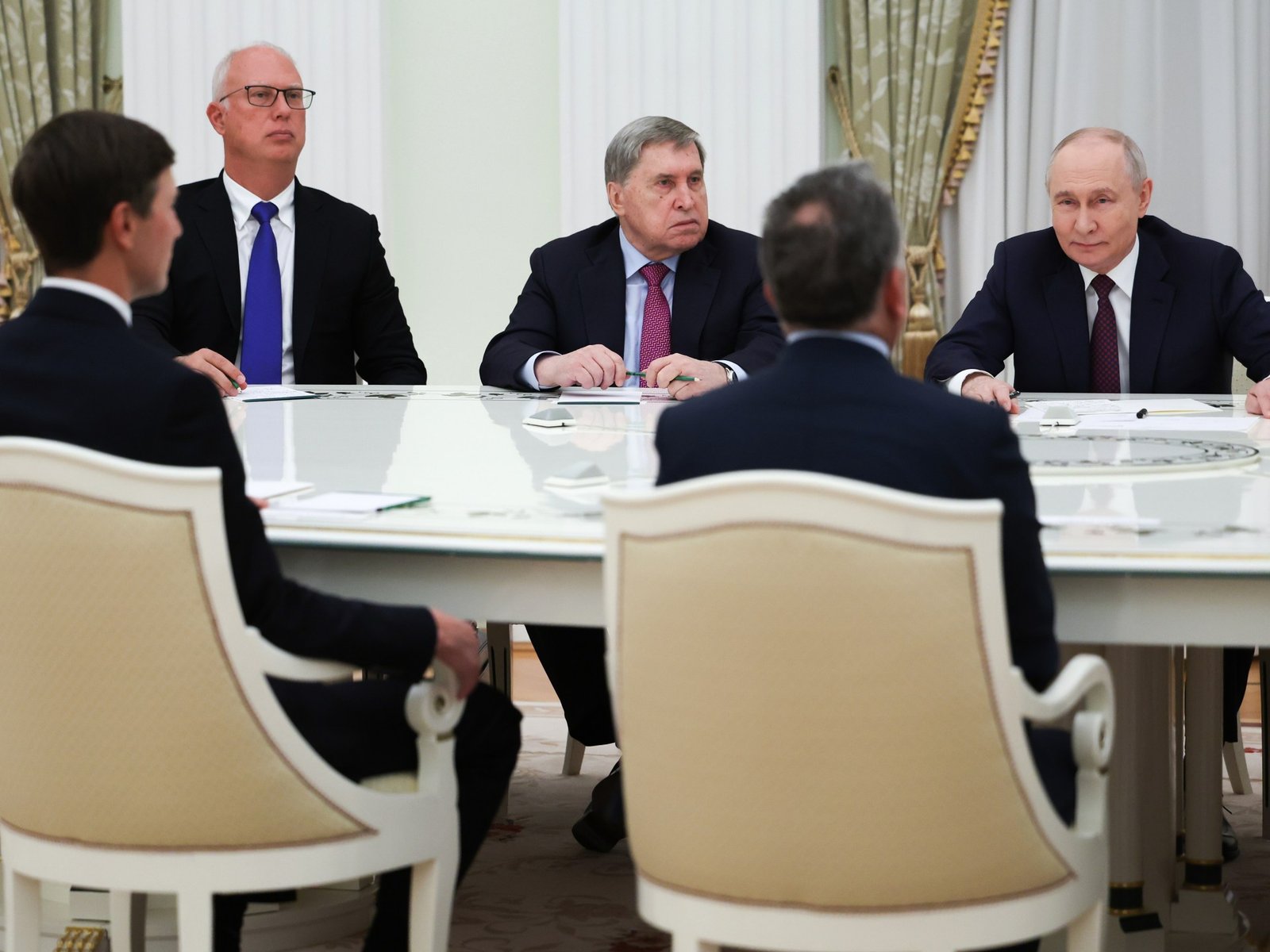
Russian President Vladimir Putin received the US negotiating team in Saint Petersburg after talks in Abu Dhabi, and repeated the Russian position that the presence of European peacekeepers in a post-war Ukraine would also be “absolutely unacceptable”.
Zelenskyy attributed Russia’s absolutism to its inaccurate understanding of realities on the ground.
“Putin lives in a different reality,” he told journalists in Copenhagen on November 11. “When I received the second report from our negotiating group after the meetings in Abu Dhabi, they told me that the Russians believe and claim that they have already occupied half of the [part of the] Donbas region which is actually under our control. These were military officers, Russian intelligence.”
Russia’s defence ministry has claimed to have seized 3,600sq km (1,400sq miles) of Ukraine this year, and Putin has repeated the claim.
Still, Abu Dhabi did produce some results.
Russia and Ukraine said there would be a new POW exchange of at least 1,000 or possibly 1,500 prisoners on each side. And Zelenskyy said de-escalation steps were discussed.
‘Ukraine faced constant alarms’
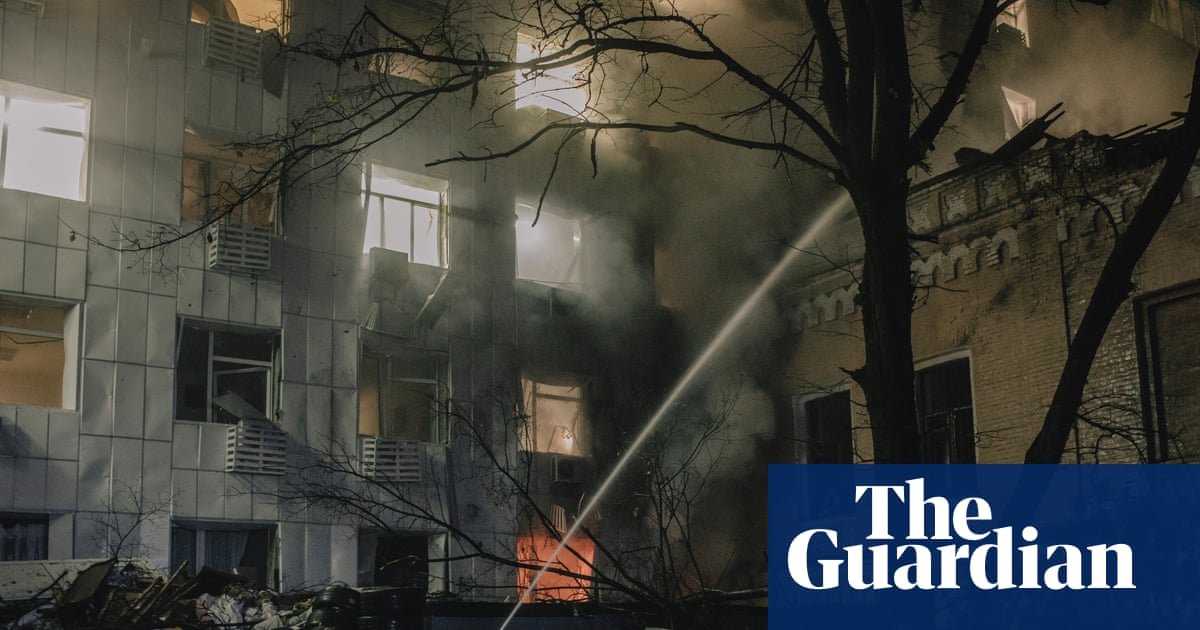
In the run-up to Abu Dhabi, Russia pounded Ukraine’s cities.
“For 10 days and nights, Ukraine faced constant alarms,” said its General Staff. During that period, Russia launched 3,519 drones, and Ukraine managed to intercept 3,068 of them, they said, including 83 percent of the jet-powered drones, which now comprise roughly half of the swarm.
On the night of November 7, Russia unleashed 36 ballistic missiles into Ukraine, including some reportedly manufactured by North Korea, striking energy infrastructure.
Prime Minister Serhiy Koretskyi has asked European allies to provide generators and battery packs for homes, as well as mobile shelters and buses to keep urban transport moving during blackouts.
On November 12, Ukraine reported it was experiencing renewed restrictions on its use of the Starlink satellite service, which it needs to coordinate interceptors to incoming Russian drones.
“This directly impacts our ability to intercept Russian kamikaze drones,” said Zelenskyy. “Due to the speed limitations, we simply cannot intercept them in time.”
This came as Ukraine continued its own strikes inside Russia, targeting ballistic missile launchers and factories as a forward defence.
On November 7, a fire burned almost a hectare of storage space next to an Almaz factory in Rostov, which makes communications equipment. It was unclear whether Ukraine caused it. On the same day, Ukraine fired Neptune missiles into the Proton-Electrotex conglomerate which makes parts for Kormoran cruise and Iskander ballistic missiles, and destroyed two ballistic missile launchers.
On November 9, Ukraine struck the Morozov plant near St Petersburg, which makes solid rocket fuel for ballistic missiles, and the Redkino plant in Tver, which makes chemical products used in missiles.
On November 10, Ukraine struck the 123rd Aircraft Repair Plant in Novgorod, which services Russia’s increasingly rare A-50 early warning and targeting aircraft.
On November 11, Ukraine struck the Naro-Forminsk cruiser, which launches Kalibr and Onyx cruise missiles.
“We are acting asymmetrically,” Ukrainian defence minister Yevhenii Khmara told his Dutch counterpart. Ukraine had struck a total of 12 ballistic missile launch sites inside Russia, he said without specifying the timeframe, and said the strikes on factories were reducing Russian production capacity.
Zelenskyy renewed his call for German Taurus missiles with which to strike Russian launchers.
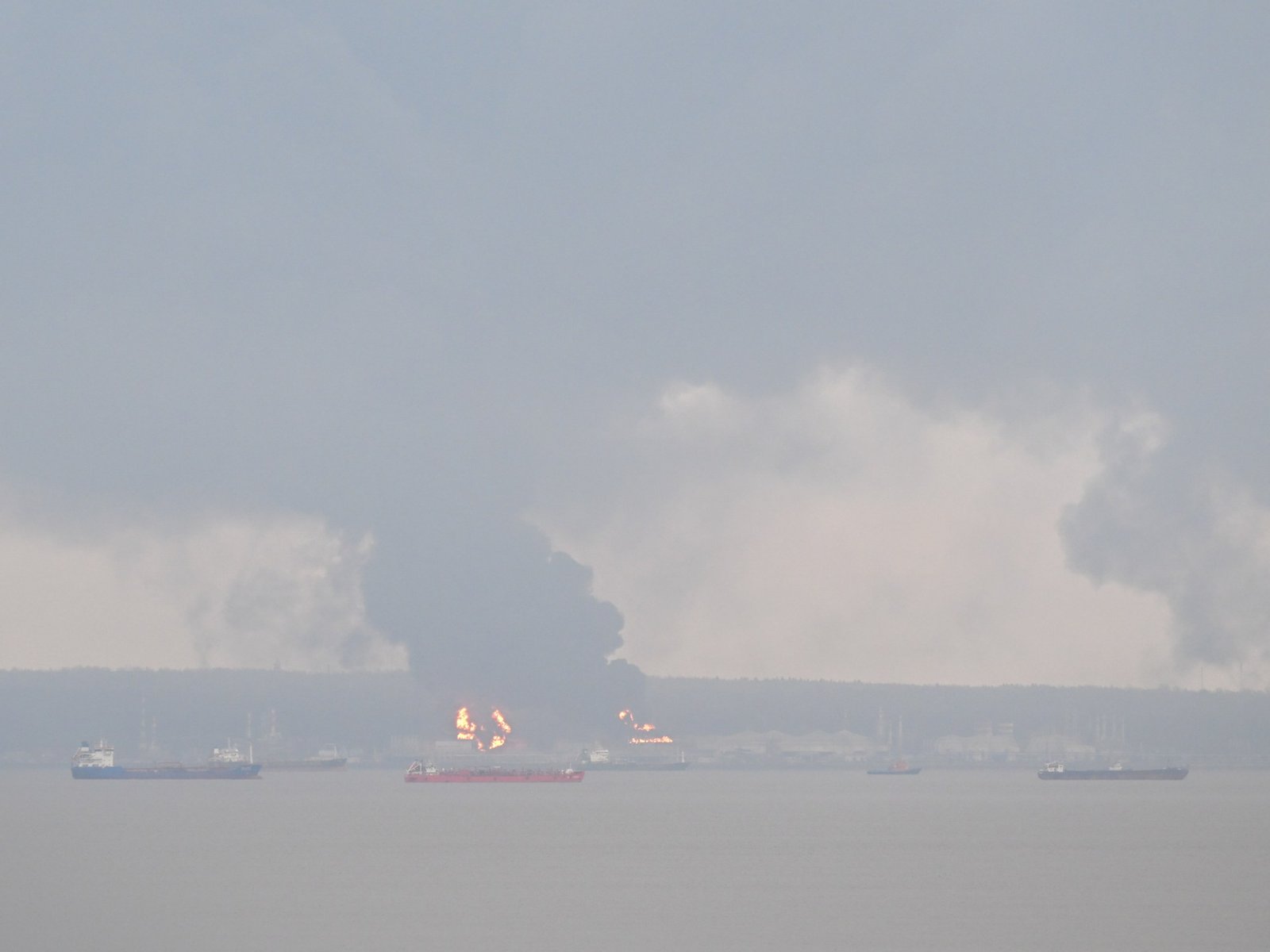
Ukraine also struck a series of refineries during the past week, including the Afipsky, Saratov, Kirishi, Ust-Luga and Omsk refineries. Russian military reporters said three Russian helicopters had been downed by friendly fire during attempts to defend the Ust-Luga refinery.
Since the end of October, its General Staff said, Ukraine had struck Russia’s five biggest refineries.
Sources told Reuters that Ukraine has destroyed at least 30 percent of Russia’s refining capacity.
The purpose of refinery strikes is to diminish Russian export revenue for petroleum products and to disrupt its economy. Those goals appeared to be working last week, as Ukraine’s Foreign Intelligence Service reported Moscow projecting a $63bn-$67bn deficit for 2026, double its intended figure, and Russian media reported staff layoffs at the parliament, or Duma, and the Russian Federation Council.