Washington, DC – United States Secretary of State Marco Rubio has announced a new set of sanctions against the International Criminal Court (ICC), this time targeting the entity itself, as opposed to the tribunal’s officials or groups that provide support.
The announcement on Friday represented a major escalation from the administration of US President Donald Trump, which has vowed an “all of government” approach to dismantling the court.
Recommended Stories
list 1 of 3Trump administration readies sweeping sanctions against ICC, reports say
list 2 of 3Why United Nations says US boat strikes may be ‘crimes against humanity’
list 3 of 3ICC convicts ex-CAR militia leader of crimes against humanity
“We will ban transactions with this rogue court, cutting off their resources and crippling their ability to operate against us because our message is clear: the United States and the American people are not subject to the jurisdiction of this fake ICC,” Rubio said in a video posted on social media. “Either the ICC will end its threats, or we will end the ICC.”
As justification for its actions, the administration has pointed to the court’s ongoing investigation into abuses committed in Afghanistan, which could ensnare US military and intelligence personnel, as well as the ICC’s arrest warrant for Israeli Prime Minister Benjamin Netanyahu and former Defence Minister Yoav Gallant for war crimes committed in Gaza.
Before Friday’s actions, the US had sanctioned ICC judges and prosecutors, a UN special rapporteur focusing on the occupied Palestinian territories and Palestinian rights groups that have provided evidence to the court.
Several rights groups have challenged those sanctions in US federal court, saying restricting how US citizens interact with the court treads on their constitutional freedoms. Sanctioned ICC judges have also launched legal challenges in the US.
Speaking to the Reuters news agency on Friday, deputy prosecutor Nazhat Shameem Khan said the sanctions “must be condemned”.
“The sanctions are intended to undermine the rule of law internationally and the work that an independent judicial institution is doing,” Khan said. “Our work will continue across all our situations, our investigations and our prosecutions.”
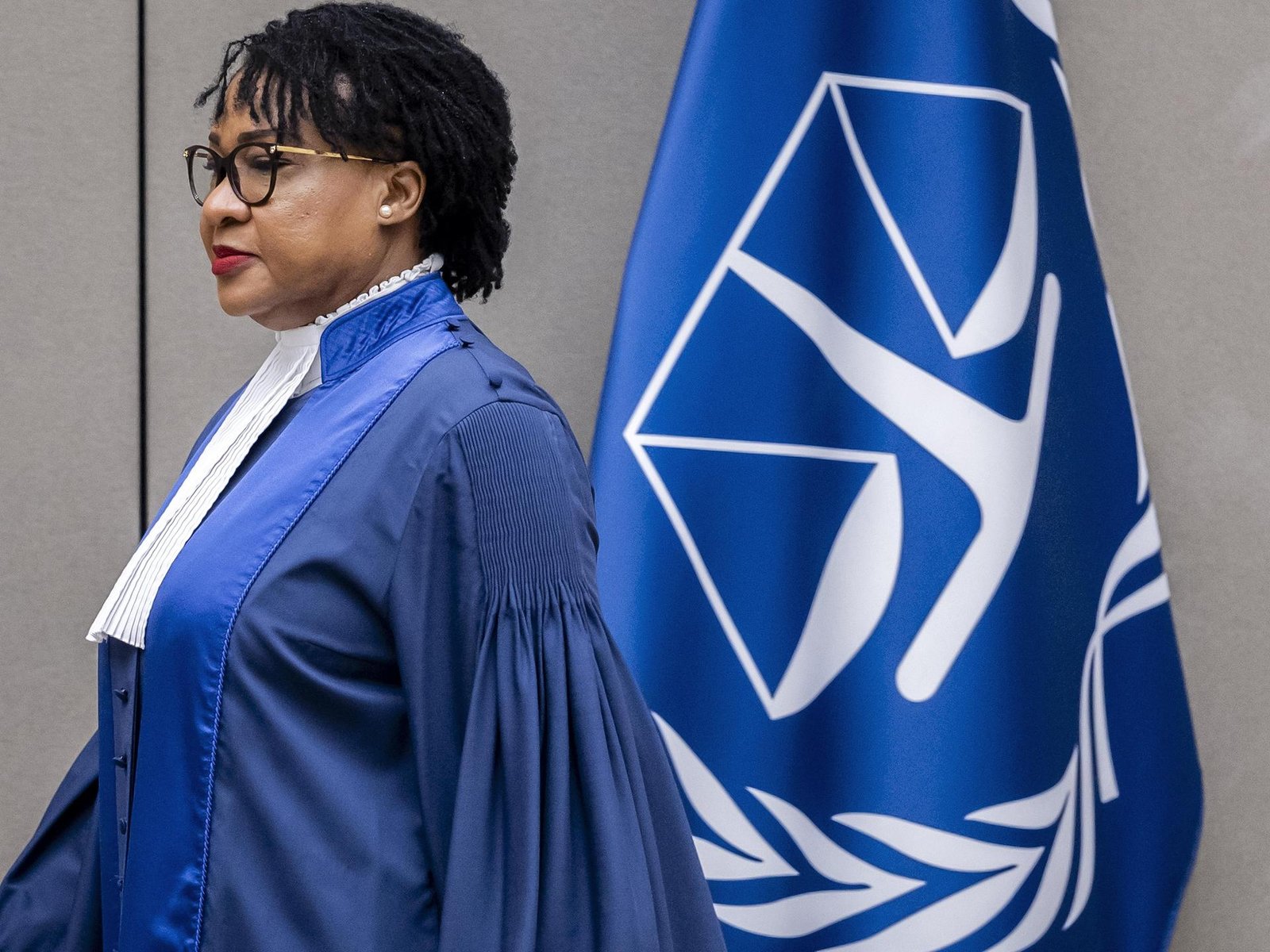
In a statement, the ICC called on member states to redouble support.
“History will judge this moment. Future generations, and above all the victims of mass atrocities, will ask how we responded when an institution created to protect them came under attack,” it said.
The US and Israel are not parties to the Rome Statute, the founding treaty that establishes the court’s jurisdiction. However, the court has long ruled that abuses committed by US or Israeli citizens in the territories of countries that are ICC members can be prosecuted.
Israel was among those cheering the Trump administration’s latest action.
“Thank you for your leadership,” Prime Minister Benjamin Netanyahu said in a statement posted on social media.
To date, the court has not sought to prosecute any US citizens. A US law dating back to 2002, amid the so-called “Global War on Terror”, already prohibits extradition of US citizens to be tried by the ICC. It further authorises the use of military force in the event that a US citizen is held in detention while being prosecuted by the court, in what critics have dubbed the “Hague invasion clause”.
Nevertheless, some US administrations, particularly those led by Democrats, have sought to provide support for the court and have espoused its founding principles.
Rights observers have said that the US pressure campaign could have wide-ranging implications for the court’s investigations, particularly the network of local organisations and fact-finders upon which it relies to build cases.
Mark Kersten, an international law expert and professor at the University of Fraser Valley in British Columbia, Canada, said ICC advocates have feared direct sanctions on the court itself since Trump took office for his second term in January last year.
“This was the number one concern: the possibility not only that individuals would be sanctioned, but that the court itself would be sanctioned,” he told Al Jazeera. “That should give people a sense of the significance of this…the worst-case scenario has come about”.
The US has also urged other countries to withdraw from the court, suggesting it would assess allies’ relationship with the court when determining foreign assistance.
The appeal has dovetailed with wariness from some ICC members over what they have called the unequal application of international law, with offenders in the Global South more likely to face accountability.
In July, Chad and Venezuela moved to withdraw from the court, following Burkina Faso, Mali and Niger.
The years ahead, Kersten said, will be a test of support from ICC members, who will need to intervene to circumvent the US sanctions. Most of Europe, Latin America and large areas of Africa remain members of the tribunal, as do Canada and Australia.
“Only with the support and concrete action of those states will the court really ultimately survive,” he said.
Escalating pressure
The latest round of sanctions means that companies that provide services to the court could be penalised. Sanctioning the entire entity, which has about 900 staff, as opposed to individual officials, will make it more difficult for the court to insulate itself from such sanctions.
The sanctions block “all property and interests in property” the court has in the US, while prohibiting “making of any contribution or provision of funds, goods, or services by, to, or for the benefit” of the court.
The sanctions included several temporary exemptions, including for services providing maintenance, technology and pension plans. The State Department said the exemptions are meant to “provide time for States Parties to demonstrate meaningful progress on diplomatic and legal resolutions that address fundamental US concerns regarding the ICC”.
William Schabas, a professor of international law at Middlesex University in London, said it was not immediately clear how impactful the sanctions would be.
He said the court had been preparing for the eventuality for over a year.
“They have been developing a plan B on how to get around this,” Schabas told Al Jazeera. That has included migrating some US-made software to European alternatives and recently ending its relationship with the French health and life insurance company Axa, which does business with the US.
“How significant this will be remains to be seen,” he said. “Obviously for the institution it’s going to complicate things considerably.”
Friday’s announcement came just hours after the Nobel Peace Prize was awarded to South African jurist and former ICC judge Navi Pillay. Pillay also oversaw the 2025 UN Human Rights report that found Israel’s actions in Gaza constituted a genocide.
Schabas drew a connection to the timing of the State Department’s announcement and Trump’s ire towards the Nobel Committee, which he has maintained should award him the Peace Prize.
“The prize is a recognition more generally of the international institutions with which Pillay was affiliated, in particular the International Criminal Court and also a kind of polite endorsement of the report that she wrote last year for the United Nations condemning Israel for genocide,” he said.
“There’s often a political message lurking behind the award of the Nobel Peace Prize and I think this year is no exception,” he said.
The Nobel judges said the prize comes at a time when “judges and institutions of international law are under political attack”.
“An international legal system in which war criminals are held to account, and the victims of abuse see justice served is a precondition for a peaceful world,” they said.