The Damallsvenskan once mastered Europe and attracted the best players, but many are now worried for its future
On 12 October 2003, Sweden stood still. The women’s football team were playing Germany in the World Cup final. TV4 set a new viewing record as almost half the nation watched the game go into extra time, where Nia Künzer scored the golden goal winner after 98 minutes.
It was a bitter pill to swallow but there was still the belief that the tournament would mark the start of women’s football’s commercial breakthrough in Sweden. After all, how could sponsors and broadcasters ignore such undeniable interest?
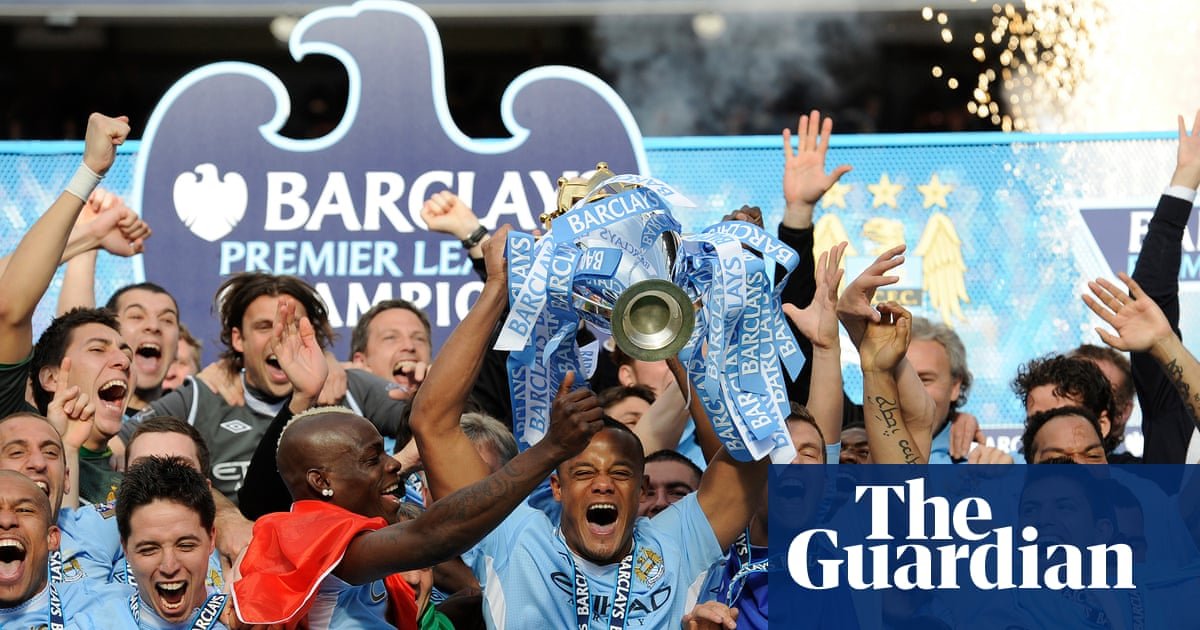
It was not only the national team who were flying high. A few months earlier Umeå had won the equivalent of the Women’s Champions League (then called the Uefa Women’s Cup) and would do so again the following season. The best players in the world came to play in Sweden, including Marta, but despite the success and growing crowds sponsors were conspicuous by their absence and pay remained low.
A decade later Tyresö reached the Champions League final with future world champions such as Christen Press, Meghan Klingenberg and Whitney Engen in the squad. But crippling debts forced the club out of the top flight. In fact they went from a Champions League final to bankruptcy within a month.
New sponsors needed
This summer, the Swedish wonderkid Felicia Schröder moved from Häcken to Real Madrid for what the Gothenburg club said was a world record fee (which would have meant more than £1.1m). According to Fifa’s latest report, no women’s league in the world received more in transfer fees during the summer window than the Damallsvenskan. It is easy to believe the league is thriving.
But what many had long feared has now become reality: both the main sponsor and the title sponsor are ending their partnerships with the Damallsvenskan. In addition, at the time of writing, the top flight still has no TV deal for next season. How can such a good product be so hard to sell?
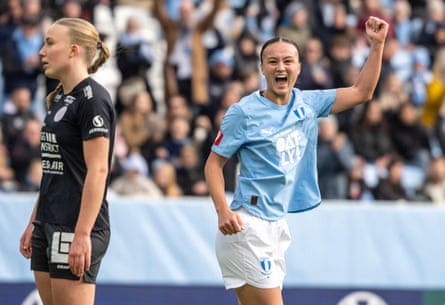
Malmö FF’s Australia international Amy Sayer knows the league well, having told her agency that playing in Sweden was her top priority coming out of college in 2023. She joined the standalone club Kristianstads DFF (who are not affiliated to a men’s side) and then Malmö, who have had a strong men’s team for a long time but whose women’s side were founded in 2019.
“I get a lot of questions about Damallsvenskan and for players who want a bigger challenge and a way into Europe, it’s a league I’d highly recommend,” she says. “But I think we are on the edge. The league can turn it around, but as players we are worried that it’s not going to grow.”
Where are the fans?
Traditionally, the league has been built on standalone women’s clubs. But a few years ago, Sweden’s biggest men’s clubs experienced a kind of collective awakening. They saw the commercial potential in investing in women’s teams, looked enviously at Arsenal Women’s growing attendances and let their imaginations run wild.
But the belief that supporters would flock to women’s matches has proved to be a huge misjudgment. The average attendance record from the Umeå era in the early 2000s, 1,127, still stands and this season the figure dropped below 800 per match.
Sayer had expected bigger crowds when she joined Malmö. “It really surprised me,” she says. “We have great communications staff and we share an Instagram account with the men’s team. But something is holding back the lifelong supporters.
“At my old club [Kristianstad] it was about a family feeling and building a sense of unity. But we were always chasing funding. At a standalone club there’s always that feeling: will we survive next year?”
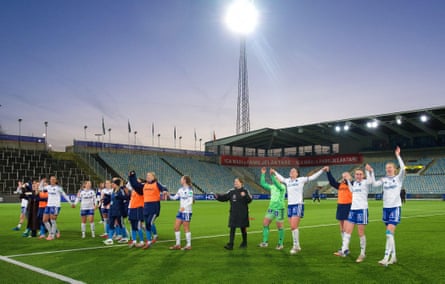
A divided league
Looking for explanations, some point to poor media coverage, others to the league operator’s lack of resources. Some blame the 51% rule, which requires Swedish clubs to be majority-owned by their members. Yet the rule did not stop Rosengård, the league’s most decorated club, from selling 47% of its women’s team to the British investment firm Crux. Instead of the hoped-for boost, the deal cost the club its most loyal supporters, who walked away in protest with a banner reading: “Goodbye! Better a B-team than a business.”
Less than an hour from Sayer’s former club lies Vittsjö. The small village has around 1,800 inhabitants, yet its club has spent 15 consecutive seasons in the top flight. After finishing an impressive sixth, the club posted an image on social media: “We need your help”, alongside a bank account number.
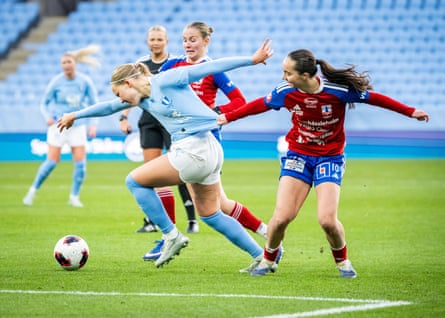
Many placed their faith in the affiliated clubs, with their deeper pockets and large fanbases, to finally become the league’s saviours. However, the anticipated surge has failed to materialise, increasing questions about the league’s future.
And nowhere were those questions more visible than in last week’s play-off for a place in the Damallsvenskan. KIF Örebro faced Rosengård over two legs even though the tax authorities had issued them with a winding up petition. They then became the first second-tier side ever to win the play-off, only to file for bankruptcy themselves on Wednesday. Now Rosengård, the league’s most decorated club, look set to keep their place in the top flight. It remains to be seen whether the investors at Crux and the high-profile football director, Caroline Seger, can lead the club out of its crisis.
Interest in Swedish women’s football has never been the problem, but turning it into engagement with the Damallsvenskan clearly has. Now the league must be repackaged in a way that reflects the different realities of its club models, with supporters at its heart. As Sayer says: “Women’s football is so exciting. It’s so creative – what the players can do is incredible. But I think a new culture has to be built.”The answers simply will not come from sponsors or broadcasters, but from the people who actually turn up. And none of this necessarily starts with money. It starts with a genuine dialogue.
If you have any questions or comments about any of our newsletters please email moving.goalposts@theguardian.com.
This is an extract from our free email about women’s football, Moving the Goalposts. To get the full edition, visit this page and follow the instructions. Moving the Goalposts is delivered to your inboxes every Tuesday and Thursday.