The story so far: The New Delhi Declaration that came out of the recent BRICS Summit in the national capital resolved to increase trade between member-countries and payments in national currencies.
Days before the summit, a report by the news agency Reuters quoted sources as saying that at the event, India would push to link central bank digital currencies (CBDCs) for cross-border payments across BRICS nations, despite political and technical hurdles that could limit progress.
The proposal to link CBDCs would be part of the agenda for the leaders’ meeting, the sources said, though the limited adoption of digital currencies globally could complicate implementation, the report added.
The proposal was, however, not part of the Declaration.
On the summit eve, Russia’s largest bank Sberbank said it saw major opportunities for India-Russia bilateral trade settlements through CBDCs.
At a media briefing in New Delhi, Sberbank chief executive officer Herman Gref said trade settlement in CBDCs was much more efficient.
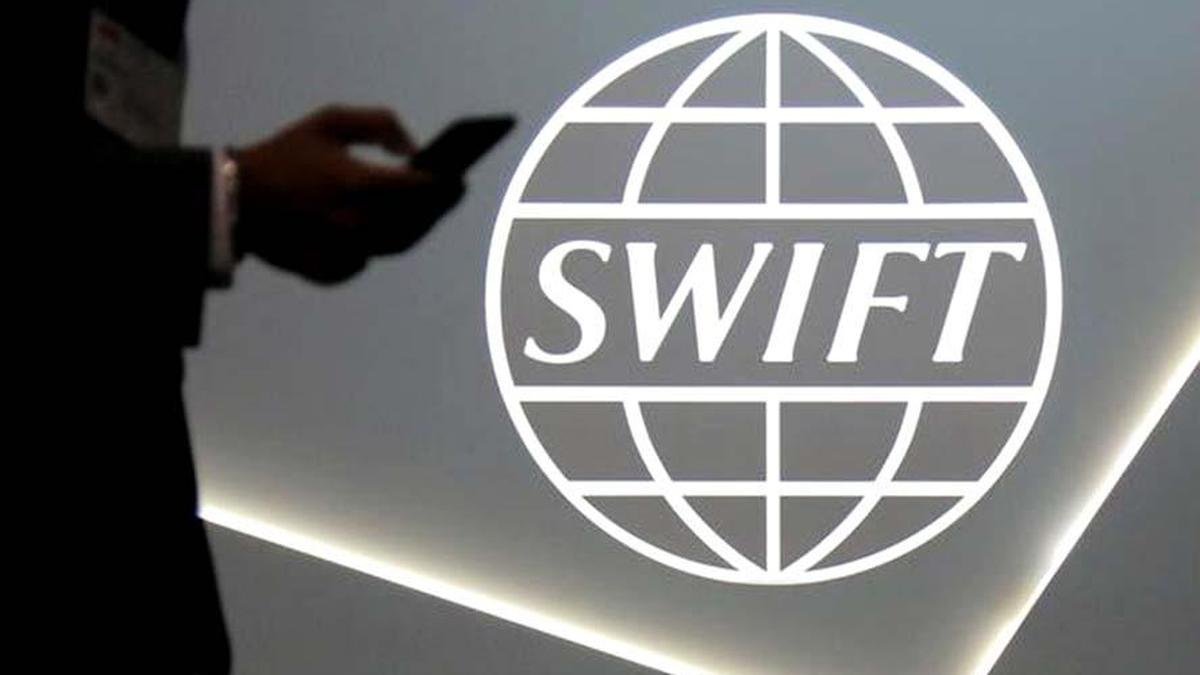
Trade between BRICS countries shows marked increase Multiple wars and U.S. weaponisation of the dollar through financial sanctions are making countries in the Global South think of bypassing the so-far universally accepted SWIFT system for inter-country payments.
The attempts to do so have been patchy, but there is an increasingly felt need to have other options.
Even on Thursday, the U.S.
Senate empowered President Donald Trump to impose 100% tariffs on countries such as India and China that buy Russian oil or gas.
What are some of the alternatives to the Belgium-based SWIFT payment system?
Project mBridge is a group comprising the Bank of Thailand, the Central Bank of the United Arab Emirates, the Digital Currency Institute of the People’s Bank of China, the Hong Kong Monetary Authority, and the Saudi Central Bank.
The Cross-Border Interbank Payment System (CIPS), a Reuters report said, is backed by the People’s Bank of China.
China launched the CIPS clearing and settlement services system in 2015 to internationalise yuan use.
It allows global banks to clear cross-border yuan transactions directly onshore, instead of through clearing banks in offshore yuan hubs, the report said.
BRICS treads carefully on de-dollarisation: Finance track talks payments, not a common currency The System for Transfer of Financial Messages, or SPFS, was developed by Russia in 2014 to bypass Western sanctions.
In 2022, Russian banks were cut off from SWIFT, and the SPFS was of help.
SEPAMA, Iran’s local interbank telecom system, has as many as 52 branches of Iranian banks and four unnamed foreign banks connect ing with 106 banks using the SPFS, the Central Bank of Iran said in 2023.
How are these systems faring?
The Bank for International Settlements (BIS), an international financial institution owned by central banks to foster international monetary and financial cooperation, exited Project mBridge on October 31, 2024, after hand-holding it since 2019, when the Hong Kong Monetary Authority and the Bank of Thailand launched the system. mBridge, a cross-bloc multi-CBDC platform with no Western bank, attained minimum viability status in 2024.
It was envisaged for direct peer-to-peer CBDC settlement without going through correspondent banks.
The project team developed a new blockchain — the mBridge Ledger — custom-built by central banks to serve as a specialised and flexible platform for implementation of multi-currency cross-border payments in CBDCs, the BIS website says.
Why is BRICS exploring cross-border payments? |Explained The BIS’s exit came under a cloud, with media reports saying it was because mBridge could provide the basis for a BRICS initiative to circumvent sanctions on Russia.
A May 2016 Forbes report said that by late 2025, mBridge was in practice “a renminbi-denominated wholesale settlement rail for trade between China and the Gulf, running outside the dollar correspondent system”.
The remnimbi’s inclusion in the basket of currencies making up the Special Drawing Right, an international reserve asset created by the International Monetary Fund, has increased the acceptance of CIPS, which currently has participants in more than 120 countries, including all BRICS members with the exception of India, said a November 2025 opinion piece in The Hindu by Biswajit Dhar, a trade economist and former Professor, Jawaharlal Nehru University.
BRICS nations should link payment systems, trade in local currencies: Piyush Goyal at BRICS Business Forum A March 19, 2026 South China Morning Post report says CIPS processed 679.8 billion yuan ($98.7 billion) of transactions on average per day in 2025, just a fraction of the $1.9 trillion of domestic and international payments Chips settles each business day.
“While the CIPS has gained ground — especially among China’s trading partners in Africa and Asia — it remains far smaller in scale than established global systems, such as the U.S.-based Clearing House Interbank Payments System (Chips),” the report said.
Beijing now appears to be moving towards building CIPS into a global platform compliant with multi-currency settlements and other foreign payment channels, the report quoted a study led by Ju Jiandong, a chair professor at Tsinghua University’s PBC School of Finance.
The SPFS, formed as Russian entities were banned from SWIFT, has grown at a record pace in 2023, the Russian central bank said that year, as Moscow ramped up efforts to resolve financial shortcomings wrought by sanctions over the Ukraine war.
Alla Bakina, director of the central bank’s national payment system department, said 50 new entities had joined Russia’s alternative system that year, taking the total number to 440, of which more than 100 are non-residents.
The SPFS has been linked with Iran’s SEPAM, and entities in the Russian network can connect with Iranian banks.
Currency conundrum: On the BRICS New Delhi Declaration How do India-Russia trade settlements happen now?
Russia and India, the second-largest importer of Russian oil, have built a functioning payments infrastructure using roubles and rupees, which now account for 96% of bilateral trade, Ivan Nosov, head of Sberbank in India, said.
“There are no problems with settlements between Russia and India.
I am ready to say that this is one of the most reliable and best-established mechanisms for Russia’s payments with other countries,” he said.
According to official data, 22 Russian banks, including Sberbank, Russia’s largest lender, which was tasked with developing the payments infrastructure, and 17 Indian banks are currently servicing bilateral trade, a Reuters report said.