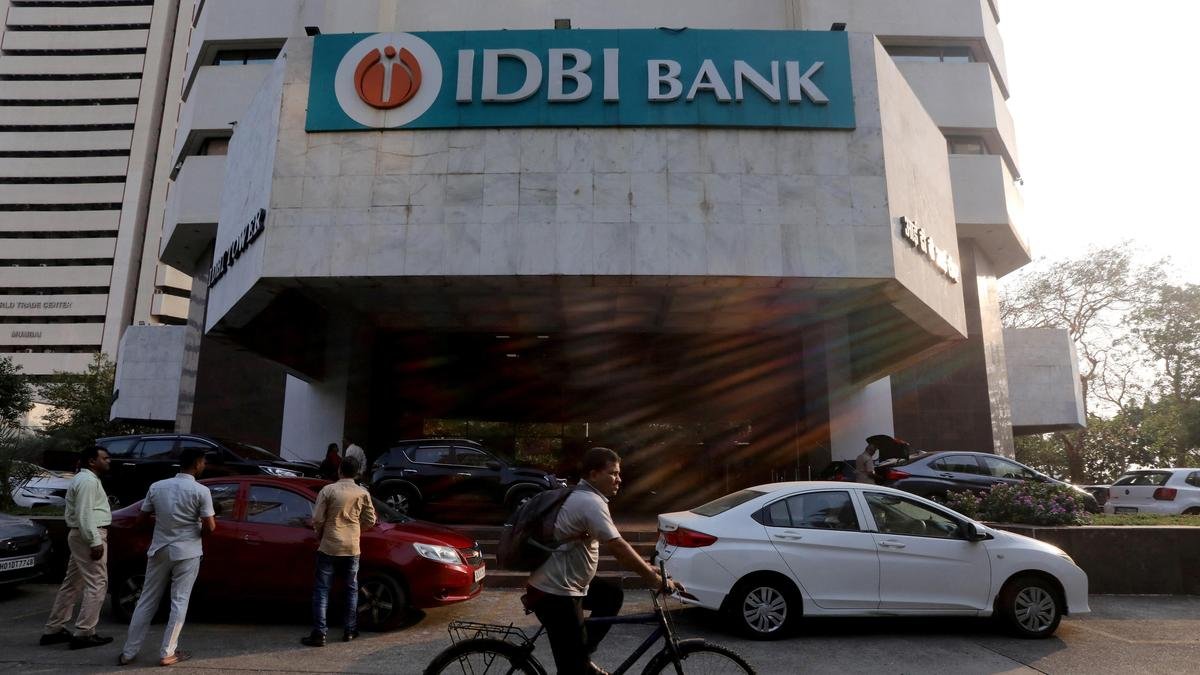
The story so far: The Union Cabinet has approved the sale of IDBI Bank to Canadian company Fairfax Financial Services, marking the largest foreign direct investment in the financial services sector in India’s history.
The deal has finally brought to a close the government and Reserve Bank of India’s (RBI) varied dealings with IDBI, which have ranged from bailing it out to desperately trying to turn its fortunes around, and finally selling it.
Largest-ever FDI in India’s financial sector: Cabinet approves sale of IDBI Bank to Fairfax for ₹52,878 crore Why did IDBI need financial help?
Like many banks at the time, IDBI ended up giving loans in the mid-to-late 2000s to several entities that eventually failed to repay them, and these loans became non-performing assets (NPAs).
These NPAs included loans to Kingfisher Airlines, ABG Shipyard, Winsome Diamonds, and the Videocon Group.
This was not an issue faced by IDBI alone, since the NPA crisis hit the entire banking sector towards the end of the UPA-II government and the beginning of the Modi government, but given IDBI’s relatively small size, it was hit hard.
Between 2010-20, the government of India infused around ₹25,000 crore of capital into IDBI Bank in a bid to keep it afloat.
In 2017, the RBI included IDBI Bank in the strict Prompt Corrective Action (PCA) framework that involved several business restrictions aimed at stemming the rising NPA levels and losses incurred by the bank.
In January 2019, the Life Insurance Corporation (LIC) took over a controlling stake in the bank by infusing ₹21,624 crore into it and being allotted preferential shares in return.
As a result, the government’s stake in the bank fell below 51% and the RBI classified it as a private bank since then.
IDBI Bank exited the PCA framework in 2021 thanks to its improving financial health.
What are the contours of the deal?
Under the deal, Fairfax will pay ₹52,878 crore and get 60.72% of IDBI Bank in return.
With this, the government’s stake in the bank will fall to 15%, and Life Insurance Corporation’s (LIC) stake will come down to 19%.
The government currently holds 45.5% of IDBI Bank, while LIC holds 49.2%.
In its release, the government termed the deal a strategic restructuring rather than strategic disinvestment, saying that it would be the largest foreign direct investment in the financial sector in India’s history.
IDBI Bank, having suffered from poor financial health for years, had been put under a Prompt Corrective Action (PCA) framework in 2017.
In January 2019, LIC took over a controlling stake in the bank by infusing ₹21,624 crore into it and being allotted preferential shares in return.
As a result, the government’s stake in the bank fell below 51%, and the Reserve Bank of India has classified it as a private bank since then.
How did the deal come about?
The decision to sell a stake in IDBI Bank was implemented through a two-stage competitive bidding process that was backed by an Inter-Ministerial Group (IMG), the Core Group of Secretaries on Disinvestment (CGD), and an Alternative Mechanism (AM) consisting of an empowered Group of Cabinet Ministers.
The government invited Expressions of Interest (EoI) from all interested parties in October 2022.
Under this, only the parties found to be ‘fit and proper’ by the RBI and that were granted security clearance by the Ministry of Home Affairs could participate in the bidding stage as Qualified Interested Parties (QIPs).
According to the government, of the five parties who initially submitted their expression of interest, four qualified as per the eligibility criteria and disqualification conditions prescribed therein, of which two finally submitted bids and became qualified bidders.
The government explained that, in such deals, there is no prior benchmark for bidding.
That is, the stock market price of IDBI Bank was so volatile, ranging from ₹61.01 to ₹118.38 over the valuation period, that it could not effectively be used as a benchmark.
So, the fair market value of the company was arrived at using the market multiple method.
Further, the bidders conduct their own valuation and submit their bids in sealed envelopes.
The government bodies then hired independent agencies to do a fair valuation of the enterprise, which is then used as a comparator to assess the reasonableness of the bids submitted.
What happens next for IDBI Bank?
The government said that the Cabinet Committee on Economic Affairs has delegated powers to the Alternative Mechanism to sell the government’s remaining 15% stake in IDBI Bank through the open market.
The LIC will manage its residual shareholding in accordance with its internal procedures and regulatory rules.
According to sources in the Ministry of Finance, this strategic restructuring does not change anything for the regulation of IDBI Bank or its customer-facing duties.
The RBI will continue full regulatory and prudential supervision of the bank.
Deposits in the bank will remain insured up to ₹5 lakh per depositor under the Deposit Insurance and Credit Guarantee Corporation.
Further, the mandatory 40% Priority Sector Lending (PSL) target will continue to apply to the bank.
IDBI will continue to provide government financial inclusion, social security and pension schemes such as the Pradhan Mantri Jan Dhan Yojana, Pradhan Mantri Jeevan Jyoti Bima Yojana, Pradhan Mantri Suraksha Bima Yojana, and the Atal Pension Yojana (APY).
What happens with the proceeds of the sale?
While LIC is free to do what it chooses with its share of the sale proceeds, the Government of India will classify what it receives as non-debt capital receipts, and it will go into the Consolidated Fund of India.
From there, it can choose to deploy the funds in any way it sees fit — capital expenditure, interest payments, subsidies, etc.