‘Brain fog’ is used to describe a feeling of mental slowness, difficulty concentrating, finding words, remembering information or processing things as quickly as before.
But it is not a medical diagnosis, and persistent cognitive difficulties should not automatically be attributed to brain fog.
What brain fog feels like Brain fog is a subjective description of changes in cognitive functioning.
People may feel that their thinking has become slower or more effortful, that they cannot concentrate on a task, lose their train of thought, struggle to find words or read something without absorbing the information.
“Brain fog is basically a subjective feeling that you are cognitively slow, that you are mentally slow, that you are not able to do your daily activities as quickly or as deftly as before,” says Srividhya S., associate consultant, department of neurology, Rela Hospital, Chennai.
It is different from the occasional forgetfulness that occurs when a person is tired, distracted or stressed.
Forgetting where the keys were kept or briefly forgetting a name, for instance, does not by itself indicate a cognitive disorder.
Tiredness is also not the same as brain fog.
Fatigue is primarily a feeling of reduced physical or mental energy, while brain fog refers more specifically to difficulties with attention, memory, processing or mental clarity.
T.
Swathi, consultant, neurology, SRM Prime Hospital, Chennai, says people with brain fog are often aware that they are not functioning as efficiently as before.
This also distinguishes it from some memory disorders, where relatives may be the first to notice changes such as repeated questions, difficulty managing regular tasks or getting lost in familiar places.
Beyond burnout: The silent crisis of collective exhaustion Health factors The causes of brain fog can be varied, and more than one factor may be involved.
Poor or inadequate sleep is a common contributor.
Sleep apnoea can also disrupt sleep repeatedly without the person being aware of it.
Stress, anxiety and depression can affect attention and processing speed.
Other possible contributors include thyroid disorders, diabetes, anaemia and nutritional deficiencies such as vitamin B12 and folate.
Migraine and hormonal changes, including those during pregnancy, the postpartum period and menopause, can also be associated with cognitive symptoms.
Medicines should also be considered.
Sedatives, some sleeping medicines, antihistamines, anticholinergic medicines and some anti-seizure drugs can affect alertness or cognitive function.
Alcohol and dehydration may add to the symptoms.
“Brain fog has several possible causes and can be due to more than one,” says Arulselvan V.L., senior consultant in neurology, Apollo Hospitals, Greams Road, Chennai.
“It is crucial to not think that all brain fog is neurological.” Cognitive difficulties can also occur during or after infections.
A recent systematic review of 47 studies involving more than 25,000 people with long COVID estimated the pooled prevalence of brain fog at 30%.
However, various studies use different definitions and assessment methods.
There is so far no comparable prevalence estimate because brain fog is a symptom description and not a defined medical diagnosis.
How to manage PCOS-related fatigue, brain fog, and energy dips during the workday When tests are needed There is no fixed duration after which every case of brain fog requires investigation.
Persistence, progression and its effect on daily functioning are important.
Doctors advise evaluation when symptoms continue despite adequate sleep and lifestyle measures, recur frequently or gradually worsen.
Repeatedly forgetting important information, struggling with previously familiar tasks, difficulty following conversations or unusual changes in work performance are also reasons to consult a doctor.
Symptoms lasting for several weeks without an obvious explanation, particularly when they affect work, studies or relationships, should be assessed.
New symptoms such as persistent fatigue, weight changes, breathlessness, tingling, low mood or excessive daytime sleepiness can provide additional clues.
Evaluation usually begins with a detailed history. .
A neurological examination may then be performed.
Depending on the history and examination, doctors may check blood counts, blood sugar, electrolytes, thyroid function, kidney and liver function and nutritional markers such as vitamin B12.
Your brain can be trained, much like your muscles – a neurologist explains how to boost your brain health A brief cognitive assessment may be useful when there are concerns about memory, attention or language.
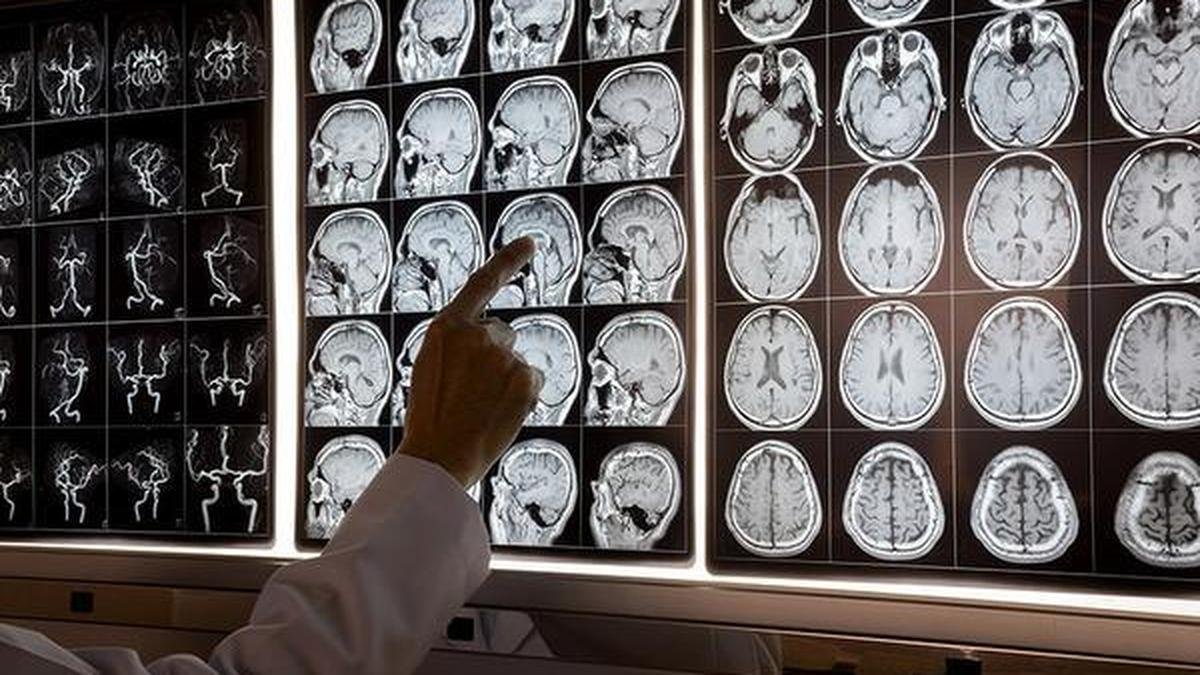
Brain imaging such as an MRI is also not routinely required for uncomplicated brain fog.
It may be considered when symptoms are progressive, the neurological examination is abnormal or there are other features suggesting a structural or neurological cause.
A sleep study or EEG may be considered in selected cases.
Certain symptoms, however, require prompt attention rather than being attributed to brain fog.
Sudden difficulty speaking, facial drooping, weakness or numbness on one side, sudden problems with vision or balance, seizures, fainting or severe confusion can indicate an acute neurological problem such as stroke.
A sudden, severe or unusual headache also requires urgent assessment.