Nearly seven years ago, the Tamil Nadu government, in a historic move, banned sex-reassignment surgeries on intersex infants and children, with the aim of protecting their bodily autonomy.
Doctors and activists, however, say the State, like the rest of the country, has a long way to go in improving its genetic infrastructure, which they argue would help with the diagnosis and understanding of variations in sex development in intersex children.
Sex-reassignment surgeries, or “genital-normalising” surgeries, are invasive, irreversible, and often unnecessary procedures that alter the ambiguous genital anatomy of infants with intersex traits or differences of sex development (DSD) to fit a binary male/female appearance.
In 2019, following a Madras High Court ruling, the government issued a G.O. banning such surgeries unless the situation was life-threatening.
It also mandated a panel comprising a paediatric surgeon/urologist, endocrinologist, social worker/psychologist/intersex activist, and a government representative to determine whether the situation was life-threatening and whether such a surgery was warranted.
Australia’s medical association has passed a landmark motion on intersex persons: it is time for India to protect its own What happens at hospitals There are several different types of DSD; while some may be apparent at birth, others may manifest only later, particularly around puberty.
“Some DSDs do require further genetic investigations at birth.
Therefore, there is a need for better genetic testing facilities,” explained M.
Kathirvel, a clinical geneticist at Apollo Hospitals, Chennai.
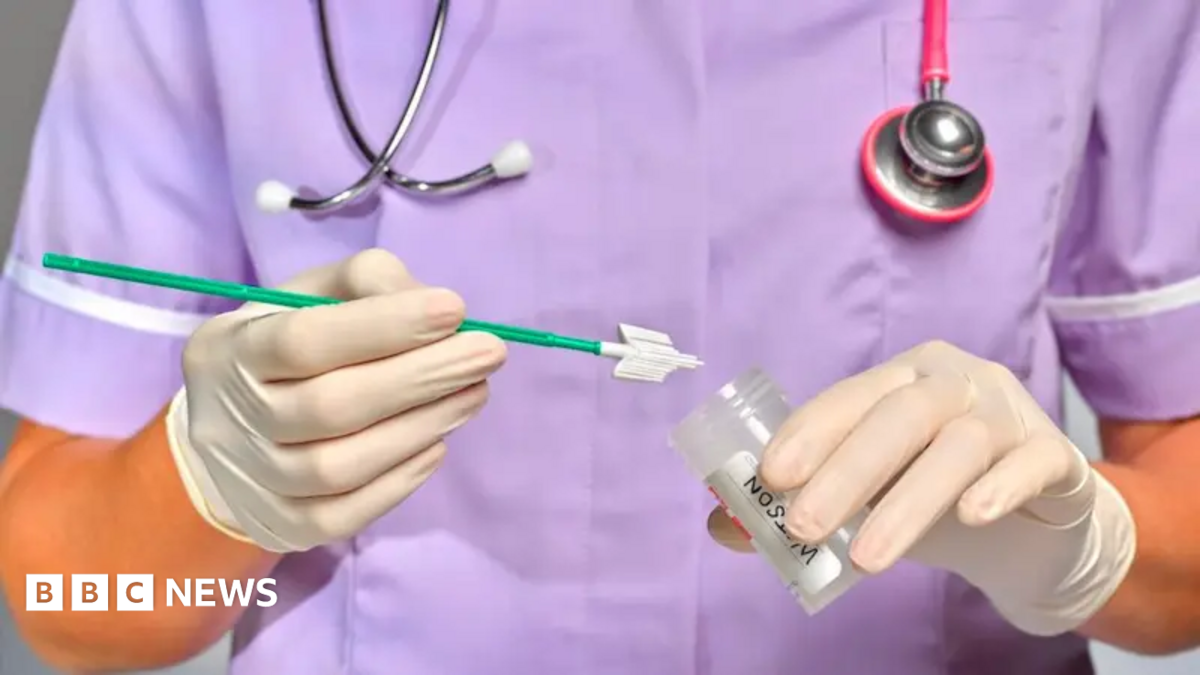
One important test that needs to be performed in children born with intersex traits, is karyotyping.
This is a test that examines the size, shape, and number of chromosomes in a sample of cells.
It is essentially a preliminary confirmatory test that gives an overall picture and analysis of the infant’s chromosomes and can show patterns that are not clear from looking at its genital anatomy.
However, even this is not available at present, in most government hospitals in T.N., and has to be outsourced to private labs.
The fight for intersex rights in India: a medical ethics and social justice perspective What’s missing A senior doctor from the Government Rajaji Hospital in Madurai, who works with intersex infants, told The Hindu that the hospital sees about one to two cases of children born with intersex traits every month.
Surgical corrections are performed only in cases where they are absolutely required, such as in congenital adrenal hyperplasia (CAH) – some forms of which may cause an overproduction of male sex hormones (testosterone in a female), leading to dangerous levels of salt and fluid loss in the newborn.
However, he pointed out that better karyotyping and genetic testing facilities would greatly improve diagnostic and management outcomes (that include confirmation of XX/XY/mixed-type sex), and avoid inadvertent/irreversible gonad removal surgery for intersex children.
Out of the 38 medical college hospitals in Tamil Nadu, only one – Institute of Child Health, Egmore, in Chennai, – has a dedicated genetic department, he said.
“Before we can even get into complex genetic testing, we do not even have basic karyotyping testing facilities.
We currently outsource it to private labs,” said the doctor.
Beyond karyotyping, examinations such as next-generation sequencing (NGS) tests, to better understand such outcomes would also help, added Mr.
Kathirvel.
Supreme Court to examine plea for recognition of intersex persons as a distinct class Infrastructure needs Along with the equipment for the tests, the government also needs to invest in human resources, experts pointed out.
There are not enough qualified personnel to perform either basic karyotyping tests or complex genetic tests.
A genetic test, when outsourced to private labs, can cost about ₹8,000 to ₹10,000, and the karyotype between ₹1,500 to ₹2,500, the senior doctor added.
Dr.
Kathirvel said the State needed to strengthen ICH, Egmore, which is is already a designated Centre of Excellence for Rare Diseases, and set up at least two additional centres of excellence for genetics in Tamil Nadu, particularly with comprehensive in-house genomic testing facilities, including NGS, which would benefit both DSD and other rare-disease diagnoses.
Investing in government infrastructure for genetic testing could go a long way towards helping parents and families who currently have to rely on expensive, private tests.
It could also help with research into chromosomal disorders and rare diseases, as well as with counselling for expectant parents, noted experts.
NHRC asks Centre to review changes to trans law, ‘revisit’ community concerns on self-identification What next?
“Without clinical geneticists as core members of every multi-disciplinary DSD team, accurate subtype identification, cancer-risk assessment, and fertility counselling remain incomplete,” noted Gopi Shankar Madurai, intersex activist and special monitor for SOGIESC Rights at the National Human Rights Commission of India.
“DSD diagnosis fundamentally relies on karyotyping, targeted gene panels, hormone-response assays and imaging.
International protocols consistently require this expertise,” Gopi said, further calling for a national-level, affirmative medical protocol for intersex people that is evidence-based and rights-respecting.