The extraordinary danger is that a president who believes he is the law, and the law is him, remains intent on disrupting the electoral process
This was originally published in The Stakes 2026, a newsletter about the midterm elections. Sign up to get it in your inbox
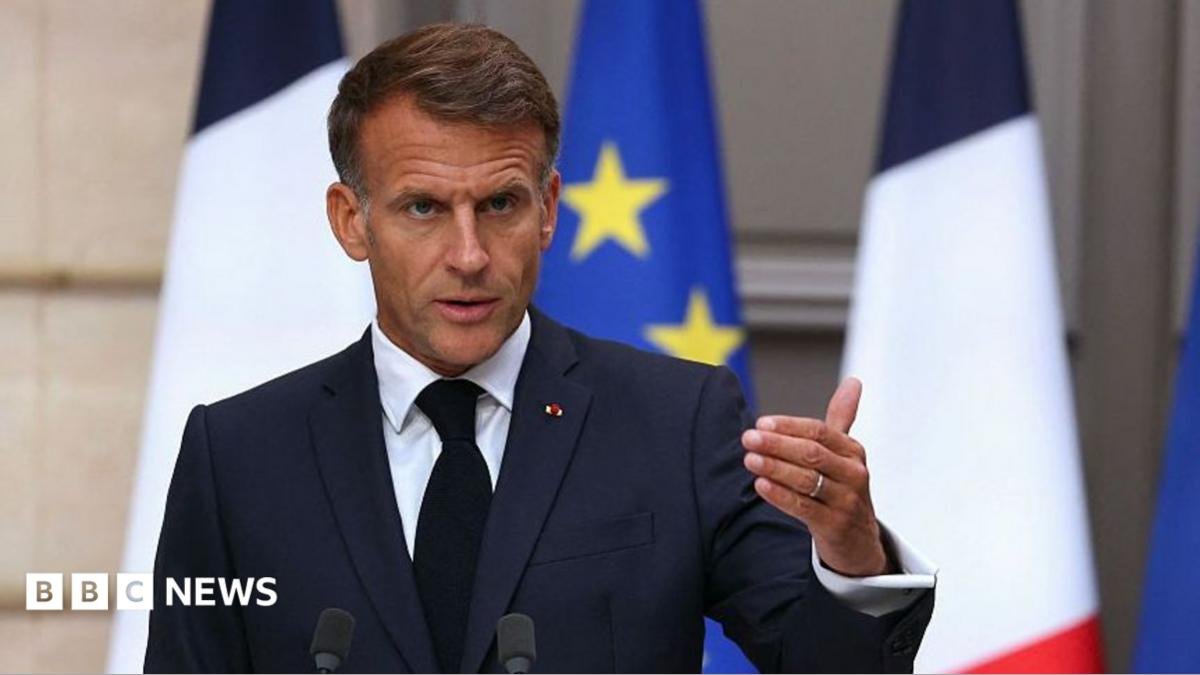
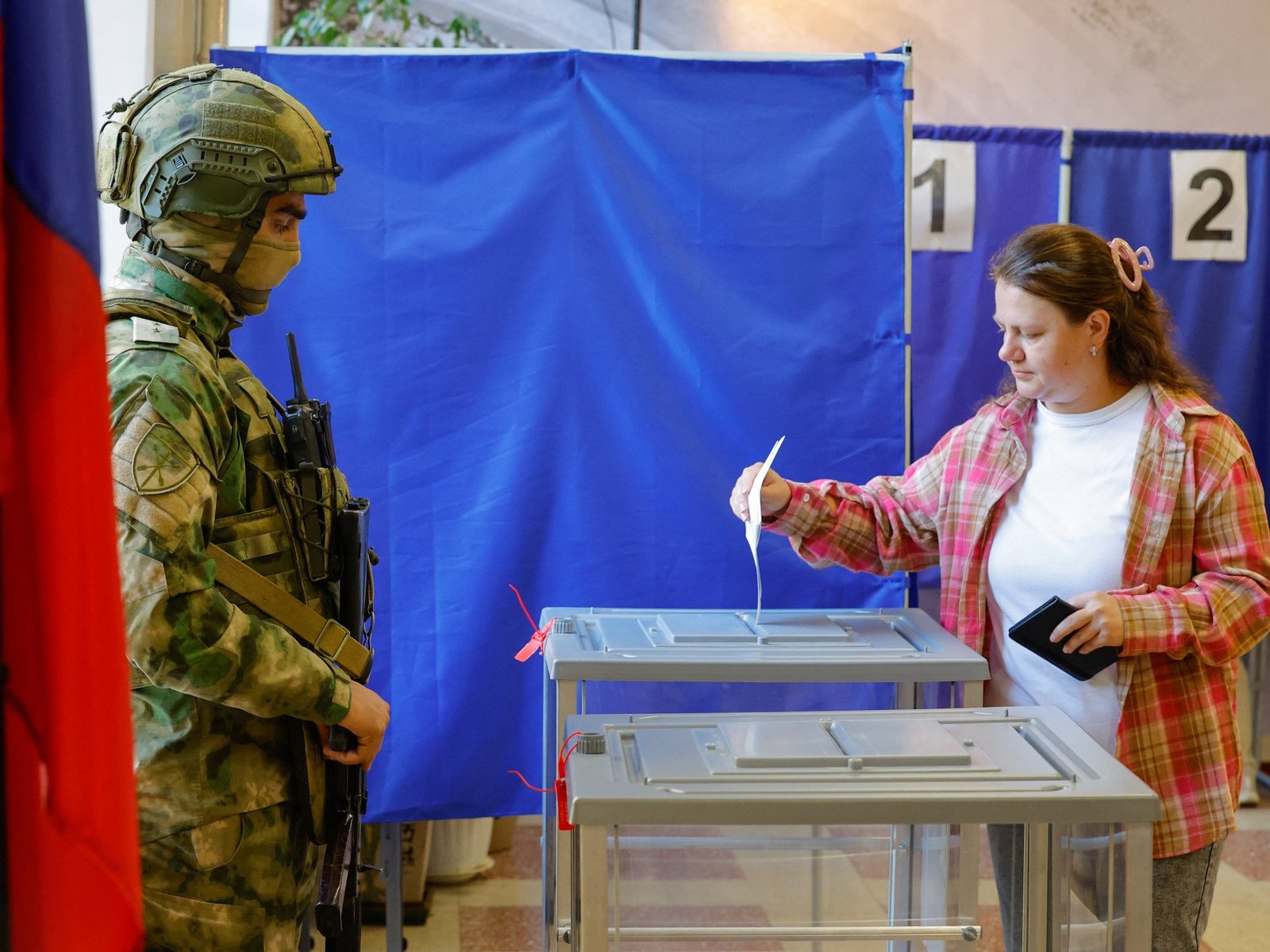
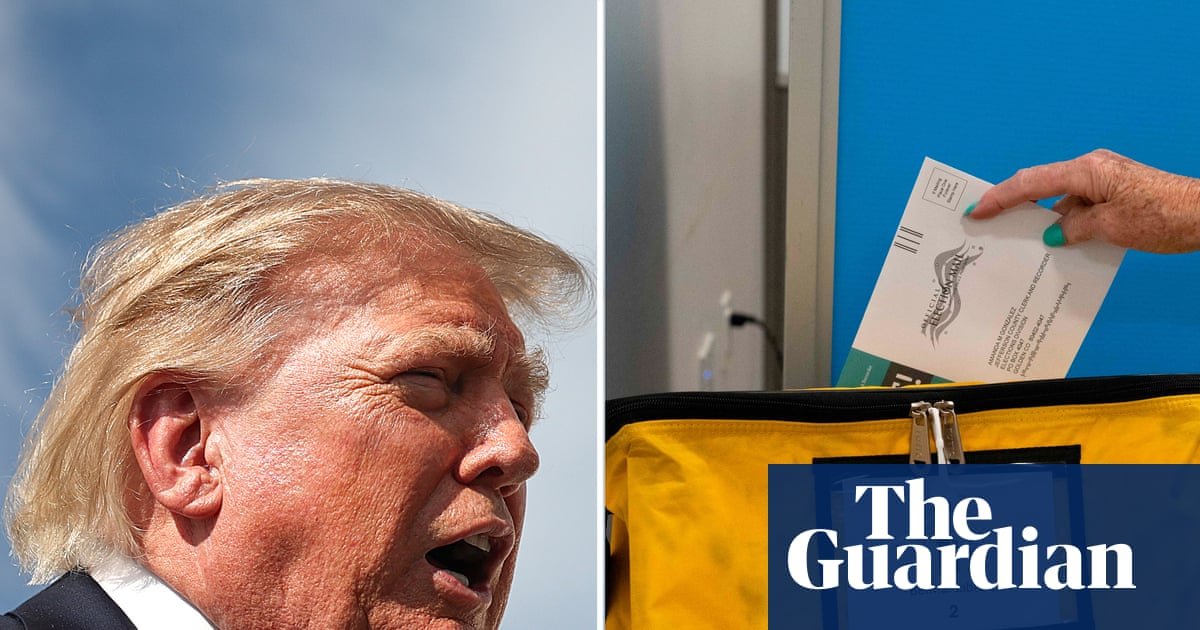
For the millions of Americans who vote by mail – almost a third of the country – the week began with significant uncertainty that they would be able to easily submit their ballot this fall, thanks to a March executive order from Donald Trump that aimed to restrict mail-in ballots. By Monday night, the supreme court restored a measure of order by rebuking the president and rejecting his plan – but Trump’s frothing response portends more danger for the rapidly approaching midterms.
Trump’s March order forbade the US Postal Service from delivering mailed ballots to anyone the administration deemed ineligible. The Department of Homeland Security, working with the Social Security Administration, would have devised that list of supposedly ineligible, noncitizen voters. On its face, the move appeared plainly illegal. One expert told the Guardian’s Sam Levine, “This is a wholly unconstitutional EO,” because ultimately the federal government cannot set election rules; only states can.
The plan was full of logistical problems, too. A whistleblower told Congress earlier this month that the Postal Service simply didn’t have the ability to implement the system safely, and that the whole plan was “perilously rushed and potentially unlawful”, according to Richard Blumenthal, the senator who handled the whistleblower complaint. State election officials also complained they would be unable to implement Trump’s restrictions this close to an election, even if they were deemed lawful. Alabama, North Carolina and Wisconsin had already begun mailing out ballots before the supreme court ruled, and chaos would have reigned there and across the country had the court blessed Trump’s plan.
But it didn’t – and that sent Trump into a furor. In a lengthy post on Truth Social, in which he called mailed ballots “corrupt and out of control”, he singled out the conservative justices who had gone against him on that issue and this year’s ruling on tariffs. (Only the justices Samuel Alito and Clarence Thomas dissented from the mailed ballot ruling; Amy Coney Barrett and Neil Gorsuch, both nominated by Trump, did not.) “These are not the people I interviewed to serve on the United States Supreme Court, they are merely a shell of their original selves,” the president fulminated.
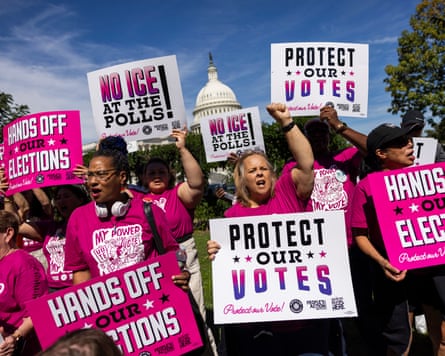
His position is clear: the federal courts, the states that administer elections, the USPS – all of them should bow to his whims, regardless of what the constitution says. Trump has already shattered legal norms by appointing his former personal lawyer to head the Department of Justice and then continuing to treat him as a personal attorney. Just this week, in a remarkable scene at the White House, the US attorney general, Todd Blanche, served the role of White House press secretary, answering a wide range of questions from reporters on behalf of the president. A day later, a smiling Blanche attended a Trump rally for the GOP Senate candidate Michael Whatley in North Carolina, flashing an enthusiastic thumbs-up from the crowd.
The extraordinary danger of this moment is that a president who believes he is the law, and the law is him, remains intent on disrupting the electoral process. Trump’s claims about mail-in voting are false, as the Guardian’s George Chidi explained. The Brookings Institution has found: “An average total mail voting fraud percentage across the 2016, 2018, 2020, and 2022 general elections of only 0.000043%, or about four cases of mail voting fraud out of every 10 million mail votes.” But Trump has been obsessed with the issue since 2020, when mailed ballots – which are typically counted last – evaporated his slim lead in some key states on election night. (Incidentally, Trump has voted by mail at least three times since then.) And more Democrats than Republicans vote by mail, so restricting mailed ballots also tilts the playing field towards the GOP.
State election officials are now working to assure voters that they can safely vote by mail this year, as Levine reported this week. But one can safely assume Trump will not stop pushing democracy to the brink.
Watch this race: Florida’s 27th congressional district
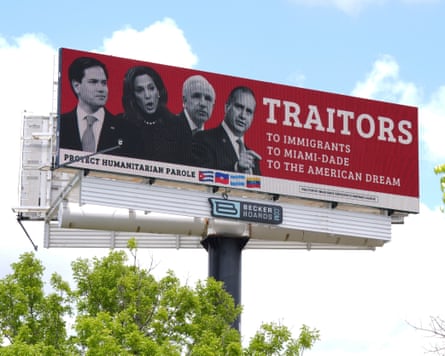
Trump won this Miami district by 15 points in 2024, when he aggressively promised a campaign of “mass deportations”. María Elvira Salazar, a Republican representative, easily held the seat, vanquishing her Democratic opponent by 20 points.
But Salazar is distancing herself from Trump this time around. “Mr President, some of your immigration enforcement efforts have gone too far,” she says to the camera in a remarkable ad released on Thursday. “In July, 50% of the 50,000 people that were detained had no criminal record. Be careful what your advisers are telling you about immigration policy.” She is facing a significant challenge this year from Eliott Rodriguez, a Democrat and former news anchor.
Fact check
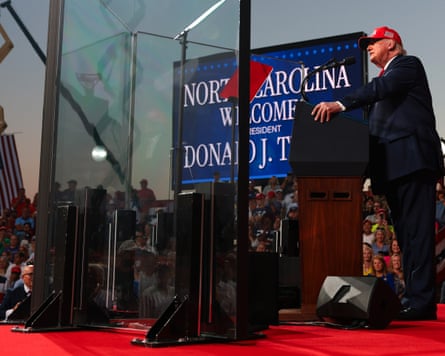
During Trump’s speech address at a rally in North Carolina on Wednesday, which the Charlotte Observer described in an op-ed as a “dark, divisive” speech, he painted the Tar Heel state as a crime-ridden hellhole. “So nobody used to think of North Carolina as a dangerous state, criminally dangerous,” Trump said. “It was like North Carolina, it was beautiful, it was apple pie, right? And now it’s one of the most violent and one of the worst in the whole nation.” (An interesting pitch to voters: your state is the worst.)
But crime has fallen dramatically in North Carolina. Don’t take our word for it: only hours before Trump’s arrival in Gastonia, North Carolina, the White House blasted out a press release correctly noting: “In North Carolina, crime fell across all four major categories in the first half of this year compared with the same period last year, including a 12.4% drop in murders, an 18% drop in robberies and a 23% drop in motor vehicle thefts.”
George Zornick is the Guardian’s US political enterprise editor