The story so far: The head of Flock, a surveillance camera maker-operator that works with a range of clients in the U.S., issued an apology this month after the Washington Post reported that multiple law enforcement officers had abused his product network, with at least one case involving an officer who misused Flock to stalk his ex-partner through her car’s license plates.
Across the U.S., anger is mounting against the surveillance camera firm, with critics going so far as to disrupt or even destroy the Flock cameras in their communities.
Possibilities and pitfalls of facial recognition system | Explained How do Flock cameras work?
Founded in 2017, Flock developed its business with the help of a two-way strategy: the sale of surveillance hardware, as well as surveillance-as-a-service subscriptions.
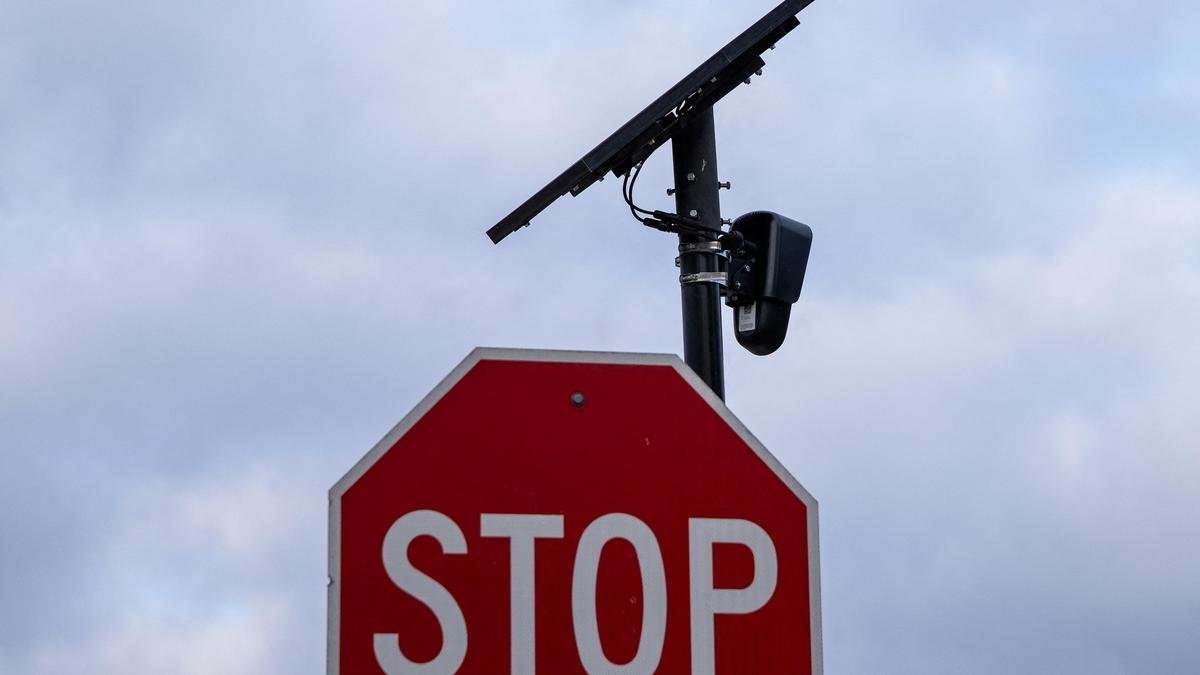
Flock products include license plate reader (LPR) cameras, video cameras, mobile security trailers, audio detection devices, drones, and software offerings.
Instead of just buying and using a single camera, clients can join the Flock network and enable (optional) law enforcement access.
Due to this strategy, Flock’s devices can help police officers collect data across wider areas and with more cameras, to detect incidents ranging from stolen cars to gun shootings.
The company’s numbers certainly impress.
According to its 2026 factsheet, over 2,800 crimes were solved weekly with Flock technology, while over 2,000 missing people have been located.
Flock reported it has partnered with over 6,000 “communities” across 49 U.S. states, as well as “thousands” of law enforcement agencies.
What caused the backlash against Flock cameras?
There are a number of reasons uniting the Americans who are against Flock.
These range from the company’s reputational challenges and the misuse of its Flock cameras to the general anger over mass surveillance technologies.
Company founder and CEO Garrett Langley made headlines last year when he referred to a critic’s anti-Flock advocacy organisation (called DeFlock) as “terroristic.” He apologised for his comments this July, and promised to improve on the company’s responses to the public’s concerns.
How Meta’s AI glass puts civilian privacy at risk | Explained Still, the Washington Post report in August that covered incidents where police officers misused Flock data to stalk women has added yet more fuel to the fire.
Soon afterwards, Flock announced it was updating its safeguards, and cutting its default ALPR (Automated License Plate Reader) data retention period to seven days, unless legally required to keep the images for longer.
On its “Myths vs Facts” page, Flock noted that it does not carry out facial recognition, predictive policing, or demographic profiling.
Flock stated it did not contract with the U.S. agency ICE or the tech firm Palantir — both associated with mass surveillance.
Even so, media outlets have identified Flock cameras as being AI-powered.
U.S. lawmakers have also raised questions about ICE possibly accessing Flock data.
Despite its outreach attempts, Flock is still facing public fury.
One reason for this was a May 2025 report that alleged Texas officials had used thousands of cameras in the Flock network to track down a woman who had an abortion, as part of an investigation.
Flock dismissed these reports last year and stated it was a missing persons case.
But later findings by the Electronic Frontier Foundation (EFF) advocacy group support the original report.
While the verdict was pending, a simplistic version of the events entered the public consciousness: social media users began claiming that Flock had worked with the police to enforce the Texan abortion ban and target a woman.
Meta AI glasses spark backlash across borders In recent weeks, protesters have expressed their anger against Flock by blocking cameras, reporting them to DeFlock in order to map them, pressuring clients to end their Flock contracts, or even destroying Flock cameras.
For example, a trending Instagram Reel with over 2 million views and 269,000 likes taught watchers how to dismantle a Flock camera without being detected by other cameras.
Furthermore, U.S. media outlets reported that in July, the Los Angeles Police Department (LAPD) would not renew its original contract with Flock, due to “serious concerns” regarding civil liberties, privacy, and the data being collected from the cameras.
Does India face a similar dilemma?
Across Indian cities, more law enforcement bodies are experimenting with AI-powered cameras in order to catch traffic rules violators through their license plates.
While these automated solutions seem encouraging, there has been a lack of human follow-up when it comes to penalising the offenders.
Another challenge is in ensuring that the authorities are handling facial recognition data securely and privately.
How tech plays a role in domestic abuse Meanwhile, the use of CCTV cameras by both police departments and private citizens is rampant, but these surveillance efforts are fragmented.
Unlike with Flock, it is hard to share private camera feeds with the police in real time and derive useful insights from the data.
Since they are owned by everyday users rather than leased by a dedicated company, these surveillance cameras are often unreliable and poorly maintained.
However, Indian citizens have become more vocal in calling out the use of smart glasses and AI-powered surveillance vans by the police, such as during the Cockroach Janta Party (CJP) demonstrations in July.
The potential misuse of facial recognition data to harass lawful protesters is a serious concern in these instances.