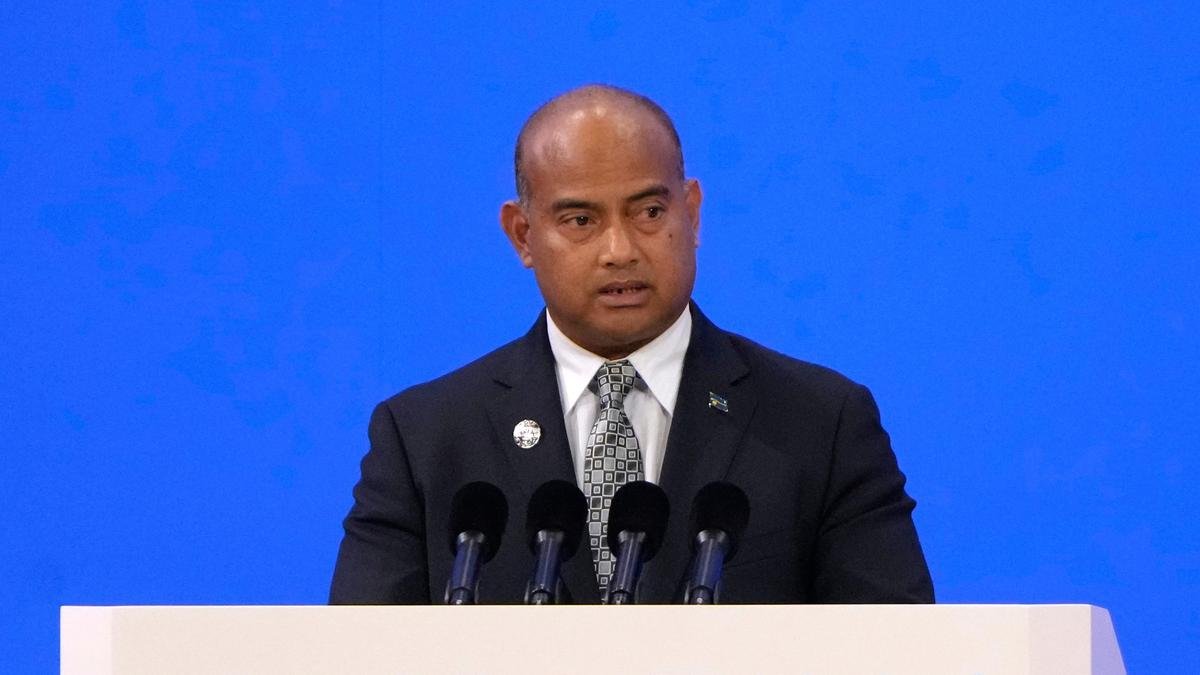
The smallest island nation in the world has adopted a more indigenous version of its name as part of efforts to move away from its colonial past as well as preserve a language deemed endangered. The move to rename the Republic of Nauru as the Republic of Naoero, to be pronounced as now-ero, is the beginning of a new national pride, the government of the island nation has said. The decision was about “identity, heritage, and preserving the legacy of our ancestors and strengthening the future of our children”, its President David Adeang had said of the revised name. The revision will also apply to its citizens, who would now be addressed as dei-Naoero instead of Nauruan, the government said, adding that it has formally notified other countries and international organisation of the name revision.
What was the contention with the name Nauru?
The government of the island nation, explaining the need for the change after a Bill to the effect was tabled in the country’s Parliament in January this year, said the ‘Nauru’ emerged as a convenience and not a choice since foreign tongues could not pronounce ‘Naoero’ properly.
The tiny island in the Pacific Ocean, to the northeast of Australia, has had several foreign powers rule over it in the last two centuries. Introduced to the western world by British sailor John Fearn in 1798, who named it Pleasant Island, it was annexed by Germany in 1888. The name ‘Nauru’ entered official records during the German rule.
Amid the First World War, Australia took control of the island, which was later acknowledged by the League of Nations following the end of the war in 1919, but given joint responsibility for governance with Britain and New Zealand. The island came under Japanese occupation during the Second World War and ended up under the control of UN trusteeship under Australia, Britain, and New Zealand.
The Island became independent in 1968. However, its name remained Nauru as entered into record by the German colonialists. While the government had announced a referendum on the name revision before its adoption, it said last week that it was not taking a new name in Naoero to seek acceptance from the people, but it is already the identity of the people and spoken in the community.
What examples did the country draw from for the revision?
It is not new for the names of places to change. Several factors, including political reasons, could push a state or administration to update place names.
India has seen several instances of places having their names revised to reflect local tongue and rewrite the spelling laid down by the British for ease: Bangalore became Bengaluru, Trivandrum became Thiruvananthapuram and Calicut became Kozhikode. But an entire nation revising its name years after being independent is rare, but not new.
While tabling the Bill for the name revision, the government of Naoero took note of recent cases of countries changing or revising their names, to reflect their culture and cut ties to colonial pasts. It named Eswatini, which changed its name from Swaziland in 2018, Turkiye, revised from Turkey in 2022, and the micronesian state Chuuk, which had adopted the name from Truk in 1990.
Why sovereign nations prefer going back to indigenous terms?
For countries that has had long history of colonial rule, where administration usually follows from what was left behind by the imperialists, adopting indigenous terms are both an assurance of its self-sustainability and sovereignty. For small nations like Naoero, which has a population close to just 12,000, de-colonialisation is a matter of identity.
UNESCO officially classifies the country’s language – dorerin Naoero – as “severely endangered”, and moving away from colonial symbol is key to preserve the language along with a rich custom accompanying it. The nation, which is reportedly being used by Australia as a detention centre for asylum seekers, is reeling under several existential challenges including from climate change.
Being a tiny island, it is bracing for the impact of rising sea levels set off by actions of large industrial economies. And while being a sovereign nation, it still comes under a lot of influence from Australia and also China which is seeking to strengthen its hold in the Pacific region. Caught between consequences of climate change and influence spheres of large economies, the island nation need to be sure of its identity and the revision will reaffirm the dei-Naoero identity.