The story so far: On Tuesday (September 1, 2026), a Supreme Court Bench of Chief Justice Surya Kant, Justice Joymalya Bagchi, and Justice V.
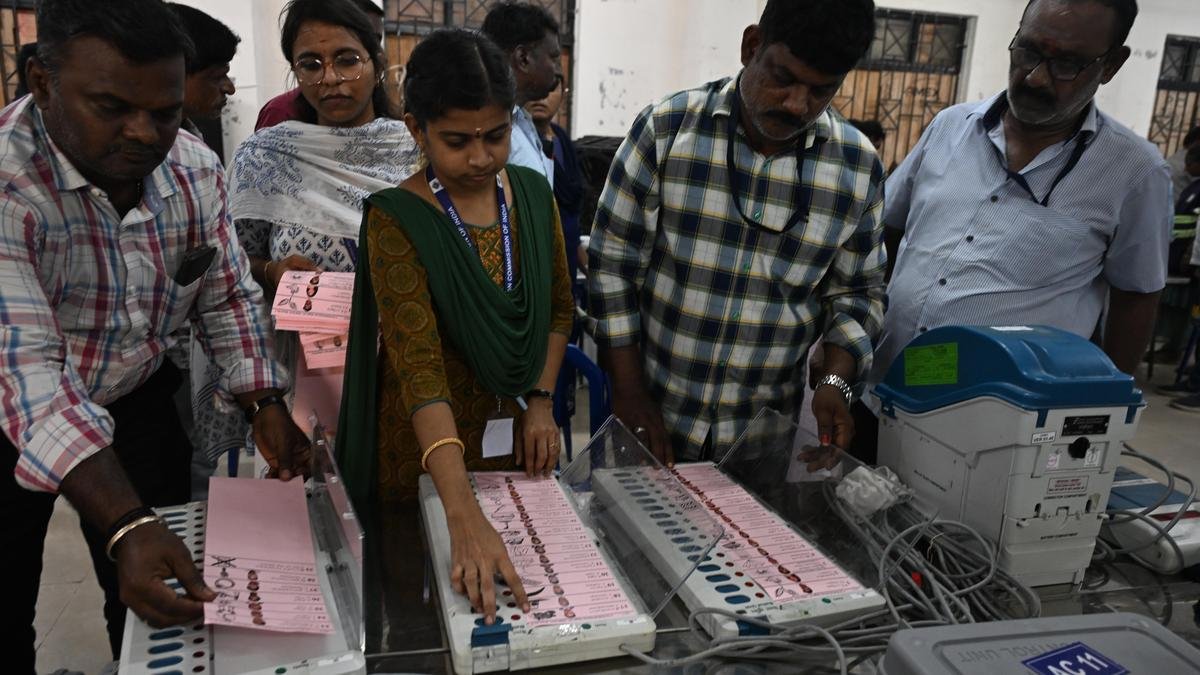
Mohana asked the Central government to examine introducing totaliser machines for counting votes recorded in Electronic Voting Machines, to protect the secrecy of booth-wise voting patterns and prevent electors at individual booths from being identified and potentially victimised.
The case dates back to 2014, when two individuals, Yogesh Gupta and Imran Khan, had moved a public interest petition seeking a direction to the poll panel to mix up the votes cast in the various polling stations in a constituency to prevent candidates from intimidating voters in places which had rebuffed them.
SC seeks Centre’s stand on use of totalisers in polls; EC warns against risks, flags public misapprehensions against EVMs What is a totaliser Totaliser is a proposal aimed at preventing candidates from determining the voting pattern of individual polling booths.
A totaliser allows the votes cast in about 14 polling booths to be counted together.
At present, the votes are tallied booth by booth.
It was developed by Bharat Electronics Limited, Bengaluru, and Electronics Corporation of India Limited, Hyderabad.
The totaliser is an interface which is connected to the main control unit of a cluster of 14 EVMs, and the consolidated count of votes cast for each candidate in that group of EVMs can be obtained by pressing the result button on the totaliser without disclosing the votes polled by a candidate area-wise.
Why was the petition seeking totalisers filed in Supreme Court Two individuals, Yogesh Gupta and Imran Khan, filed a public interest petition in 2014 seeking a direction to the poll panel to mix up the votes cast across polling stations in a constituency.
They argued it was necessary to prevent candidates from intimidating voters in areas that had rebuffed them.
As part of their arguments, the duo cited alleged intimidation by late former Maharashtra deputy Chief Minister Ajit Pawar in the Baramati constituency during the last general election.
Pawar had allegedly threatened the voters that his party, the Nationalist Congress Party, would be able to detect the voting patterns from the electronic voting machine readings and cut off their water supply if they snubbed it.
What has been the stand of the Central Government The Centre’s position has historically been one of opposition to totalisers.
In 2018, Additional Solicitor General Maninder Singh told the bench led by then-CJI Dipak Misra that installing a totaliser could cause a breach of data even before vote counting begins — the government had rejected this demand the year before.
More recently, the Centre again raised apprehensions that a totaliser system could lead to data being leaked from EVMs before votes are counted, prompting the Court to give the Election Commission two weeks to respond to those specific fears.
In 2017, the Centre told the Supreme Court that the identification of booth-wise voting patterns did not lead to voter intimidation and that there was no need to stop the practice.
It argued that knowledge of the booth-wise vote shares allowed the candidates to work harder in areas where support for them was low, thus producing better results for everyone involved.
Indian EVMs not connected to internet, Bluetooth or Wi-Fi: CEC Gyanesh Kumar A law ministry affidavit had told the court that a group of ministers headed by the then-Home Minister Rajnath Singh had decided last September that “intimidation/victimisation of voters as apprehended may not occur on a larger scale in this era of media activism”.
What has been the Election Commission’s stand The Election Commission’s stand has been consistently supportive of introducing totalisers.
It first suggested the measure to the UPA government back in 2008.
In a 2018 submission before the Supreme Court, the poll body stated that “a time has come for introduction of totaliser for counting of the votes.” That support has continued into the current round of hearings.
The EC informed the Court that it had earlier recommended the totaliser system to the Union government, and the senior advocate representing the EC expressed backing for the goal of protecting voter anonymity — while also flagging some practical and legal challenges in actually implementing it, including concerns around booth-wise verification and VVPAT.
What has the Supreme Court said now?
The Supreme Court on Tuesday (September 1, 2026) asked the Central government to state its position on introducing a “totaliser” system for counting votes recorded through EVMs.
The Court specifically sought to know if there are any impediments to introducing such a mechanism and if there would be any negative impact because of it.
The Election Commission of India has also been asked to submit its proposal to the Union.