United States President Donald Trump has thrown his weight behind Iraqi Prime Minister Ali al-Zaidi’s campaign against oil smuggling. Baghdad has moved to take control of border crossings and oilfields in the semi-autonomous Kurdish region and has confronted Kataib Hezbollah, Iran’s most powerful armed ally in Iraq.
The endorsement came days before talks between Baghdad and Erbil are due to take place on December 1 under the sponsorship of the head of Iraq’s Supreme Judicial Council.
Recommended Stories
list 1 of 3How an oil feud is deepening rift between Baghdad and Iraq’s Kurdish region
list 2 of 3Trump backs Iraqi PM’s oil smuggling crackdown
list 3 of 3Is Iraq facing renewed instability?
Here is what we know.
What did Trump say?
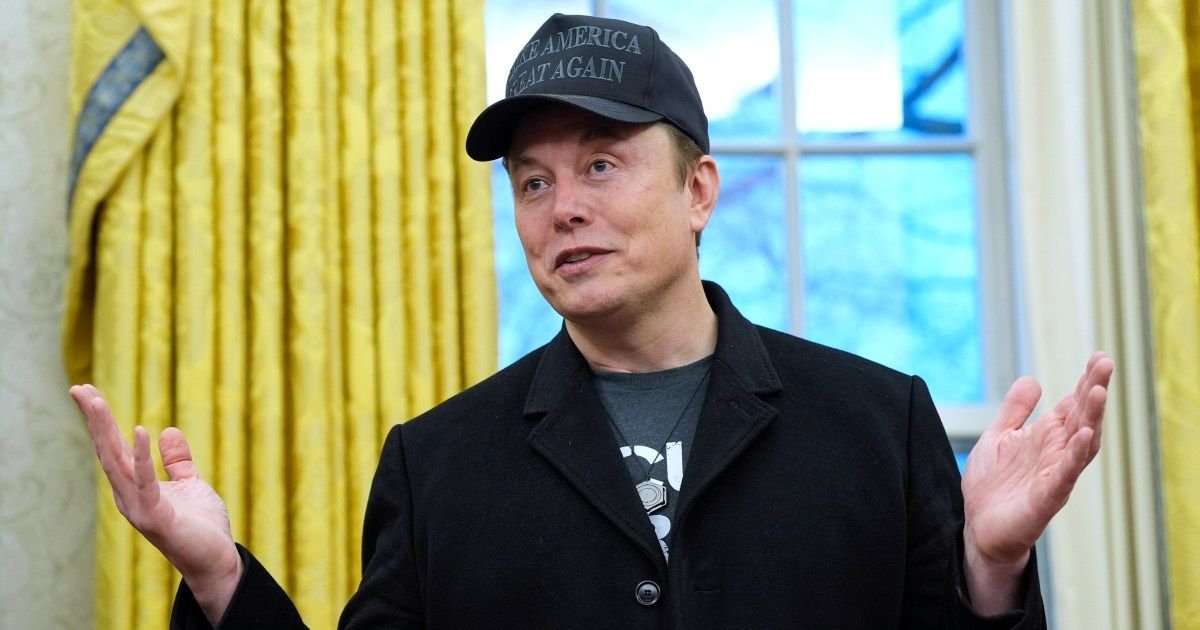
In a post on Truth Social on Friday, Trump wrote: “We support Iraqi Prime Minister Ali al-Zaidi’s efforts to assert state authority throughout Iraq, stop the smuggling of Iraqi oil, end corruption, and bring all weapons under the exclusive control of the state.
“We support Prime Minister al-Zaidi’s efforts to build a united, prosperous, and strong Iraq that makes its own political decisions,” he added.
The post marked Washington’s first comment on tensions between Baghdad and Erbil. On Tuesday, al-Zaidi moved to place the Kurdish region’s border crossings and several oilfields under federal control. On Wednesday, Iraq’s top court ruled that Baghdad can deploy federal forces along all of the country’s international borders, including those of the Kurdish region. On Thursday, Iraq closed two crossings in the region, one with Syria and one with Iran.
Salim Zakhour, a researcher specialising in constitutional law and political systems, told Al Jazeera that the timing is significant, as Trump’s post comes after Baghdad’s measures and before the planned dialogue meeting.
“It is a clear message, first to the federal government, as a show of support for it,” he said. “But the more important message is for the authorities and Kurdish leaders in the Kurdistan region. It tells them that all the measures taken by the federal government have strong American backing.”
What is Iraq’s anti-smuggling campaign?
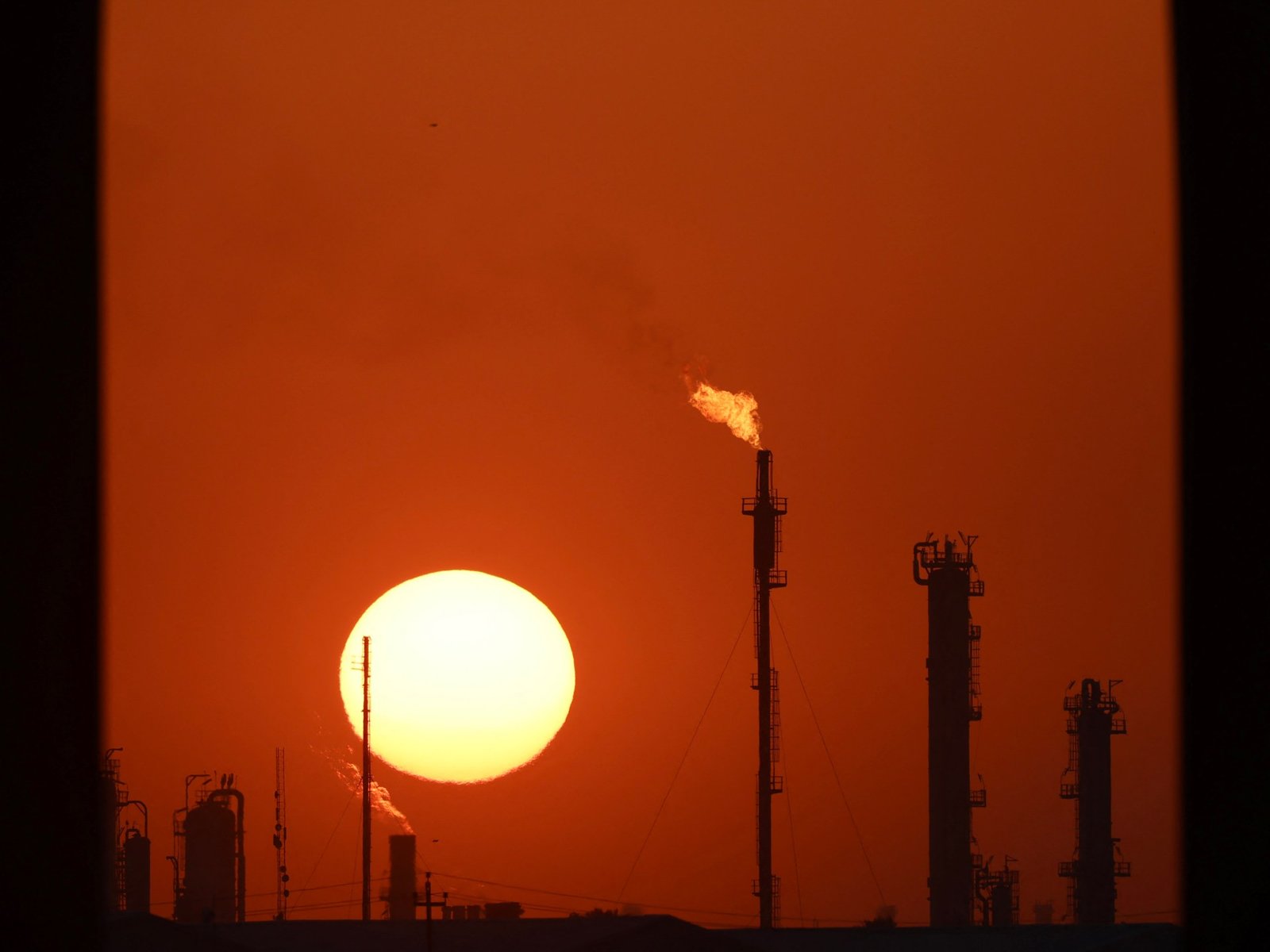
The Iraqi government says it wants to clamp down on oil smugglingو which is harming its economy.
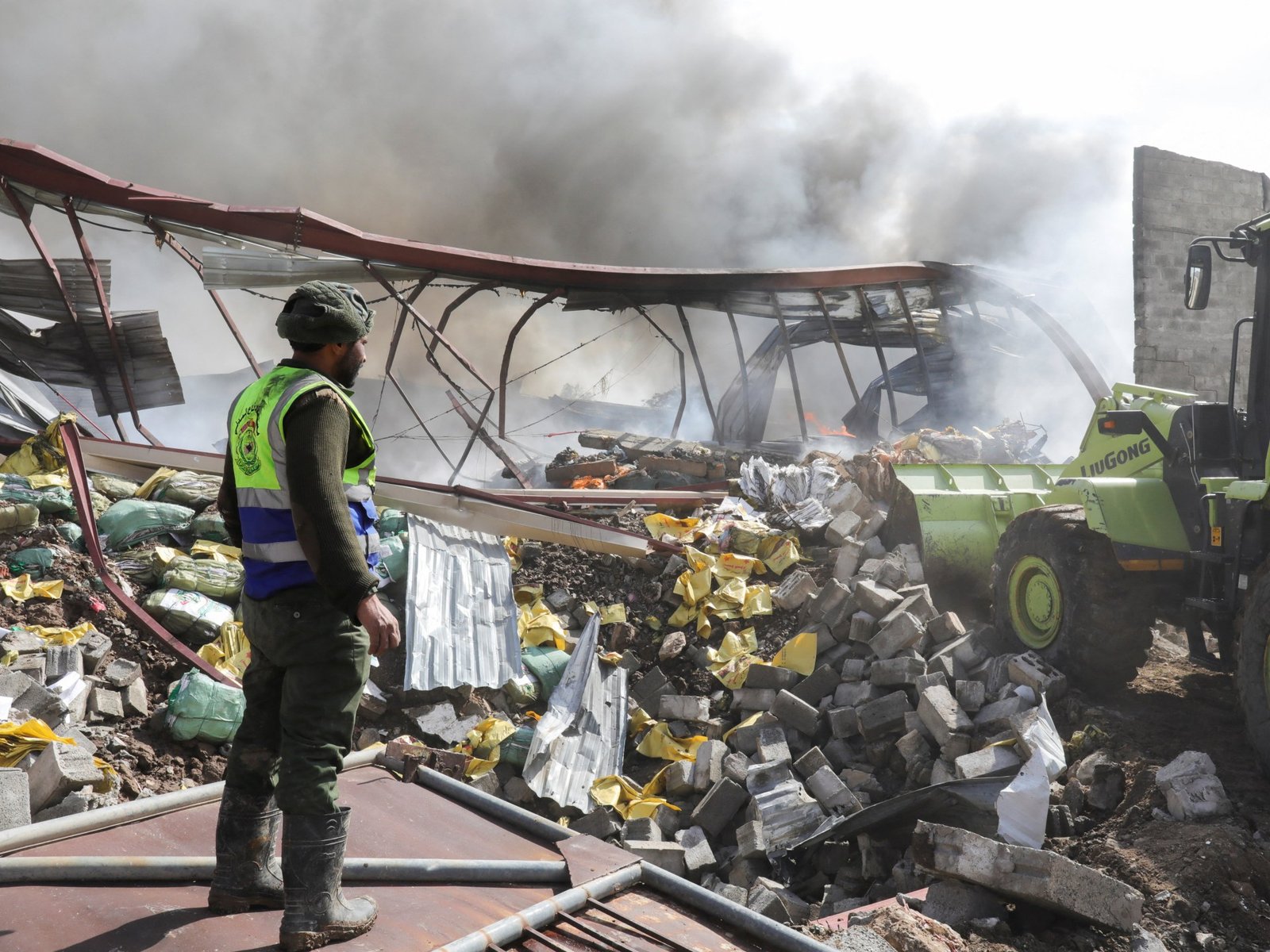
The campaign began in Jurf al-Sakhar, also known as Jurf al-Nasr, a town in Babil province south of Baghdad. The armed group Kataib Hezbollah has held the town since 2014, when Iran-backed groups took it from ISIL (ISIS), and its mostly Sunni residents were displaced.
Senior Iraqi security, army, police and oil officials told the Reuters news agency that Kataib Hezbollah has since run an oil smuggling network there, siphoning off state-owned crude worth hundreds of millions of dollars since 2021.
Nine senior security and oil officials have been dismissed and referred to the courts. Kataib Hezbollah, which the US designates as a “terrorist” organisation, denies the allegations.
Al-Zaidi gave the group until November 20 to leave the town. A day before the deadline, the two sides reached a compromise, reportedly following direct intervention by Esmail Qaani, the head of Iran’s Quds Force.
Under the deal, government forces entered Jurf al-Sakhar and set up a joint operations centre. Kataib Hezbollah units are due to withdraw gradually as army, federal police, energy police and Popular Mobilisation Forces (PMF) units deploy in phases.
Kataib Hezbollah is not the only group resisting Baghdad’s push to bring weapons under state control. Harakat al-Nujaba and Kataib Sayyid al-Shuhada have also refused to disarm. After the armed groups missed a September 30 deadline to hand over their weapons to the state, the government pushed the deadline to June 2027.
Baghdad then extended the campaign to the Kurdish region. Government spokesperson Haider al-Aboudi told the Iraqi News Agency (INA) that Iraq has lost an estimated $100bn between 2008 and 2025 from oil smuggled through the region. Reuters reported that it was unclear how that figure had been calculated.
Kurdish region Prime Minister Masrour Barzani called the measures unconstitutional and rejected them outright. Thousands of Kurds protested on Thursday, although Kurdish officials have said they do not want clashes with Baghdad and have left the door open to talks.
Liqaa Makki, a senior researcher at the Al Jazeera Centre for Studies, said Baghdad turned to the Kurdish region before the Jurf al-Sakhar operation was finished.
“The forces went in, but what next? There were promises that residents would return, that the town would be rebuilt and that Kataib Hezbollah would leave. None of that has happened,” he said.
Makki said al-Zaidi was responding to Shia armed groups asking why Baghdad was targeting them and not the Kurds, and wanted to show them “I am tough with everyone.”
He added that the prime minister could exploit divisions within the Kurdish region between the Patriotic Union of Kurdistan, based in Sulaimaniyah, and Erbil. “This is a good opportunity, because Sulaimaniyah is with him against Erbil,” he said.
Ghalib al-Daami, an academic and political researcher in Baghdad, told Al Jazeera that the Federal Supreme Court has already settled the legal question about borders with the Kurdish region.
“The border crossings, in terms of control, are run by the federal government, which also sets fiscal policy, but the actual day-to-day management of the crossings is to be joint,” he said. That would mean federal forces working alongside local Kurdish forces, such as the Asayish and the police.
“Oil, as interpreted by the Federal Court and the Iraqi constitution, is the property of all Iraqis,” he added.
How important is Iraq to Iran’s economy?
“Very,” Muhanad Seloom, a senior non-resident fellow at the Middle East Council on Global Affairs, told Al Jazeera. “It is Iran’s main land outlet under blockade.”
Seloom said Iraqi buyers imported about $11.9bn of Iranian goods in 2024, one-fifth of Iran’s non-oil exports. “Gas for Iraqi power plants adds $4-5bn a year, and Iraqi banks give Tehran a route around sanctions,” he said.
Iraq is one of Iran’s most important economic partners. Bilateral trade topped $10bn in 2025, according to Iraqi official figures, driven mainly by Iranian exports of food and consumer goods. Iran’s Trade Promotion Organization put the figure at about $11.6bn.
Energy is at the centre of the relationship. According to US Energy Information Administration data, Iranian gas fuels power plants that produce 30 to 40 percent of Iraq’s electricity.
Iraq has also served as a channel for Iran to get around sanctions. Reuters revealed in late 2024 that a fuel oil smuggling network in Iraq was generating at least $1bn a year for Iran and its allies.
That channel has become more valuable as pressure on Tehran has grown amid the US war. The US has imposed a naval blockade on Iranian ports used for exporting oil and has threatened sanctions against countries and groups that continue doing business with Iran.
Washington also has unusual leverage over Baghdad because Iraq’s oil revenues are held at the Federal Reserve Bank of New York. In April, the US halted a $500m cash payment to Iraq to press Baghdad to take action against Iran-backed groups.
What do we know about alleged oil smuggling between Iraq and Iran?
Seloom said the best-documented scheme involves Iranian oil that is relabelled as Iraqi. “US Treasury designations since July 2025 describe blending and forged papers, and in May the trail reached Iraq’s deputy oil minister,” he said.
He said a newer claim – that crude from Kirkuk and Sulaimaniyah is trucked into Iran – “rests on one intelligence document that AFP has viewed without being able to confirm, and Erbil rejects it.”
An Iraqi intelligence document cited by the state news agency INA suggests crude is being moved by tanker truck from oilfields in Kirkuk and Sulaimaniyah provinces into Iran. There, it is reportedly blended with Iranian oil and sent on to Afghanistan, in what the document describes as an effort to help Iran “evade sanctions”. The document also suggests there may be a second route via crossings into Turkiye.
Washington has made similar accusations for some time. In May, the US Department of the Treasury sanctioned Iraq’s deputy oil minister, Ali Maarij al-Bahadly, accusing him of abusing his position to divert oil for the benefit of Iran and its allied armed groups in Iraq. Earlier, the Treasury sanctioned a network of companies run by Iraqi businessman Salim Ahmed Said. It accused the network of blending Iranian oil with Iraqi oil and selling it as purely Iraqi.
What is Trump’s interest in all this?
Seloom said Iraq is “the land gap” in Trump’s blockade of Iran.
“Closing it costs him no troops,” he said. “The crackdown slots into Washington’s economic-blockade strategy. It also squeezes militia funding and shores up al-Zaidi.”
The security source in Baghdad told the AFP news agency that the crackdown has US backing as Washington seeks to limit Iran’s economy.
Zakhour said the US position on the Kurds has also shifted. Washington backed Kurdish autonomy for decades, from the no-fly zones of the 1990s to the decentralised federal system written into the 2005 constitution.
“Now there is a different approach, led by the US envoy to Iraq and Syria, Ambassador Tom Barrack,” he said. “This approach is towards more centralised decision-making, both in general and especially on investment and oil.”
He said Barrack’s view is that “when American companies sign contracts, there must be a single party to sign with, and there must be no disputes after the signing.
“Everything we are seeing now is aimed at securing that demand,” Zakhour added.
Makki said Washington’s backing has freed al-Zaidi to take on Erbil. “America is now standing behind him with all its strength,” he said. “So he is not afraid that the Americans will side with the Kurds. On the contrary, they are asking the Kurds to stand with al-Zaidi.”
Al-Daami rejected any suggestion that US backing compromises al-Zaidi, who has steered Iraq closer to Washington and whom Trump hosted at the White House in July this year.
“Fighting corruption, preventing smuggling and controlling national wealth are clearly a domestic agenda,” he said. “Yes, that agenda lines up with the American one.”
Could the Iran war shift to a new front in Iraq?
“Yes, but more as a launchpad than a battlefield,” Seloom said. “Militia participation in any renewed US-Iran round is very likely.”
He said Iraq has had no US troops present since September 30. “So I expect militia fire from Iraqi soil and US air strikes on militia leaders, not a ground war,” he said.
The risk is rising. The US and Israel launched the war on Iran on February 28, and a ceasefire took effect following a memorandum of understanding in June. But that agreement, which would have paved the way to wider peace talks, fell apart, and the two sides have continued to exchange attacks in recent weeks, while the US blockades Iranian ports.
Trump has said he “would not hesitate” to resume full military strikes if diplomacy fails, and Iranian Foreign Minister Abbas Araghchi has warned that Tehran will “rain down hell” if the US escalates.
Iraq has already been drawn in. Since the war began, several Iraqi armed groups have pledged to support Iran’s war effort, and Baghdad has acknowledged that attacks on neighbouring countries have been launched from its territory. In July, joint US-Saudi strikes on PMF sites across Iraq killed at least 20 of its members.
Baghdad is trying to stay out of any new round of US-Iran fighting. In a phone call with Trump on November 5, al-Zaidi said Iraq would not allow its territory to be used to attack neighbouring countries. Foreign Minister Fuad Hussein warned Iraqi armed groups against joining any Iranian retaliation. “Pushing Iraqi society into the war will lead to a disaster,” he told Dijlah TV.
Al-Daami said outside powers would inevitably shape the outcome. “The foreign actor, whether we like it or not, has influence in the Middle East and in Iraq,” he said.
The dispute with Erbil carries its own economic stakes for Baghdad. Zakhour warned that if Baghdad centralises control over oil, the Kurdish region’s budget “will depend entirely on transfers from the Baghdad government”.
Al-Daami predicted the talks would end with the Kurdish government accepting the court’s ruling. “In the end, the disputes between the two governments will result in the federal government controlling all of its border crossings and all of its territory,” he said.