The story so far: Nicaragua filed a case against Germany in the International Court of Justice (ICJ) in 2024, arguing that the European country violated the 1948 Genocide Convention by supplying weapons to Israel during its attacks on Gaza and accusing Berlin of having “contributed to the commission of genocide” against the Palestinian people.
While the ICJ, also known as the World Court and headquartered in The Hague, initially rejected Nicaragua’s request for emergency provisional measures to halt Germany’s arms exports to Israel, the court did not quash the case.
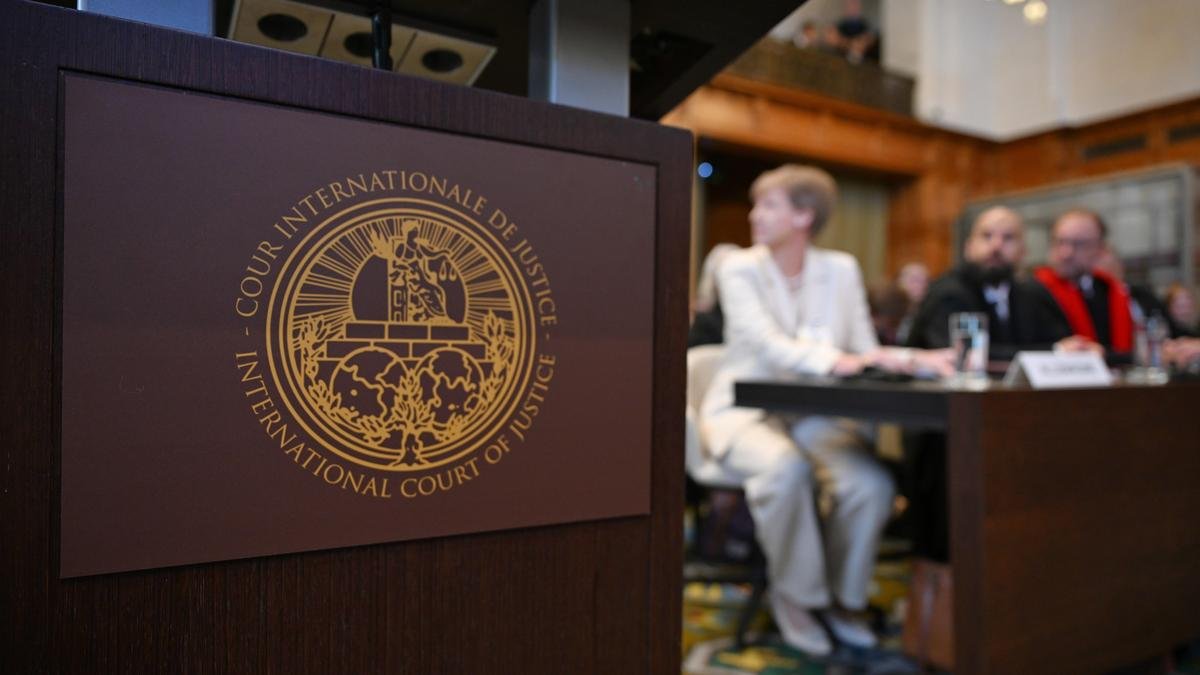
Proceedings in the ICJ take place over the course of several years, and on Monday (September 7, 2026), Germany asked the court to dismiss Nicaragua’s case, arguing that the Central American country did not follow the proper procedures before filing the case and that large parts of the case fall outside the jurisdiction of the ICJ.
Nicaragua, which cut diplomatic ties with Germany in 2024 over the country’s support for Israel, on Tuesday (September 8, 2026) argued that the case should be heard, as it and Germany are signatories to the Genocide Convention and are required to carry out certain obligations.
What is the Genocide Convention?
The Convention on the Prevention and Punishment of the Crime of Genocide, known more commonly as the Genocide Convention, was adopted by the United Nations General Assembly in 1948 and came into effect in 1951.
Dr.
Julia Monar, Agent of the Federal Republic of Germany, speaks to the press alongside Counsel and Advocates Professor Antonios Tzanakopoulos and Professor Christian J.
Tams following public hearings at the International Court of Justice (ICJ) at the Peace Palace in The Hague, Netherlands | Photo It defines genocide as a crime under international law, which signatories “undertake to prevent and to punish”.
It also says that any dispute between signatories “relating to the interpretation, application or fulfilment” of the convention could be taken to the ICJ.
The word “genocide” was coined by Polish lawyer Raphael Lemkin in 1944 in his book Axis Rule in Occupied Europe, and he advocated for years for it to be recognised as a crime before the convention was eventually adopted in 1948.
While it was initially signed by 41 countries, it now has 154 signatories, including Nicaragua, Germany and Israel.
India is also a signatory.
What next?
Hearings regarding Germany’s request for the case to be thrown out were held from September 7 to September 10.
It is expected that the ICJ will take a decision on whether the case can continue by the end of this year or the beginning of the next.
If the court decides not to quash the case, hearings will later commence on the actual merits of Nicaragua’s claims against Germany.
A final verdict could take several more years.
Judges of the International Court of Justice (ICJ) are pictured on the bench during the public hearings at the Peace Palace | Photo If the court eventually rules that Germany did, indeed, violate the Genocide Convention or other international law, it could impose reparations and demand that the country comply with its obligations.
However, compliance with any potential ICJ verdict would depend on Germany’s willingness or the UN Security Council’s stance towards enforcing the verdict.
In most cases, the ICJ does not reach a stage where it imposes financial reparations.
Instead, the countries involved generally come to a settlement on reparations and other obligations.
The South Africa case Nicaragua’s case builds on the 2023 case filed in the ICJ by South Africa, accusing Israel of genocide.
South Africa had initially asked for interim measures, which the court granted, ordering Israel to prevent acts that violate the Genocide Convention.
Israel has rejected allegations of genocide and questioned the ICJ’s jurisdiction in the matter.
An actual verdict on the allegation by South Africa, which was joined by several other countries that intervened in the case subsequently, that Israel committed genocide, is expected only by 2027 or 2028.
The situation in Gaza After the attack in Israel by Hamas on October 7, 2023, in which over 1,200 people were killed and 251 hostages were taken, Israeli strikes in Gaza have killed over 70,000 people, with UN agencies estimating that another 10,000 remain missing under the rubble of destroyed buildings.
India needs to be more vocal on international law violations: Palestine Foreign Minister A ceasefire brokered by the U.S. has been in place since October 2025, which has allowed some aid to enter Gaza.
Since the ceasefire, according to Gaza’s Health Ministry, over 1,300 people have been killed in intermittent strikes that Israel has continued to carry out.
Aid groups have described the humanitarian situation in Gaza as catastrophic, with the British Red Cross saying that “every day has been a fight for survival” for the people of the enclave.