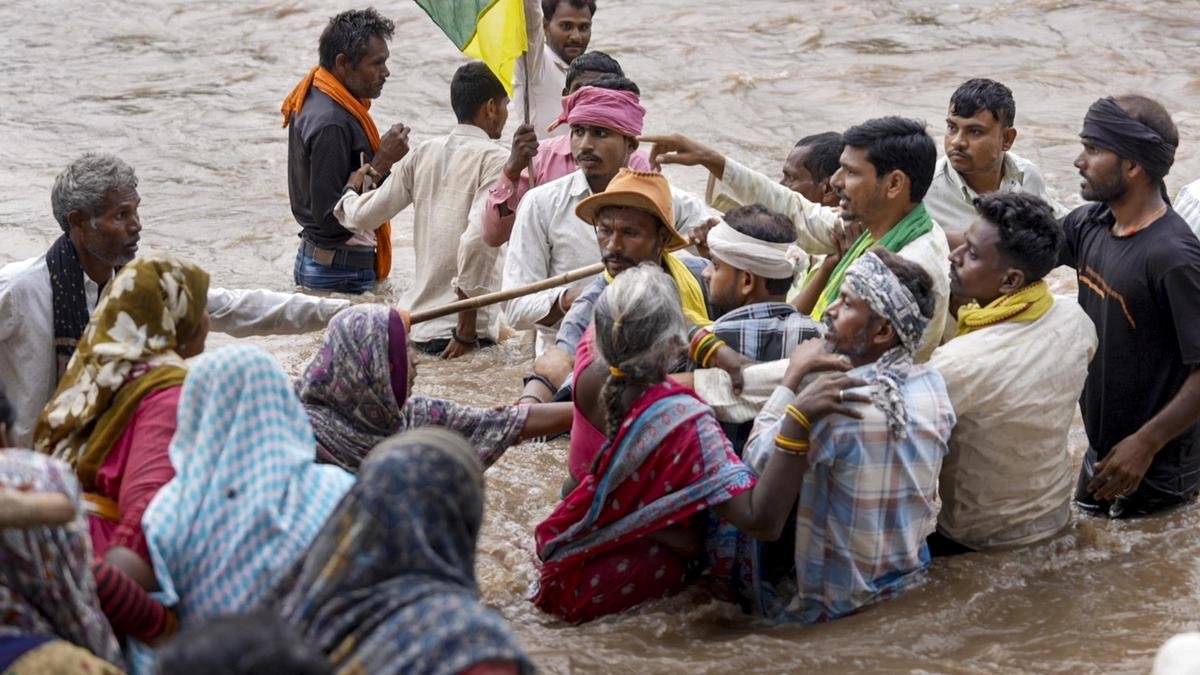
The story so far: Responding to questions about the Ken-Betwa River Link project in Madhya Pradesh raised by Opposition MPs in Lok Sabha, the Union Ministry of Tribal Affairs on Thursday (August 6, 2026) acknowledged that it had received several complaints about “issues of displacement” owing to the project but that it had sent all of these complaints to the Madhya Pradesh government and district authorities, saying that it was the State government that was responsible for implementing the forest rights law.
Locals in Madhya Pradesh have been protesting for months, grabbing national attention on social media after visuals of their demonstration showed men and women placing a noose around the neck while some lay on symbolic pyres inside the waters of the Barana river in Chhattarpur district.
The protest, first held in April, was relaunched in July after government efforts to engage with the protesters failed.
Why are there protests over the Ken-Betwa project?
Soon after the protests resumed, the police on July 19 cleared the protest site and forcibly took local activist Amit Bhatnagar of the Jai Kisan Sangathan to the hospital and removed nearly 150 protesters from the area.
Mr.
Bhatnagar had been on a hunger strike for 14 days at the time.
The project: Part of the Ken-Betwa river linking project is among 30 such link projects under a National Perspective Plan (NPP) for water resources development and interlinking of rivers with ‘surplus water’ to those with ‘deficit water’, formulated in 1980 by the Ministry (then Union Ministry of Irrigation) and the Central Water Commission.
Under this project, the plan is to transfer declared surplus water of the Ken river by constructing the Daudhan Dam on it and using a 221-km canal, including a 2-km tunnel, to the Betwa river.
Apart from this, the project is also expected to generate 103 MW of hydropower and 27 MW of solar power.
While the project involves the displacement of over 7,000 families, locals protesting the project has raised multiple issues with it.
These include the demand for increased compensation, alleged irregularities in how the beneficiaries for the compensation and rehabilitation package were picked, and impropriety in the procedure for obtaining Gram Sabha consent for the project under the forest rights law of India.
What was asked and what the Centre said?
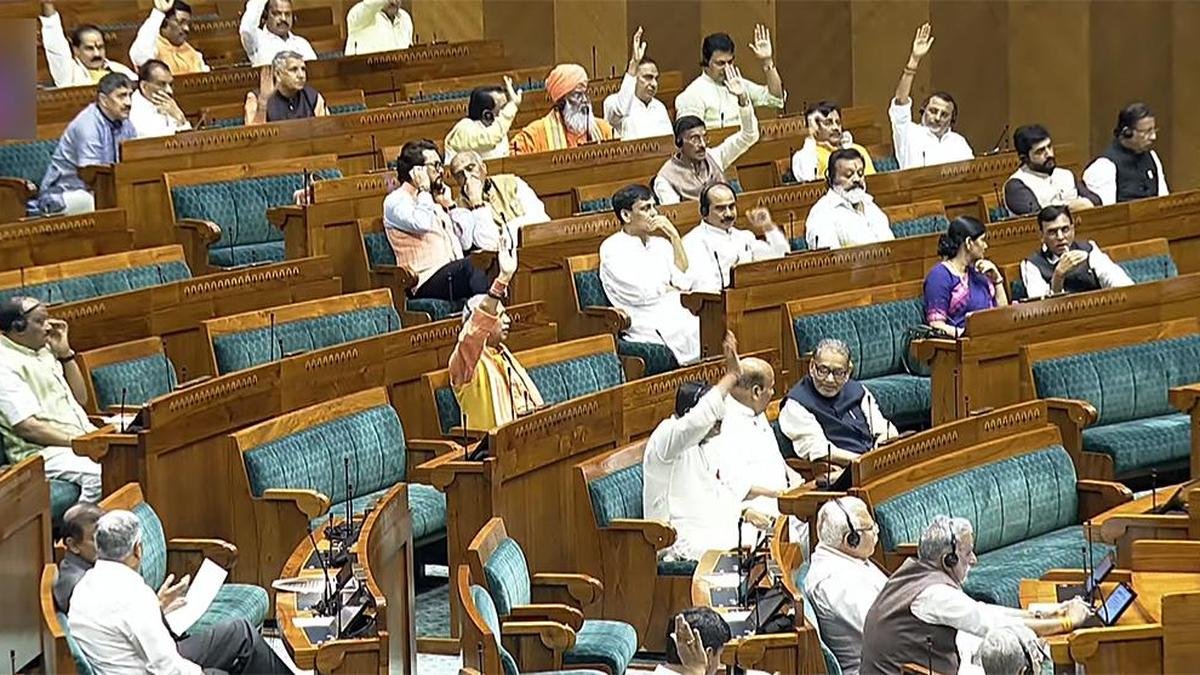
While the Union Tribal Affairs Ministry passed on issues related to the project to the State government, it was responding to specific questions raised by the Leader of the Opposition in Lok Sabha, Rahul Gandhi and Samajwadi Party MP Ajendra Singh Lodhi.
The questions asked for the total number of families affected by the project, the number of them who are from tribal communities, and the number of them who had received partial and full compensation amounts as per the procedure.
Gandhi and Mr.
Lodhi also asked how many Gram Sabhas were held to approve the project, the number of people who attended these meetings, and the grievances raised at these meetings.
The MPs also specifically asked if the government was aware of families being evicted before being paid full compensation and whether the government had taken note of the protests.
Most of the questions were focused on the compensation, rehabilitation and resettlement plans for the locals affected by the project and compliance with consent procedures under India’s Forest Rights Act of 2006.
On both, the issue of compensation and rehabilitation and the issue of Forest Rights Act consent procedures, the Tribal Affairs Ministry has said that it was the State government that was implementing these plans.
Why the Centre is passing on issues to State govt?
In its reply in Lok Sabha, tabled by Minister of State Durgadas Uikey, the government noted that under the Right to Fair Compensation and Transparency in Land Acquisition, Rehabilitation and Resettlement Act, 2013, all activities related to acquiring land, paying compensation and rehabilitation are being completed by the State government.
It cited a similar justification that under the Scheduled Tribes and Other Traditional Forest Dwellers (Recognition of Forest Rights) Act, 2006 (FRA), the State government is the implementing agency.
However, the project itself is being led by the Union Jal Shakti Ministry, and the Forest Rights Act mandates that the Union Ministry of Tribal Affairs function as the nodal Ministry for all matters related to it.
This comes even though the Tribal Affairs Ministry has said that it is represented on the Steering and Monitoring Committees of the Ken-Betwa Link Project, which “monitors the progress of implementation of the action plan of R&R of Project Affected Families (PAFs)”.
Apart from noting that the issues being raised by the protesters over the Ken-Betwa project were for the State government to deal with, the Ministry of Tribal Affairs insisted that it has been writing to State governments to scrupulously follow the provisions of laws like the RFCTLARR and the FRA, specifically warning administrations against removing people from their homes without processing their forest rights claims.