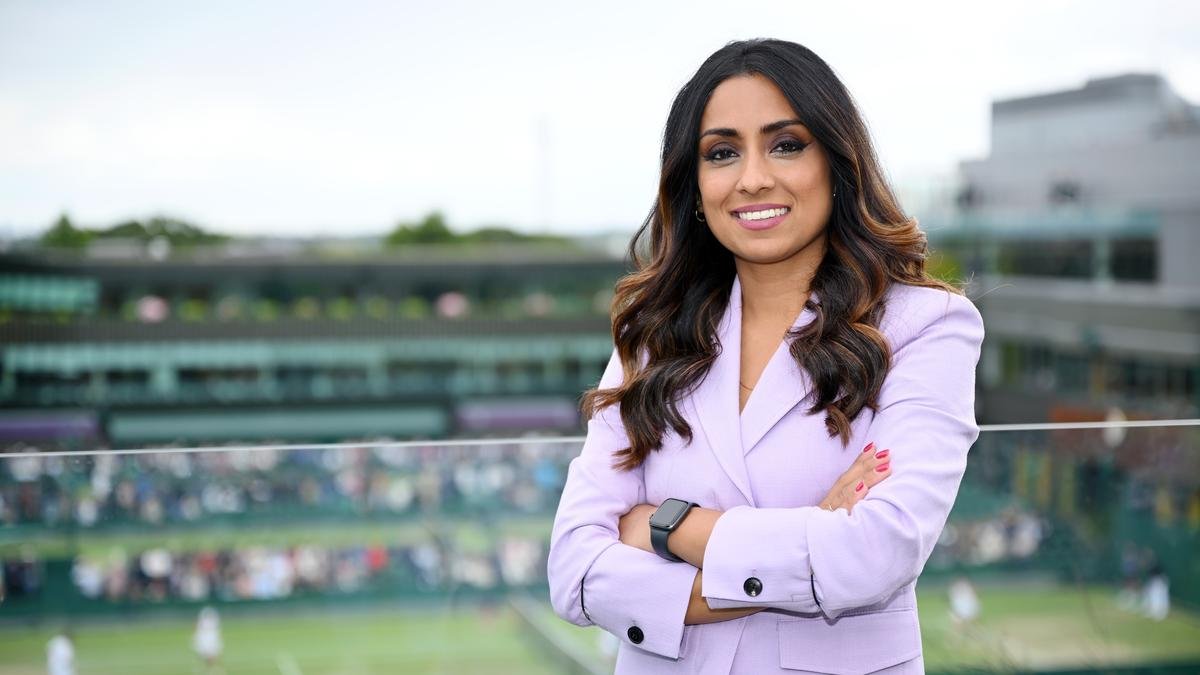
Isa Guha, the first female cricketer of South Asian origin to play for England, took 148 international wickets across formats in a nine-year career with her seam bowling. The World Cup winner is now one of the game’s pioneering female commentators. Excerpts from an interview Guha gave The Hindu at Lord’s:
You were a part of the England team that won the 2009 World Cup. In the final against New Zealand, you had provided the breakthrough, dismissing Kate Pulford.
It is incredible really that it has been 17 years already. I remember, back then, we were just the curtain-raiser to the men. Now women cricketers have a super huge stage all to themselves.
How do you look back at your cricket career?
With so much pride. There was not much for women’s cricket at that point of time, but I am absolutely fine with that. I went on this journey with this team. We were pretty average and we became the best team in the world in 2009. I will never forget that journey, with a group of people who did something incredible.
It is of course great to see that the women’s game has travelled quite a lot. I think India recognising how important women’s cricket is has been huge for the game. And that started long before the WPL started. Now the whole game recognises the importance of giving women’s cricket a platform. Because we know the bigger picture, that people’s attention spans are getting shorter. Sports are having to compete with each other.
Thankfully, sport is the one thing that people still watch live. It is a valuable asset. But to compete with other sports, you need everyone to feel included in it.
You are one of the pioneering women in commentary.
It all happened by accident. I have always had a curiosity to learn, though. But honestly, when I first started, I was awful. I think there weren’t a lot of women commentators around when I started.

Launch vehicle: The chance to work as a broadcaster during the IPL in India, Guha says, opened doors to ‘more and more opportunities’. | Photo
I guess Melanie Jones was there…
She was doing a bit for Sky with women’s cricket. And I know that Rachael Heyhoe-Flint has done some. As has Clare Connor. But there weren’t a lot of us. So, I didn’t really think of it as a career at that time.
And I got the opportunity with the BBC, with Sky. I did some TV punditry in 2010. And a bit of radio commentary soon after. And then I got the big opportunity with ITV, to present the IPL. I had never done any sort of presenting, though, so that was an education.
And then India decided to bring me over for Sony. Then all of a sudden, I started to get more and more opportunities. I worked for Ten Sports in India, too.
I was asked to do the Caribbean Premier League, the men’s tournament. No woman had worked on men’s T20 cricket before. So that was a big opportunity. And that is where I learned a lot about commentary. Then obviously the IPL. Soon after, it was Australia.
When the Australian opportunity came about, I wasn’t sure what to expect. I didn’t know how they would receive me. Thankfully, it went really well. Then Fox wanted to hire me for their coverage. So I have my two jobs now, in Australia and the UK.
You are quite popular on Fox in Australia, especially when you pair up with Kerry O’Keeffe or Adam Gilchrist. You have a licence to speak a bit more freely in Australia than the UK perhaps?
Yes, that is true. Kerry and I had worked on the radio together. We had a great time. We just hit it off.
Other commentators you have enjoyed working with?
Shane Warne gave me a lot of encouragement. He would ask me about my opinion on the cricket. He genuinely respected my opinion. That is when I thought, OK, maybe I can do this. I actually love working with Phil Tufnell, too. He is a lot of fun.
There are lots of different skills you need for broadcast, right? A reporter is different from a commentator, who is a bit different from a presenter. And TV is different from the radio. In different countries, it’s different how you apply yourself. In India, you need to be a bit more bombastic. In England, you need to be a bit calmer.
I always wanted to be an all-rounded broadcaster. When I was a player, I wanted to be an all-rounder. And then as a broadcaster, you want to learn as much as possible so that you can be versatile. I always wanted to get good in cricket and then maybe cross over into other sports. I have been lucky to work at Wimbledon for five years now. I do love tennis. When I am at Wimbledon, it really is so magical being there. I played a bit of tennis when I was younger. Cricket is always going to be my home, though.
One of your best performances came in the 2008 Ashes Test at the Bradman Oval, Bowral, where you took nine wickets to bowl England to victory.
In the few games before, I hadn’t really been playing, so I was low in confidence. When I got to Bowral, I really wanted to play there. It had an aura about it. It felt quite special. The home of Don Bradman. Trees everywhere. White picket fence. I just really wanted to do well. I got an early wicket and then it just flowed.

Nine at Don’s: The Bradman Oval inspired Guha’s best Test performance in 2008. ‘Trees everywhere. White picket fence. I got an early wicket and it just flowed,’ she says. | Photo
Memories of playing in India?
Once I got to play at the Eden Gardens in Kolkata, which is where my family is from. But unfortunately, it was at a time that Sourav Ganguly was out of the Test side. And the fans basically were revolting. So no one turned up. Just my grandparents and my family. But it was still special for me.
You head a charitable organisation…
Yes, I founded Take Her Lead in 2022. Our purpose is to advance equity and diversity in cricket and increase participation for women and girls. We did a survey in 2022 with over a thousand women and girls, and the majority said they felt they didn’t belong in the sport. We have done a lot of work to try and change that. We have a mentoring program. We work with a lot of charity partners, like the MCC Foundation and Lord’s Taverners. Between the age of 10 and 15, girls drop out of sport 20% more than boys. We deliver mental and social skills to help them feel like they have the skills to be able to succeed in cricket.
We are also addressing the South Asian challenge. There have only been three of us that have played for England — me, Sonia [Odedra] and Mahika [Gaur]. There is only 11% representation from a South Asian background for girls at the entry-level pathway. That drops to 4% at professional level. So we are trying to address that. We partnered with the South Asian Cricket Academy.
With South Asians, there is always an unconscious bias that we are not mentally tough or we are not fit. I always tried to make sure that I was never dropped for those reasons. And I want to make sure that these girls are equipped with the tools to succeed.