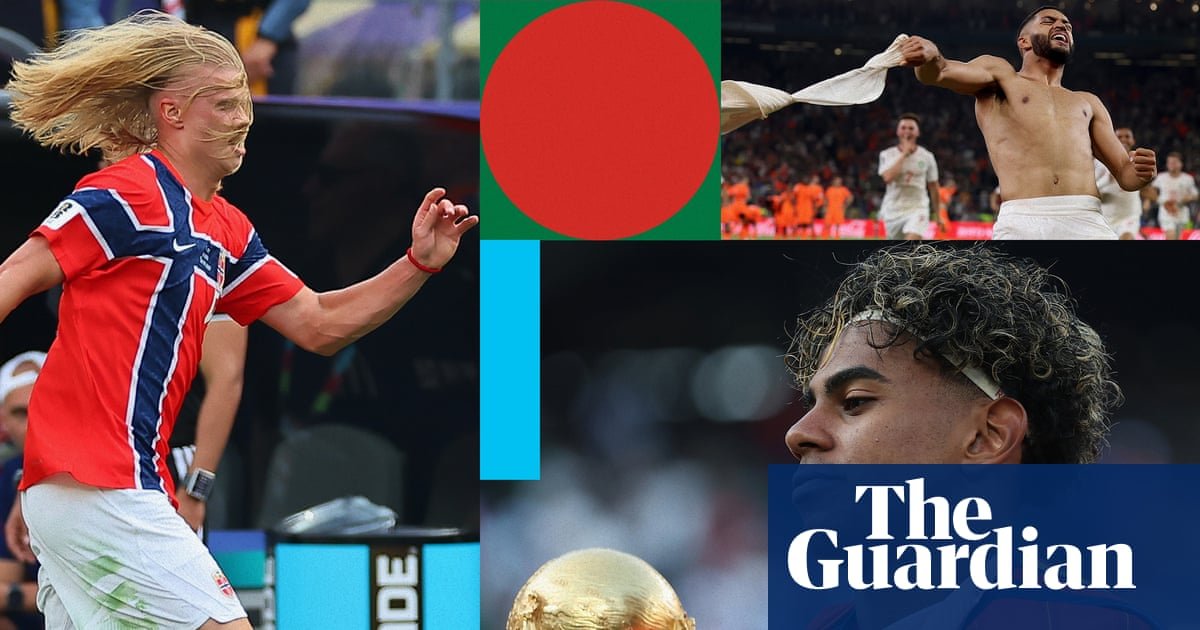
The next men’s World Cup is still four years away, but we take a look at the teams with the firmest foundations who should be primed to contend
The 2026 World Cup provided many an esteemed veteran with what could be their international swansongs, with golden greats Lionel Messi, Cristiano Ronaldo, Luka Modric, Neymar, James Rodríguez and Guillermo Ochoa all making teary exits as their tournament ended. As we turn ahead to the 2030 World Cup, any player 32 or older will be sweating their selection status and changing their daily routines to stay sharp against inevitable aging.
For these power rankings, we’re overvaluing sure things. Teams with plenty of leading players comfortably in their 20s can build for this impending four-year cycle with greater confidence than a team replacing an ageless talisman. Consider these the 10 teams with the firmest foundations and viable reasons to hope to reach a quarter-final in four years’ time.
Mentioned players’ ages on 1 June 2030 listed (in parentheses).
1) Spain
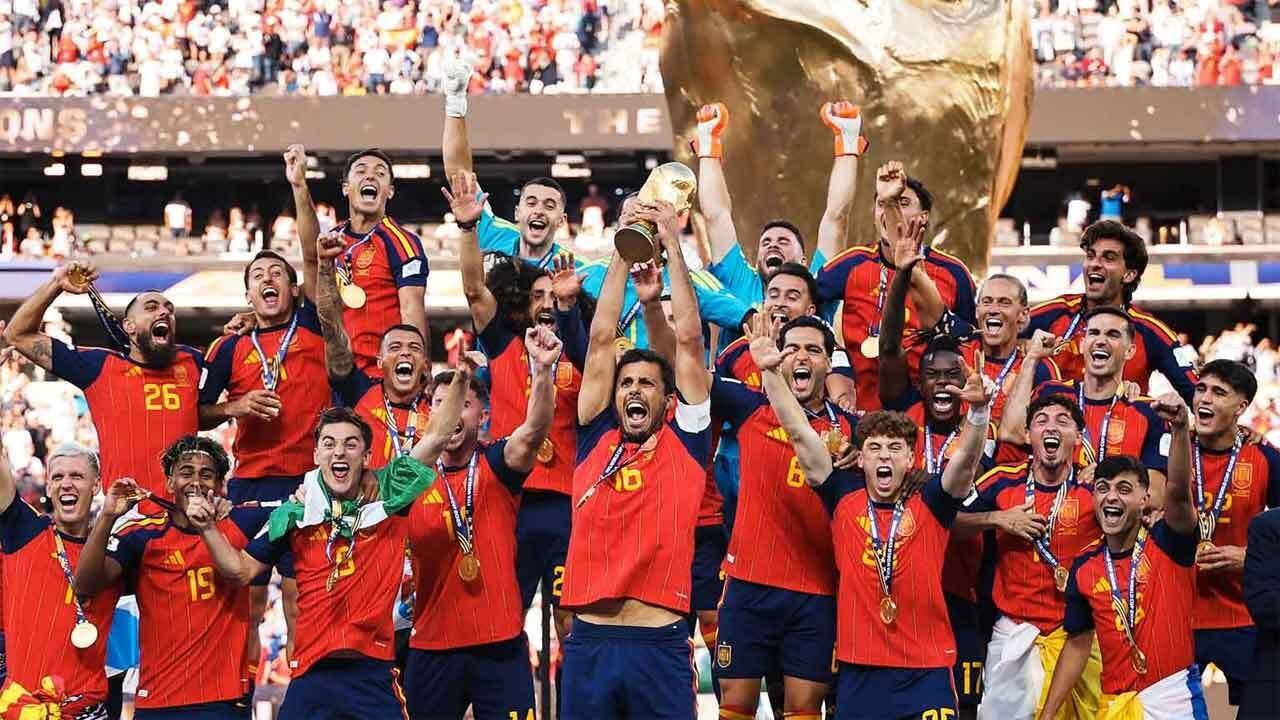
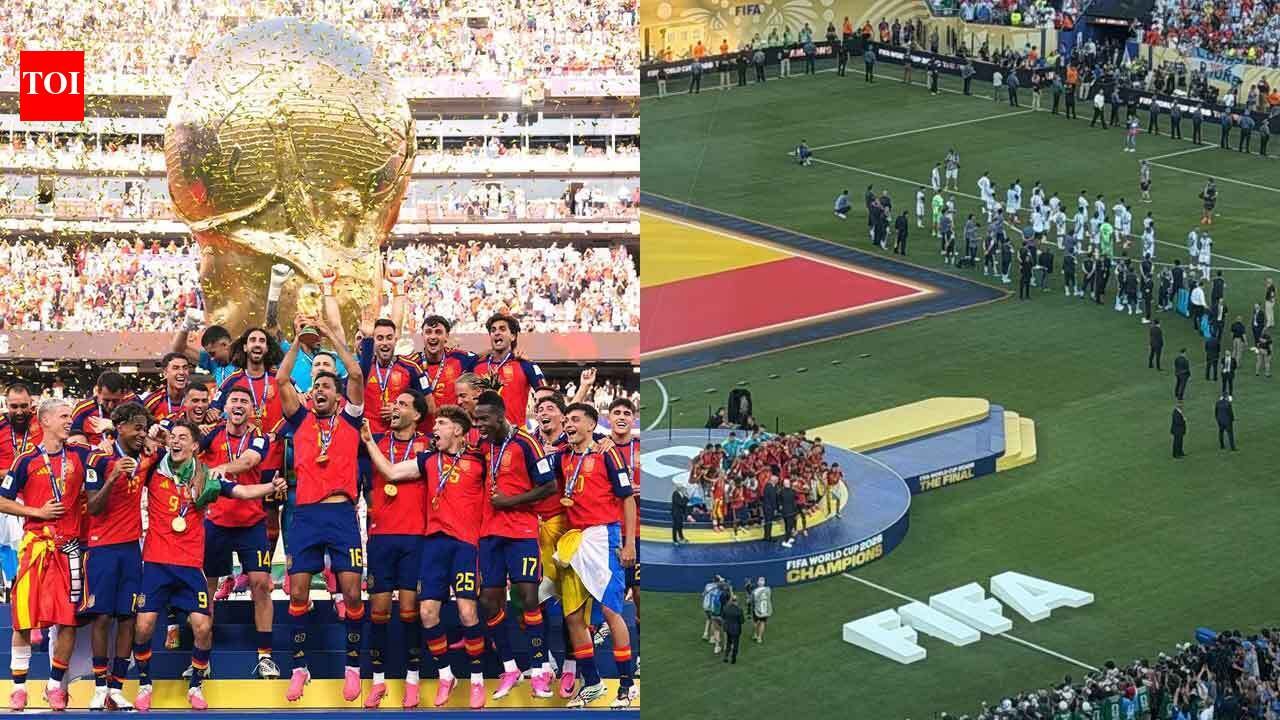
The first defending World Cup champion to host the ensuing installment, Spain will enter 2030 as favorites to run it back. With Luis de la Fuente’s masterful sense of his team’s strengths and universal commitment from his players, this group could develop into a juggernaut.
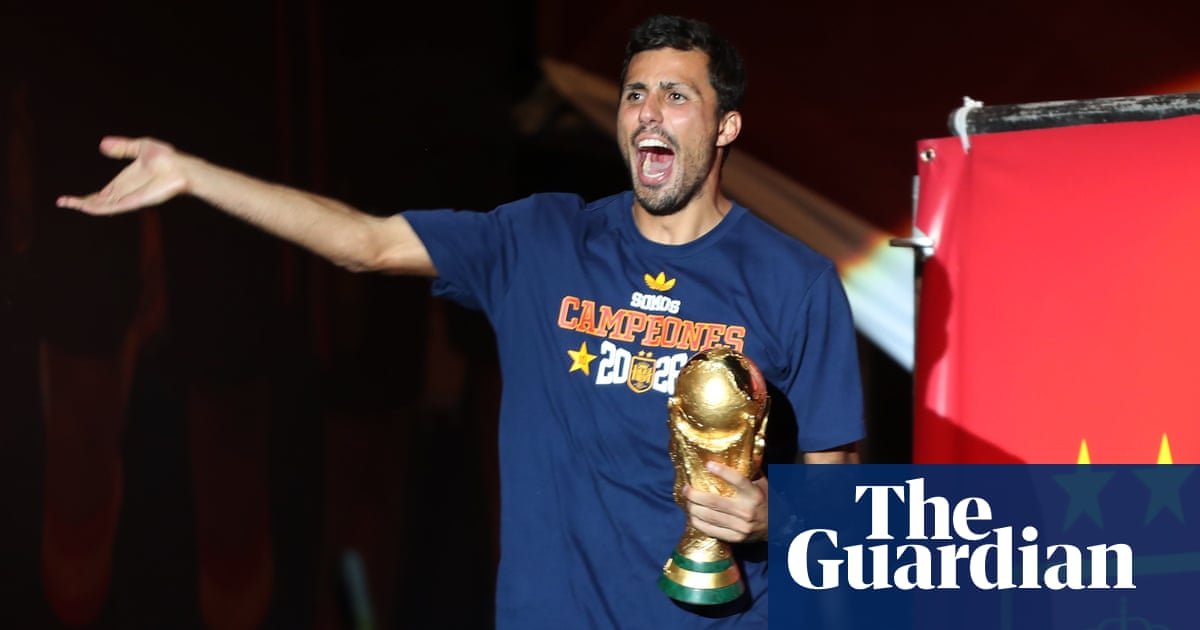
Unai Simón (32), Joan García (29) and David Raya (34) could repeat as the goalkeeping trio. Marc Pubill (26), Eric García (29), Pedro Porro (30) and Pau Cubarsí (23) are a solid defensive bedrock. Dani Olmo (32), Gavi (25) and Pedri (27) should return in midfield, while Rodri (33) stands a good chance to start at the midfield’s base. Nico Williams (27) and Lamine Yamal (22) will hope to enjoy better fitness but demonstrated their importance in the final stages, and Ferran Torres (30) may be a threat from the bench again.
And, of course, there’s great talent beyond the title-winning 26. Dean Huijsen (25) and Cristhian Mosquera (25) are options to replace Aymeric Laporte (36), while Fermin López (27), Pablo Barrios (26), Javier Guerra (27), Marc Bernal (23) and Jesús Rodríguez (24) have featured under de la Fuente. If Samu Aghehowa (26) or Gonzalo García (26) can become a viable option at striker, Spain could wring even more goals from their possessive machine – a scary thought, indeed.
2) France
A fresh touchline voice arrives just in time, with Zinedine Zidane replacing the great Didier Deschamps after decreasing returns across his three World Cups. What lessons can Zizou glean from their stunning semi-final crumble against Spain?
Mike Maignan (34) should have another cycle in his capable gloves, shielded by Dayot Upamecano (31), Ibrahima Konaté (31) and William Saliba (29). The midfield is in good stead with Manu Koné (29) and Aurélien Tchouaméni (30), as well as squad snubs Eduardo Camavinga (27) and Khéphren Thuram (29). Kylian Mbappé (31) will be raring to extend his goalscoring record with Michael Olise (28) and Désiré Doué (24) in support. Talent wasn’t the issue so much as overcoming Spain’s structure, and for all his success with Real Madrid, Zidane impressed more with his squad management than his tactical chops.
3) England
The Three Lions showed impressive resolve, outlasting Mexico in an instant classic and coming back against Norway to return to the semi-final. Their timid failures to close out a 2-0 lead over Argentina will haunt many, but the reality is that England are poised for a very strong response at Euro 2028 and the next World Cup – with one glaring asterisk.
Marc Guéhi (29) looked a leading center-back for much of the tournament, with Djed Spence (29) having finished the World Cup in top form. Declan Rice (31), Elliot Anderson (27), Jude Bellingham (26) and Kobbie Mainoo (25) offer plenty of midfield combinations, and Bukayo Saka (28) and Anthony Gordon (29) fared well on the wings. The biggest question is whether Harry Kane can be a 90-minute option at age 36, as England hasn’t yet found an obvious successor to their leading goalscorer. Goalkeeper should also be an open battle, but players who missed Thomas Tuchel’s squad such as Lewis Hall (25), Cole Palmer (28), Adam Wharton (26), Alex Scott (26), Phil Foden (30), Rio Ngumoha (21) and Ayden Heaven (23) reiterate the depth of the pool.
4) Morocco
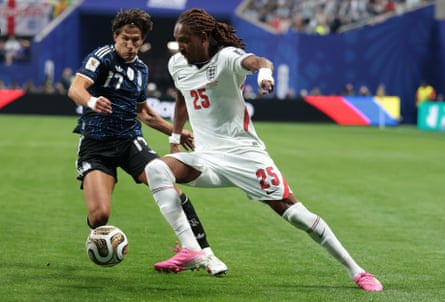
The groundwork is excellent for another of 2030’s primary co-hosts. Back-to-back World Cup quarter-final runs, with one berth in the semis. Legal custody of the Afcon 2025 title. A freshly installed coach who got more verve from his side without sacrificing stability. Can Morocco take things a step or two further in 2030?
Achraf Hakimi (31), Chadi Riad (26), Anass Salah-Eddine (28) and Noussair Mazraoui (32) project to stick around in defense. Ayyoub Bouaddi (22) should be even better after his emergent World Cup, along with his midfield partner Azzedine Ounahi (30). Ismael Saibari (29) was a safe bet to score before his injury, while Bilal El Khannouss (26), Gessime Yassine (24) and Brahim Díaz (30) also challenge any backline.
Morocco won the most recent U-20 World Cup, led by forwards Othmane Maamma (24) and Yassir Zabiri (25) as well as goalkeeper Ibrahim Gomis (25). If goalkeeping hero Yassine Bounou (39) can somehow stay in his usual blistering form, they’ll be a tough draw for anybody.
5) Argentina
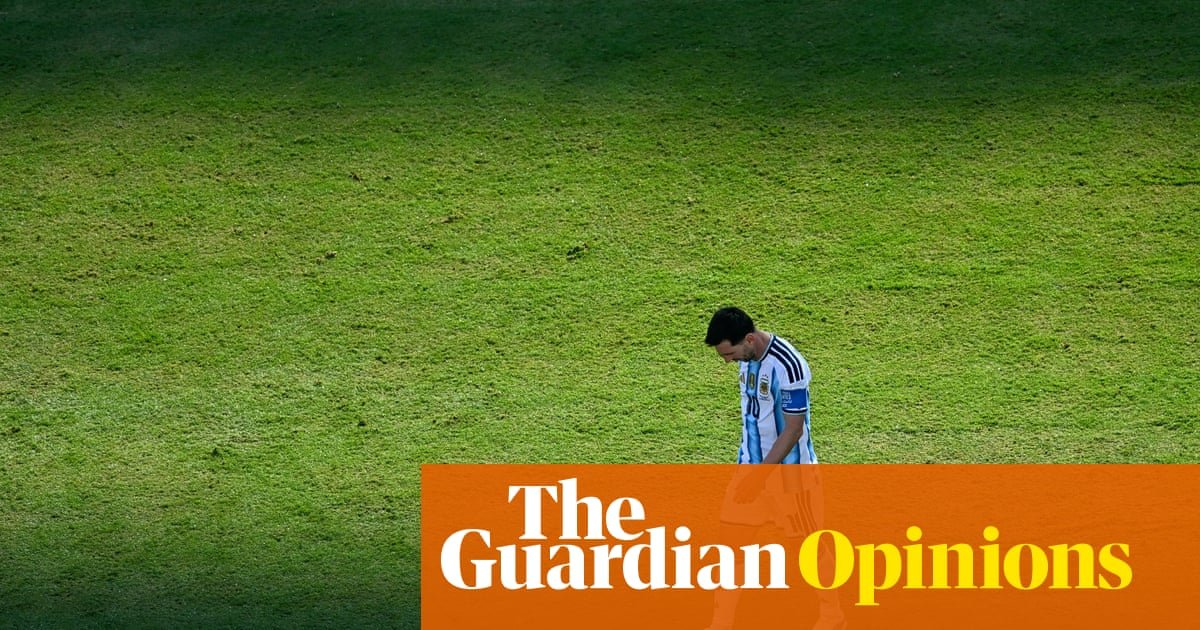
Argentina’s run to the final reiterated how uniquely vital Messi was to his team, both as the determinant of their attack and the heart every teammate fought hard to protect. He is, by every definition of the word, irreplaceable.
Then again, Argentina were not just a one-man band. Julián Álvarez (30) has grown increasingly comfortable as a leading man, and should again be backed up by lethal Lautaro Martínez (32). Enzo Fernández (33) has a lot of apologies to give after his send-off, but should anchor midfield this cycle. Nahuel Molina (32), Cristian Romero (32) and Lisandro Martínez (32) will be veteran defenders, while Emiliano Martínez (37) should have plenty left to offer. They also were runners-up at the last U-20 World Cup, with standouts including midfielder Milton Delgado (24), left-back Julio Soler (25) and goalkeeper Santino Barbi (24).
6) Portugal
Portugal were left to wonder what could have been with a more natural and mobile line-leader atop an otherwise terrific team. Ronaldo has admitted he won’t play in the 2030 tournament at age 45, and the biggest question will become whether Roberto Martínez squandered this generation’s best chance to win a first World Cup.
Diogo Costa (30) is among the world’s best goalkeepers, with Gonçalo Inácio (28) and Nuno Mendes (27) forming a strong defensive base. António Silva (26) will hope to get his promising career back on track, seemingly with Bournemouth, while João Neves (25) and Vitinha (30) would start in nearly any nation’s midfield. Gonçalo Ramos (28), João Félix (30) and Francisco Conceição (27) return in attack, too. But with the list of aging players including the great Bruno Fernandes (35), Bernardo Silva (35) and Rúben Dias (33), it’s hard not to feel the best opportunity has been missed.
7) Norway
Few will underestimate Norway after their deserved run to the quarter-final, with a culture in and around the team that became the envy of the summer. Many of their men should be back in four years, including the main-est man of all.
Few people seemed to have enjoyed this World Cup as much as Erling Haaland (29), who should still be devastating defenses when the next one comes around. Andreas Schjelderup (26), Antonio Nusa (25) and Oscar Bobb (26) are credible running mates in the final third, while Martin Ødegaard (31) will hope to shirk his injury bugs to pull the strings once again. There will need to be ample rotation in the defensive half and in goal, but as long as Haaland is leading the line, Norway will stand a chance.
8) Côte d’Ivoire
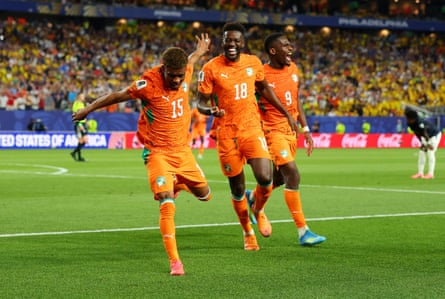
The Elephants impressed in a tricky Group E, beating Ecuador and Curaçao before falling to Norway in the last-32. If Emerse Faé is back to lead this team, he’ll enjoy an immense level of talent to work with as (part of) the tournament returns to Africa.
Yahia Fofana (29) is steady in goal, his job made easier by the collective defending of Ousmane Diomande (26), Odilon Kossounou (29) and Wilfried Singo (29). Their forward options pose champagne selection issues: Amad Diallo (27), Oumar Diakité (26), Elye Wahi (27), Yan Diomandé (23), Simon Adingra (28) and Ange-Yoan Bonny (26). Midfield appears to be their only thin area especially if Franck Kessié (33) ages out of starting status. But on paper, and on the back of a first World Cup knockout match and the Afcon 2023 title, they’re a team to watch.
9) Germany
While the legion of club managers making their World Cup debuts in 2026 saw mixed returns, Jürgen Klopp has four years to build his ideal culture and refine a new system for Die Mannschaft. That seems a dream scenario after a trio of disappointing tournaments on the back of 2014’s triumph.
The bigger question is whether Germany have the players. An injury to Lennart Karl (22) on the eve of the World Cup put a damper on preparations, but the Bayern playmaker would be a welcome addition. Kai Havertz (30) should pop up with timely goals, while Florian Wirtz (27) and Jamal Musiala (27) will hope to arrive in better form and fitness. Nathaniel Brown (26) looks to be an ideal wing-back for the next few cycles, and Joshua Kimmich (35) has already dismissed concerns that he may retire before Klopp arrives. That’s a relief given how much turnover will be necessary from this summer’s squad in the defensive half.
10) United States
The Balogun Affair stripped the sheen off of what had been the US’s most promising men’s World Cup showing to date. Mauricio Pochettino’s status for the next cycle is uncertain. Still, the Americans’ run to the last 16 saw many players of a similar age group step up and project to be mainstays.
Folarin Balogun (28) should be an even more refined forward to follow his three-goal showing this summer, while Malik Tillman (28) offers strong dead-ball service and tidy midfield play. Chris Richards (30), Tyler Adams (31), Weston McKennie (31), Christian Pulisic (31) and Alex Freeman (25) will probably continue to be foundational pieces, while Sebastian Berhalter (29), Gio Reyna (27) and Ricardo Pepi (27) should stick around after capable World Cup showings. A 12th-place finish still indicates a last-16 exit that has become the frustrating norm for the US, but perhaps the lessons of a high-pressure hosting gig will really pay off in four years.