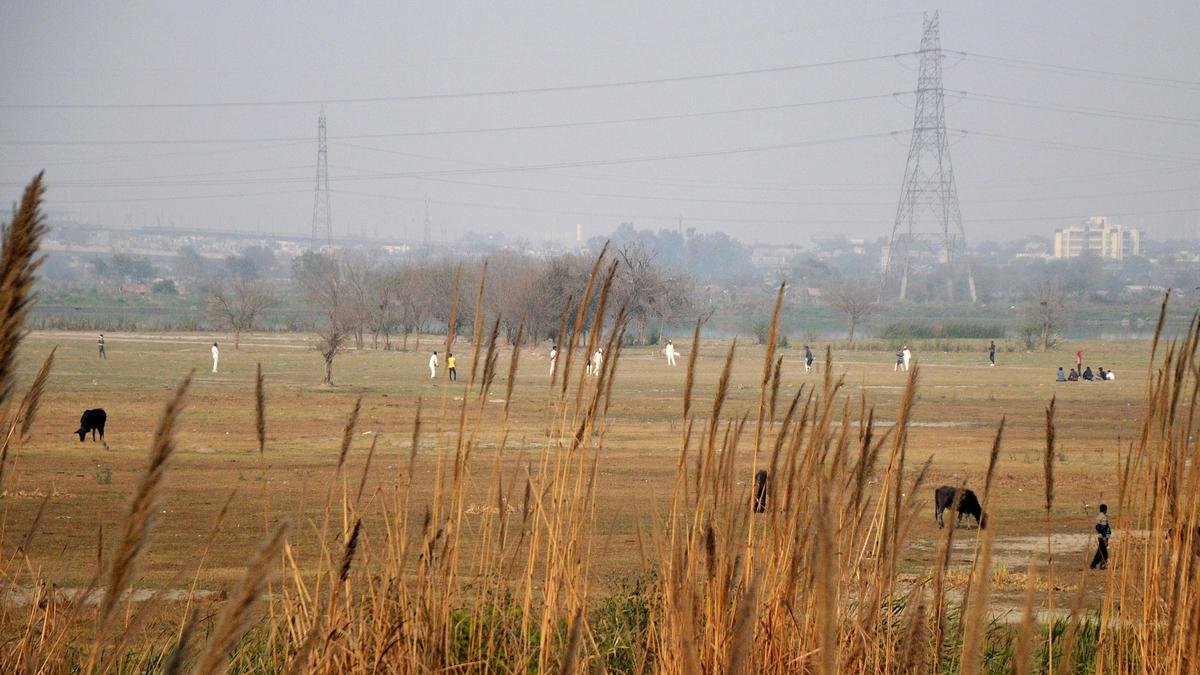
The Supreme Court on Saturday (August 22, 2026) set aside a December 2017 decision of the National Green Tribunal (NGT) holding Sri Sri Ravi Shankar's Art of Living Foundation responsible for the damage caused to the Yamuna floodplains during its World Culture Festival held in 2016.
A Bench of Justices Satish Chandra Sharma and N.K. Singh directed the Delhi Development Authority (DDA) to refund ₹5 crore deposited by the foundation with it in four weeks.
NGT holds Sri Sri’s Art of Living responsible for damage to Yamuna floodplains
The top court’s order came on an appeal filed by Vyakti Vikas Kendra India, associated with the Art of Living Foundation.
Criticises nod for event
The court disapproved of the manner in which the DDA granted permission to hold the event on an active floodplain. “It was not only avoidable, but was also not consistent with the precautionary principle and doctrine of public trust,” Justice Sharma, who authored the judgment, observed.
The Bench said the DDA should continue to carry out the rehabilitation work on the Yamuna floodplains as per the proposed plan and directions issued by the NGT from time to time. “We have not altered the responsibilities entrusted to the DDA concerning the management or rehabilitation of the Yamuna floodplains, in any manner,” the court clarified.
The NGT had directed the foundation to deposit ₹5 crore with the DDA to be utilised for the restoration of the floodplains of the Yamuna.
In its judgment, the top court said the NGT had failed to note that the floodplain, which was the site of the event, was already in a damaged condition prior to its handing over to the foundation.
The court said the NGT did not specify whether the foundation had caused any additional damage to the floodplain. The court said the NGT did not even consider relevant material, including a letter from the foundation regarding the presence of debris and construction material at the site.
“We are afraid, the tribunal got swayed by the expert committee’s report that massive preparatory work is going on at the site and went on to conclude that by undertaking such work, the appellant has severely damaged the floodplain. This conclusion was reached by the tribunal without examining the contemporaneous evidence regarding pre-existing damaged condition of the floodplain and conspicuous failure of the authorities to implement its earlier judgment in the Yamuna matter,” the Bench observed.
The court said the NGT relied on a “solitary” satellite image without testing it with other contemporaneous evidence on record before giving a stamp of judicial approval.
The court said, at some point, the NGT “completely altered the character of the dispute before itself and converted it into a proceeding for fresh development of the Yamuna floodplain, and in doing so, it burdened the appellant to bear the expenses of such development activity”. “Effectively, the tribunal burdened the appellant with the task of developing something that it never destroyed,” the court said.