Get our breaking news email, free app or daily news podcast
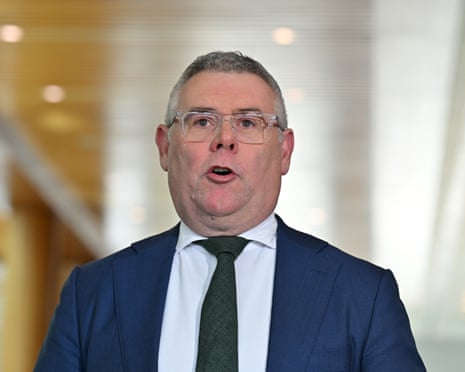
14m agoAlbanese announces PBS medication to stay $25 until the end of the decade
26m agoCoalition wants a gas reservation scheme, says Jane Hume
2h agoAlbanese trails Angus Taylor as preferred PM in Newspoll
2h agoSmall business carveout for digital duty of care legislation
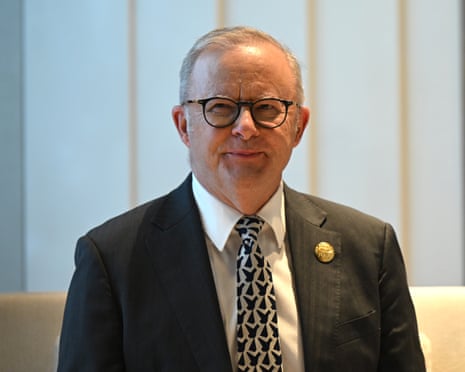
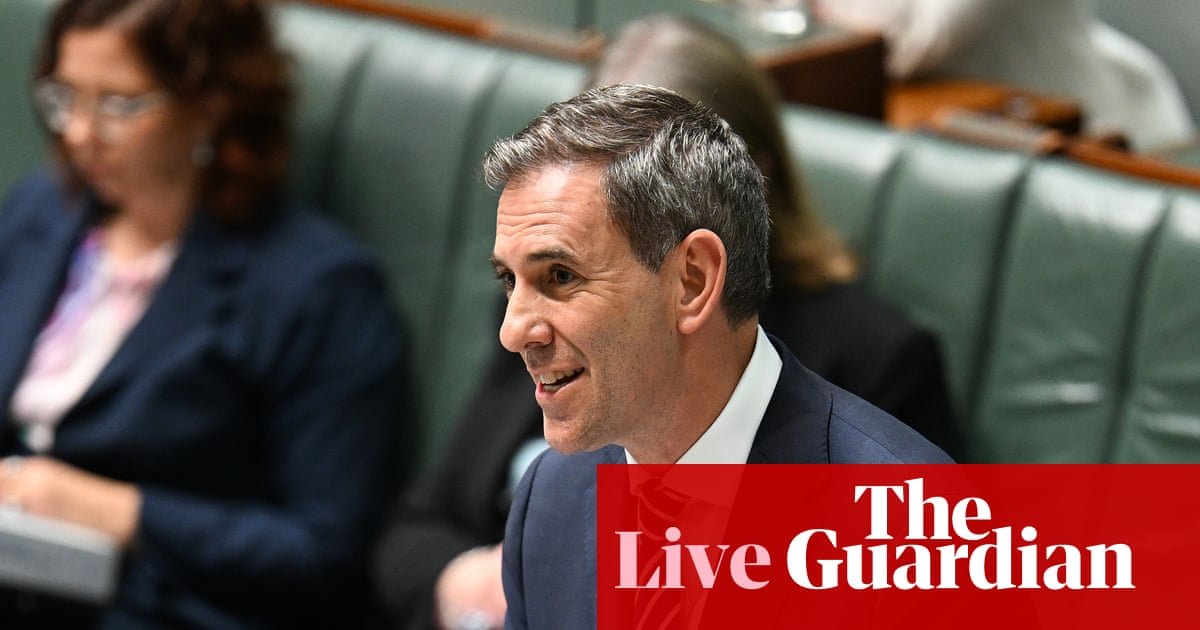
Anthony Albanese is back in the country after appearances at international summits in China and the Philippines.
He has called a press conference to announce the government will introduce legislation to keep PBS-listed medication priced at $25 until the end of the decade.
Labor is under significant pressure as the cost of living rises – so the PM is hopeful this will bring some relief to both household purses and his government.
Today we will introduce legislation to extend the freeze of the cost of PBS medicines at just $25 until the end of the decade. This helps Australians now with the cost of medicines but it helps to keep our nation healthier as well, and we understand the cost of essential medicines can put pressure on household budgets and that’s why we’re giving Australians access to cheaper medicines. Under the former government, when we came to office, PBS co-payments soared, but now medicines would have cost over $50 per script for general patients.
Today we will introduce legislation to extend the freeze of the cost of PBS medicines at just $25 until the end of the decade.
This helps Australians now with the cost of medicines but it helps to keep our nation healthier as well, and we understand the cost of essential medicines can put pressure on household budgets and that’s why we’re giving Australians access to cheaper medicines.
Under the former government, when we came to office, PBS co-payments soared, but now medicines would have cost over $50 per script for general patients.
COP break down evidence of ‘difficult geopolitical times’: Albanese
The prime minister has been forced to defend Australia’s central involvement in the COP climate talks which broke down, and could not reach consensus.
Anthony Albanese says it’s “evidence that we’re living in difficult geopolitical times”.
But he continues to back the involvement, saying it was necessary to remain a key player in the Pacific.
Climate change is the first, second, and third priority of Pacific leaders, it is an existential threat to countries such as Tuvalu and Kiribati, who we have continued to engage with and build relationships. But there’s a link as well between environmental security and national security. You’ll see some of that played out this week. In order to have credibility, the entry fee is action on climate change.
Private health insurance legislation being negotiated in ‘good faith’
Keeping PBS medications to $25 is likely to be a slam dunk for the government – it’s politically easy policy.
A much trickier battle is ahead though, with the government still searching for support to increase private health insurance rebates for over 65s. The Coalition have said there’s no shot they will support that bill.
The health minister, Mark Butler, says the government is negotiating in good faith with the Greens – who want pensioners carved out.
We’re in negotiations with the Greens party. Have been over the last little while and, yes, we would hope to have that legislation dealt with in the Senate this week. We conduct negotiations under this prime minister in good faith. We listen to the Senate. We understand we don’t have the numbers in the Senate to pass this bill right now in the form that we introduced it. So, of course, we’re negotiating to see what we can achieve.
We’re in negotiations with the Greens party. Have been over the last little while and, yes, we would hope to have that legislation dealt with in the Senate this week.
We conduct negotiations under this prime minister in good faith. We listen to the Senate. We understand we don’t have the numbers in the Senate to pass this bill right now in the form that we introduced it. So, of course, we’re negotiating to see what we can achieve.
New nest of red imported fire ants found and destroyed in Sydney
The NSW government discovered a new nest of red imported fire ants in Sydney over the weekend, with findings suggesting the nest could be about a year old.
Officials destroyed the colony, found in Auburn in the city’s west, after it was deemed to contained red imported fire ants, a major invasive species that poses threats to both human health and the environment.
A separate nest was discovered two months ago at the Enfield logistics centre, more than 6km from the site found this weekend. The new nest was found outside a biosecurity control zone and officials are investigating if it is a different infestation originating from another source. Detection dogs are set to be on site soon and a new biosecurity control order is being developed.
Tara Moriarty, the NSW minister for agriculture, said:
Human movement of materials is the primary way fire ants spread, which is why we’re asking everyone to stay alert and report anything suspicious. Everyone has a part to play in biosecurity, and I thank the member of the public for reporting this site in Auburn.
Human movement of materials is the primary way fire ants spread, which is why we’re asking everyone to stay alert and report anything suspicious.
Everyone has a part to play in biosecurity, and I thank the member of the public for reporting this site in Auburn.
… But not at “any cost”, Hume says.
The Coalition’s big problem now is that they’re worried the scheme creates an oversupply of gas in the domestic market by design, which would lower gas prices.
They say that could deter new gas investment or even lead to gas slowly dying off.
Hume says the government has already made key concessions by carving out WA, so she’s hopeful there can be a deal.
We want a gas reservation. We’ve been saying that from the start but it can’t be at any price. The government has moved a long way. I think the carveout of WA was a significant move and a good start. But there’s more that can be done. We want to make sure that we get the calibration of this right. We can’t afford an oversupply domestically that would have detrimental effects on prices for investors. We need new gas in the system, more gas in the system, more investment in gas.
We want a gas reservation. We’ve been saying that from the start but it can’t be at any price. The government has moved a long way. I think the carveout of WA was a significant move and a good start. But there’s more that can be done.
We want to make sure that we get the calibration of this right. We can’t afford an oversupply domestically that would have detrimental effects on prices for investors. We need new gas in the system, more gas in the system, more investment in gas.
Bowen failed on Cop, Hume says
Jane Hume has not missed an opportunity to stick the knife into Chris Bowen after the UN Cop summit failed to reach a consensus after historically long talks.
Sitting in the hot seat after Murray Watt in the RN Breakfast studio, Hume says Bowen failed overseas, while Australians have also faced rising energy prices.
Not only has he failed in these negotiations as the lead negotiator but he’s also failed Australians at the time when he has spent $150m just to be there, just to get this presidency in the first place. Our energy prices have gone up. Our emissions have flatlined. I think that’s kind of disappointing. He’s really got a job to do at home.
Not only has he failed in these negotiations as the lead negotiator but he’s also failed Australians at the time when he has spent $150m just to be there, just to get this presidency in the first place.
Our energy prices have gone up. Our emissions have flatlined. I think that’s kind of disappointing. He’s really got a job to do at home.
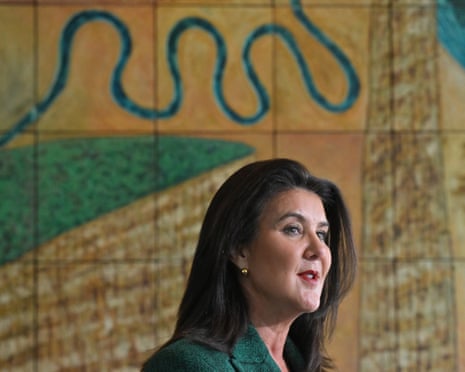
Labor wants gas reservation scheme passed this week
Labor is trying its hand at playing off the Coalition and Greens to get its gas reservation scheme through this week.
The environment minister, Murray Watt, says the Coalition was the party most likely to support the legislation but is now being a bit “intransigent” so Labor could instead make a deal with the Greens.
At face value it looks like a tactic to try to strong-arm the Coalition back to the negotiation table because it’s a policy similar to what they themselves had proposed before the last election under Peter Dutton.
And the government has already made a major concession by carving out WA from the scheme.
I think, up until last week, we certainly felt that the Coalition was the more likely party but we’re seeing the same kind of intransigence from them that we saw last year with the EPBC reforms. But this week is an important week and this is the week that the Coalition can decide if they support cheaper gas. That’s certainly the intention. I think it’s also worth noting one other group that has evaded scrutiny on this is Pauline Hanson’s One Nation party. They have traditionally supported a gas reservation but, mysteriously, shortly after Gina Rinehart, who’s a big gas producer, has supported their party, they’ve flipped their position.
I think, up until last week, we certainly felt that the Coalition was the more likely party but we’re seeing the same kind of intransigence from them that we saw last year with the EPBC reforms. But this week is an important week and this is the week that the Coalition can decide if they support cheaper gas. That’s certainly the intention.
I think it’s also worth noting one other group that has evaded scrutiny on this is Pauline Hanson’s One Nation party. They have traditionally supported a gas reservation but, mysteriously, shortly after Gina Rinehart, who’s a big gas producer, has supported their party, they’ve flipped their position.
My colleague Sarah Martin wrote about this policy flip a couple of months ago:
‘Very difficult to bridge that divide’: Murray Watt
Cabinet minister Murray Watt says it’s increasingly difficult to bridge the divide between nations on climate policy after a frustrating Cop summit that didn’t reach a final agreement.
Speaking to ABC’s Radio National, the environment minister says it wasn’t a failure and points to the fact that the US didn’t even send an official delegation.
On the proposed deal not including the words “fossil fuels”, Watt says there were a range of nations that weren’t prepared to sign up if they were included … but in omitting them found another group of countries that refused to agree anyway.
It’s obviously a very deeply disappointing outcome that the cover decision was not agreed to by all nations. I think what this shows is a very challenging international environment at the moment to reach agreement on almost anything and particularly a situation like this where you’ve got fossil fuel producers on the one hand and other countries that are experiencing very serious impacts from climate change. That’s a very wide divide to be bridged and it’s very disappointing that that wasn’t possible.
It’s obviously a very deeply disappointing outcome that the cover decision was not agreed to by all nations.
I think what this shows is a very challenging international environment at the moment to reach agreement on almost anything and particularly a situation like this where you’ve got fossil fuel producers on the one hand and other countries that are experiencing very serious impacts from climate change.
That’s a very wide divide to be bridged and it’s very disappointing that that wasn’t possible.
US foreign policy influence falls in Asia Power Index
Serial blunders have caused the foreign policy sway of Australia’s most important ally, the US, to plummet on the Lowy Institute’s Asia Power Index, AAP reports.
The US led China in six of the survey’s eight criteria but trailed on diplomatic influence and economic relationships, while Washington’s foreign policy score posted its sharpest decline in the index’s nine-year history.
Anthony Albanese earned praise for inking deals with Singapore, Malaysia and Brunei to avert a fuel supply crisis caused by the war but his government scored much lower on advancing Australia’s diplomatic interests in Asia.
The institute’s report also comes on the heels of the prime minister pinballing between Turkey, the Philippines and China for the Cop31, Asean and Apec summits.
Albanese signed up to joint military exercises with Quad partners the US, Japan and India, and on Friday was lauded by the Chinese president, Xi Jinping, for achieving a “full turnaround” in Sino-Australian relations.
Researcher Jack Sato, who helped compile the annual report, said the week’s developments underlined some of the power index’s more optimistic findings.
We’re seeing much greater defence engagement between Australia and Japan, Australia and the Philippines, and the Philippines and Japan. Even though I think it doesn’t quite come across in its overall score, that US defence relationship in the region is stronger, which is helping Australia.
We’re seeing much greater defence engagement between Australia and Japan, Australia and the Philippines, and the Philippines and Japan.
Even though I think it doesn’t quite come across in its overall score, that US defence relationship in the region is stronger, which is helping Australia.
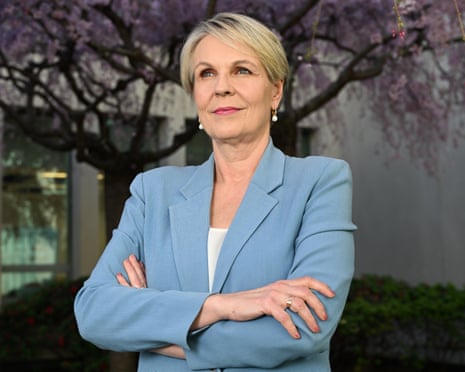
‘It’s frustrating we didn’t get further’: Plibersek
The social services minister, Tanya Plibersek, has conceded it is “frustrating” that nations at Cop didn’t get a deal over the line but defended Australia leading the talks.
Speaking to Sunrise, before the panel with One Nation MP Barnaby Joyce devolved into a slanging match, Plibersek said it was crucial all countries came to the table:
I’m sure Barnaby would agree, if we’re going to take action to reduce carbon emissions, Australia can’t be the only country doing it. It’s frustrating that we didn’t get further. I’m sure Chris [Bowen] is, you know, the most frustrated person I can think of right now because he put in many hours.
I’m sure Barnaby would agree, if we’re going to take action to reduce carbon emissions, Australia can’t be the only country doing it.
It’s frustrating that we didn’t get further. I’m sure Chris [Bowen] is, you know, the most frustrated person I can think of right now because he put in many hours.
Just like the atmosphere, the temperature rises – and the two start arguing with each other over policy and cost.
Joyce says One Nation wants to “get away from your [Labor] policy which is destroying our nation”, while Plibersek asks him to say what the cost will be under his policy that would see more fossil fuels burned.
‘Pretty extraordinary’: Liberals blast Cop negotiations
The Liberals say it’s extraordinary the government put its hand up to co-host the UN climate summit in Turkey and failed to secure an agreement between nations.
It’s despite the summit going overtime to continue negotiations, making it the longest COP ever.
The EU, UK and some allies rejected a deal on the future of the climate which didn’t even mention fossil fuels.
The deputy Liberal leader says voters should be concerned Australia couldn’t broker a deal. Jane Hume told News24:
It’s pretty extraordinary, isn’t it? We’ve spent $150m to get Chris Bowen to Cop, to host Cop. Then we found out it was actually a co-host deal. Now we’re walking away without a deal at all. This is quite extraordinary. It hasn’t been, since 2009, when Kevin Rudd was in Copenhagen, that we had no agreement, but to have no deal at all, this is quite exceptional, and I think it should be something that Australia should be concerned about.
It’s pretty extraordinary, isn’t it? We’ve spent $150m to get Chris Bowen to Cop, to host Cop. Then we found out it was actually a co-host deal. Now we’re walking away without a deal at all. This is quite extraordinary.
It hasn’t been, since 2009, when Kevin Rudd was in Copenhagen, that we had no agreement, but to have no deal at all, this is quite exceptional, and I think it should be something that Australia should be concerned about.
The Cop co-president, climate change minister, Chris Bowen, defended his leadership.
“Australia left nothing on the field,” he said, but the red lines the presidencies had tried to negotiate were “unbridgeable”.
Good morning, Krishani Dhanji here with you for the final sitting week of the year! (Don’t sound too excited.)
It’s crunch time for Labor who have several key pieces of legislation they want to pass this week including digital duty of care, the gas reservation scheme, changes to capital gains tax for trusts, and reducing private health insurance premiums for over 65s.
So far they’re closer to a deal on the first two, trusts is somewhere in between, and private health is looking iffy – but anything is possible.
Labor is also going to cop some heat (get it!) after climate talks broke down at the UN Cop summit where the energy minister, Chris Bowen, was the chief negotiator.
I’ve got my coffee, I hope you’ve got yours – let’s get stuck in.
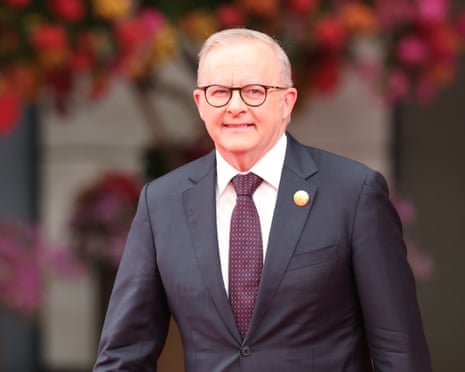
Anthony Albanese returns from a series of overseas summits to crunch negotiations on multiple proposed changes as his popularity takes a further nosedive, as Australian Associated Press reports.
The Labor leader trails his opposition counterpart, Angus Taylor, as preferred prime minister for the first time, according to a Newspoll published in The Australian on Monday.
Albanese’s net approval rating also hit a new low of minus 31, while the Coalition managed to claw back some voter support. Its primary vote stood at 22% in the latest survey, behind One Nation and Labor, which were tied on 27%.
– AAP
Wong warns about AI in major foreign policy speech
AI is a foreign policy and national security challenge, Penny Wong will tell parliament this week, raising concerns in a major speech about how the growing technology is being used in war and foreign interference.
Wong will give a substantial foreign policy address to parliament on Tuesday, with advance speech notes detailing a focus on artificial intelligence. The foreign affairs minister will warn that AI tools “make that [foreign] interference faster, cheaper and harder to recognise”.
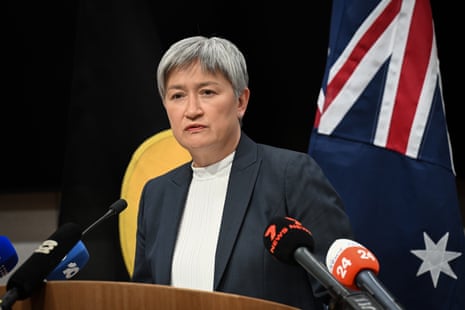
Wong says Australia welcomes investment in AI but urged a focus on safety - particularly on the international stage.
We must do what we can to ensure that the race to develop frontier AI, concentrated in a handful of companies and countries, does not reward speed over prudence. Australia has helped shape the international order before, in non-proliferation and in online safety. With artificial intelligence, we intend to do it again.
We must do what we can to ensure that the race to develop frontier AI, concentrated in a handful of companies and countries, does not reward speed over prudence.
Australia has helped shape the international order before, in non-proliferation and in online safety. With artificial intelligence, we intend to do it again.
Anika Wells said the government would consult on how to exempt low-risk small businesses – and potentially other services – from the digital duty of care legislation before it comes into effect 12 months later.
Business groups had called for such a change but the Australian Chamber of Commerce and Industry had urged that it be specifically included in the legislation, not worked out later via regulation. Its chief executive, Andrew McKellar, said:
A small business should not have to engage lawyers simply to work out whether its website is caught by a regime carrying penalties of more than $100m. The answer should be in black and white in the legislation.
The Greens are expected to eventually back the bill but more negotiations will continue this week.
Labor will exempt small businesses from its digital duty of care legislation – a key request from business groups, and potentially another step toward getting the bill passed.
The government is still seeking the support of the Greens on the bill, who want tougher penalties.
The carveout for small businesses from new regulations was not at the top of the Greens’ agenda – they also want a new ombudsman for big tech – but the new update from the communications minister, Anika Wells, shows Labor is in the mood to make deals.
The intention of the digital duty of care is to put the onus on tech companies to protect Australians from online harms before they occur – not to create additional burden for low-risk small businesses. A low-risk website for a cafe or bookkeeper is unlikely to cause harm to its users so, once the digital duty of care starts, they will be exempt from the law. We will work closely with small business to get the setting right.
The intention of the digital duty of care is to put the onus on tech companies to protect Australians from online harms before they occur – not to create additional burden for low-risk small businesses.
A low-risk website for a cafe or bookkeeper is unlikely to cause harm to its users so, once the digital duty of care starts, they will be exempt from the law. We will work closely with small business to get the setting right.
Good morning and welcome to Guardian Australia’s coverage of Australian politics. Krishani Dhanji will be with us shortly.
Let’s begin.