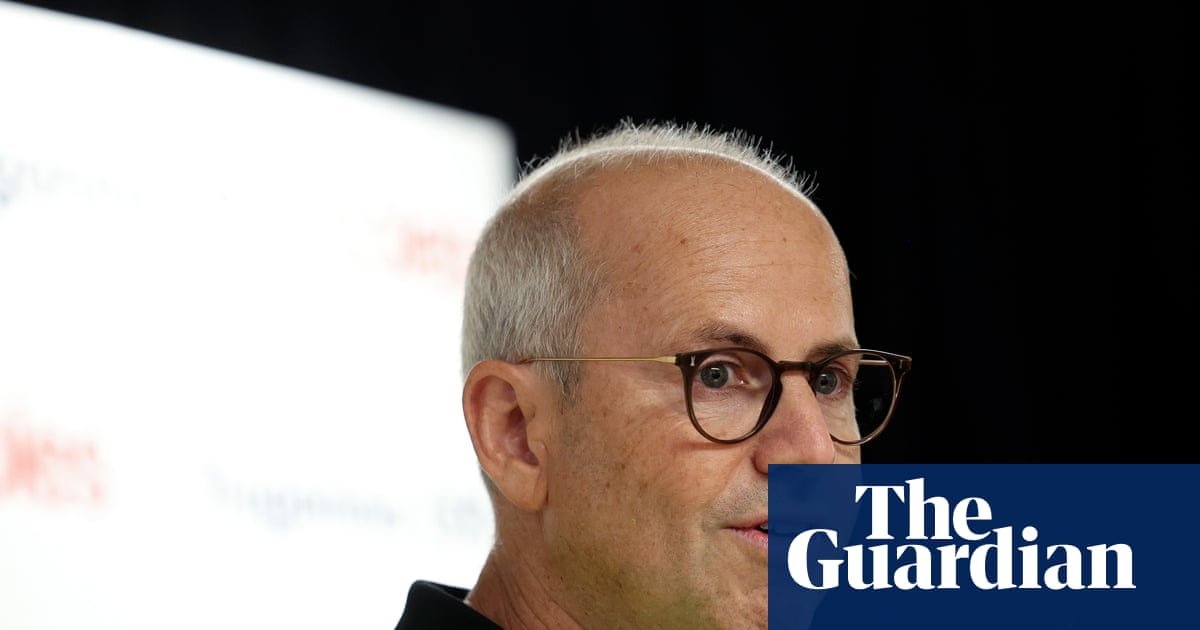
Andy Burnham at the People's History Museum in Manchester, 29 June 2026.
Burnham must learn from Starmer’s mistakes: Labour was elected to transform the economy, not just stabilise it Jonathan Portes Devolution, tax, the EU and immigration: these are all opportunities for growth if Burnham abandons the excessive caution of the past few years The economic inheritance Andy Burnham will receive from Keir Starmer and Rachel Reeves is not, in any meaningful way, a crisis.
That is worth saying, because the comparison is not with some imagined social-democratic Eden.
It is with the Britain Labour inherited after austerity, Brexit, the inflation shock and the Truss episode – a country in which economic policy had too often alternated between drift, denial and irresponsibility.
Restoring seriousness to fiscal and macroeconomic management is an achievement, and not one economists should dismiss.
But it is also a limited achievement.
Labour was not elected simply to demonstrate that it could avoid blowing up the gilt market, or so that ministers could once again speak in complete sentences about public finances.
The question is whether Starmer and Reeves changed the trajectory of an economy that has, for more than a decade and a half, been characterised by weak productivity growth, falling relative living standards, deteriorating public services, excessive centralisation and a damaging loss of openness.
On that test, the answer is less comfortable.
The central contradiction of the Starmer-Reeves approach was always this: it correctly identified stability as a precondition for renewal, but too often treated stability as if it were a growth strategy and fiscal credibility as if it were a fiscal strategy.
A government can be responsible and still be too cautious; indeed, in the present circumstances, excessive caution is itself irresponsible if it prevents the investment and reform without which productivity, and hence fiscal sustainability, will not improve.
Although Burnham will inherit an economy that is more stable than the one Labour took over, it is still constrained by the same pathologies.
He will also inherit a political opportunity.
He understands, more than most Westminster politicians, that growth happens in places, and that the disproportionately large productivity gap between London and much of the country is not an act of God.
It is the result of choices about transport, housing, skills, institutions and power.
But the Treasury model of devolution – responsibility without power and resources – is merely blame-shifting.
If Burnham is serious about a different economic model, he will have to make devolution fiscal and institutional, not just rhetorical.
That also means being more honest about tax than Labour has so far been willing to be.
Britain does not need higher taxes as an objective in itself; it needs a tax system that raises the revenue required for a civilised state while doing less economic damage and distributing the burden more fairly.
At present we tax work too heavily, property irrationally and wealth inconsistently.
Council tax is indefensible; business rates are a tax on productive activity in the wrong places; the treatment of high incomes, capital gains, inheritance and pension tax reliefs is a mixture of historical accident and political cowardice.
Reform in these areas is not a distraction from growth – done properly, it is part of a growth strategy.
The same is true of Europe.
Labour was right not to pretend that Brexit could be undone by a slogan, or that the EU was waiting expectantly for Britain to resume its old arguments.
Realism, though, is not the same as silence.
Brexit has made the country poorer and less open; it has created trade frictions, reduced the UK’s attractiveness as an investment platform and has damaged sectors, from manufacturing to higher education, that depend on cross-border exchange.
Incremental improvements, though worth having, are not enough.
Over time, a much closer relationship with the single market – in goods, services, research, energy and mobility – is an economic necessity.
Universities are illustrative of the wider problem.
They are one of the few sectors in which Britain is unquestionably world-class: they are exporters, research institutions, civic anchors and drivers of local growth.
A government that says it wants innovation while pursuing a policy of often malign neglect when it comes to universities’ funding model and international students is not being tough-minded.
It is simply incoherent.
Immigration requires the same candour.
Britain needs a relatively open, liberal and flexible migration system – not because of some abstract cosmopolitan preference, but because it is essential both to maximise our comparative advantages (high-productivity tradable services such as finance, consultancy and higher education) and to help fund and staff essential public services.
Migration has distributional and local impacts, and policy should address those through housing, labour standards and skills.
But arbitrary targets and ritual denunciations are not a substitute for a functioning system.
They are a recipe for economic damage and political failure.
So Starmer and Reeves’s legacy will be neither failure nor transformation.
It will be stabilisation without a strategy – a necessary correction after Conservative misrule, but not yet a break with the deeper habits that produced stagnation.
Burnham’s task will not be to abandon credibility, but to use it; not to abdicate fiscal responsibility, but to define it properly; not to choose between growth, fairness and openness, but to explain that, for Britain now, they are inseparable.
A closed country will be poorer.
A country that underinvests will not grow.
A state that refuses to reform tax will ration ambition.
And a Labour government afraid to say these things will discover once again that caution, too, has costs. skip past newsletter promotion after newsletter promotion Jonathan Portes is professor of economics and public policy at King’s College London and a former senior civil servant Explore more on these topicsAndy Burnham Opinion Economic policy Labour Devolution Keir Starmer Tax Rachel Reeves comment Share Reuse this content